
Captain Cook Snorkeling Hawaii: Kealakekua Bay Guide 2026
Captain Cook Snorkeling Hawaii guide for Kealakekua Bay: best times, what to pack, safety for beginners, wildlife and tour prices for 2026.
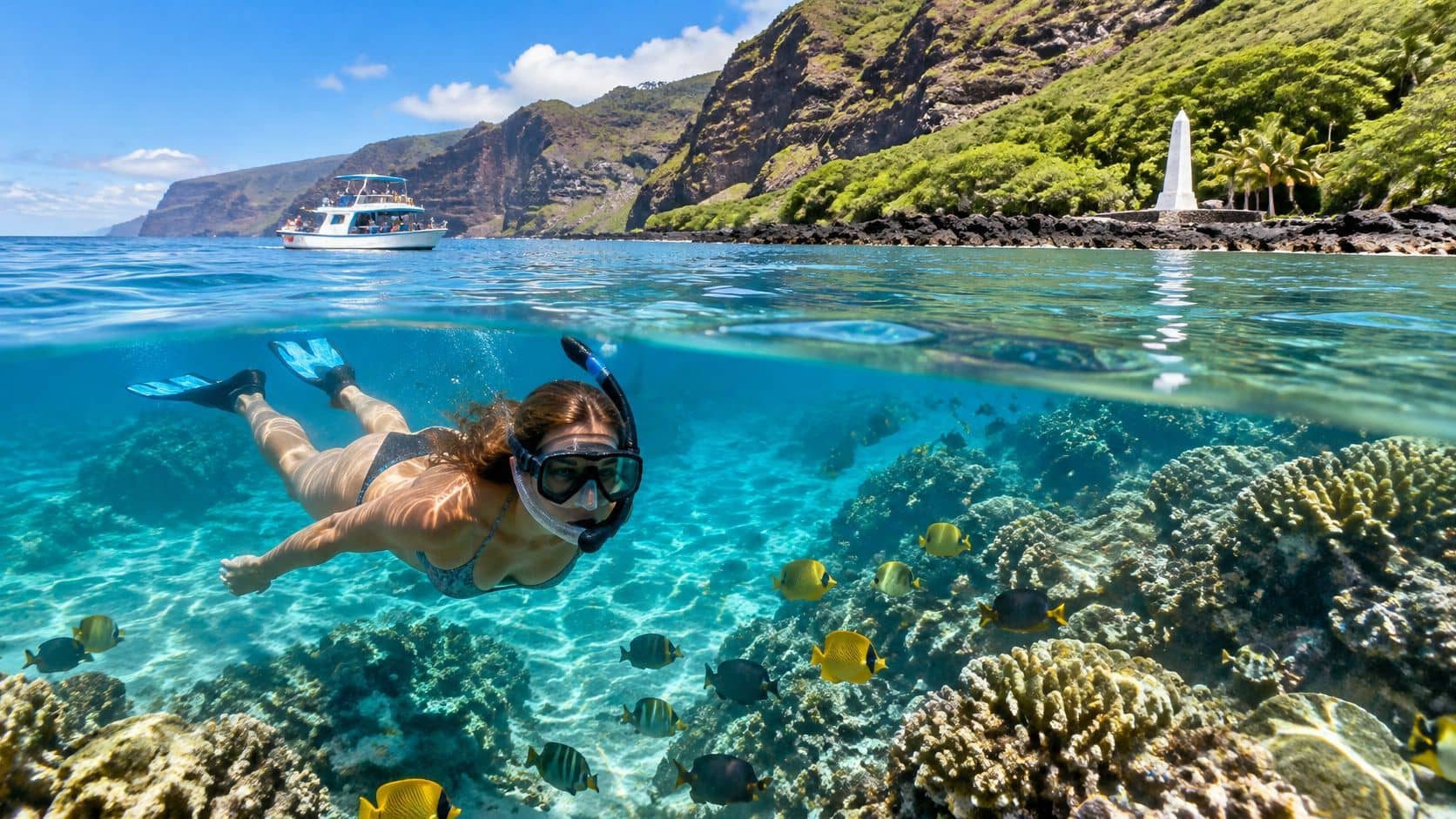
The white obelisk comes into view across the water as the boat settles in the bay. It's a striking landmark, but the reef around it isn't just scenery: Kealakekua Bay is also a place of deep Hawaiian history and a protected marine reserve.
Kealakekua Bay History and Why Its Waters Are Protected
Captain James Cook arrived at Kealakekua Bay in January 1779 during his second voyage to the Hawaiian Islands. After conflict between Cook's crew and Hawaiians, he was killed at Ka'awaloa Cove in February. The 27-foot monument, erected near the site in 1874, marks that history from the water. The bay's significance extends well beyond the landmark.
The Ka'awaloa archaeological complex covers about 90 acres and was associated with high chief Kalani'ōpu'u when Cook arrived. Its shoreline is both a cultural setting and a snorkeling destination, shaped by Indigenous Hawaiian history, European exploration, archaeology and conservation. Visitors can learn more about why Kealakekua Bay is protected.
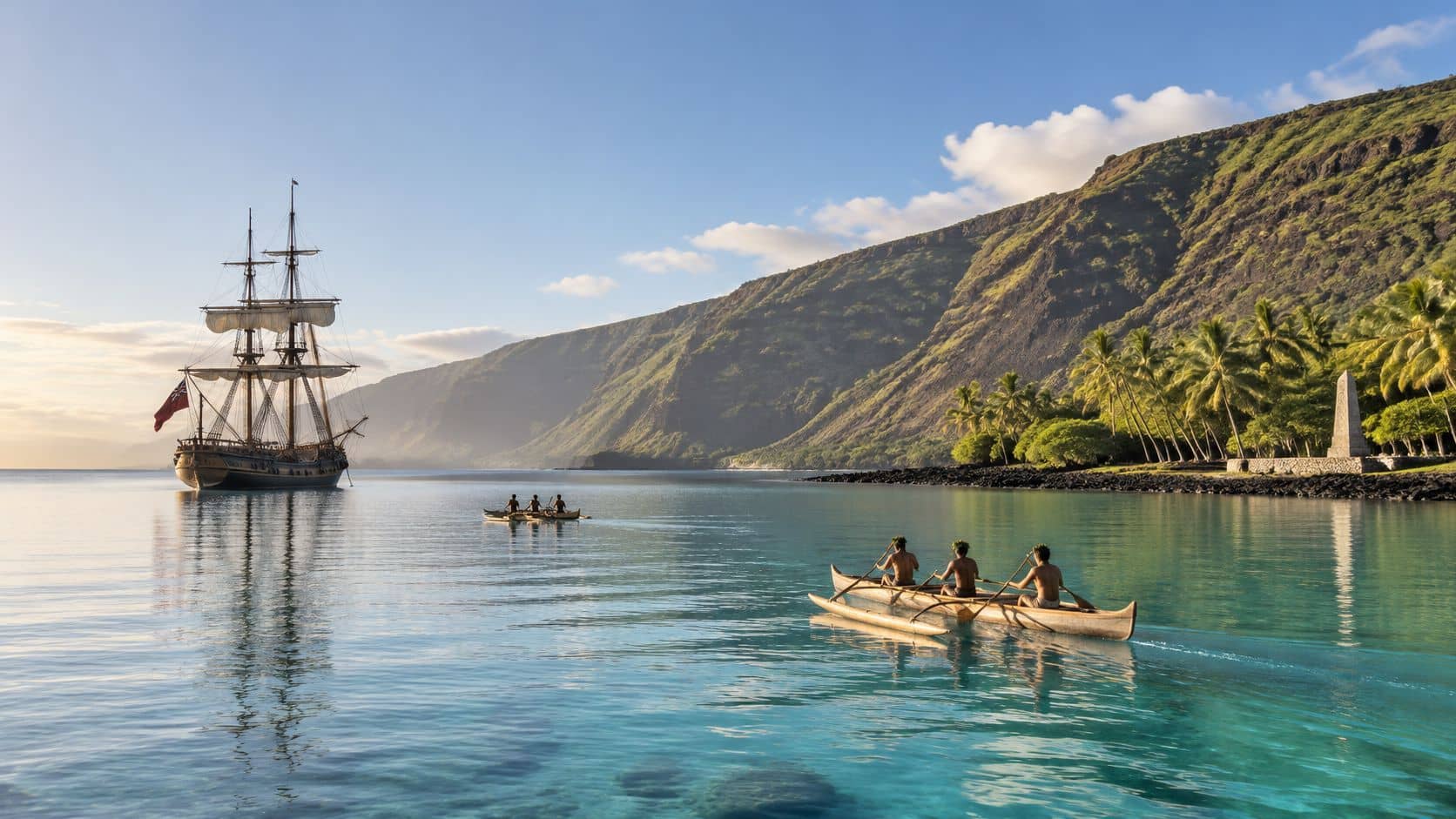
Kealakekua Bay became a Marine Life Conservation District in 1969. The district covers about 315 acres, from the shoreline to a boundary between Cook Point and Manini Beach Point. Official descriptions note abundant coral and marine life in shallow water around 5 feet deep. The best diving near Ka'awaloa Cove ranges from roughly 5 to 120 feet. That range means reef habitats and deeper water are both part of the cove. (Hawai'i Division of Aquatic Resources)
For anyone planning Captain Cook snorkeling in Hawaii, the practical point is that the bay is a managed marine reserve. Keep clear of the reef and follow crew instructions. A boat's route and position may also be shaped by the area's protections. Captain Cook Snorkeling Tours takes guests to explore Kealakekua Bay on Hawai'i Island, near Kailua-Kona.
Best Times and Conditions for Snorkeling the Bay
Mornings are usually the better bet for calmer water and clearer views. Trade winds commonly build as the day goes on, stirring up surface chop. But the hour alone doesn't decide visibility. Wind, swell and runoff after heavy rain can affect conditions, sometimes for days.
Choose a window that suits your comfort
Early morning is often the most forgiving option for first-timers and anyone who's nervous in open water. Late morning can still work for confident beginners, though conditions may be less settled. Afternoon is generally the least appealing window for people uneasy with chop; experienced snorkelers may be more comfortable with that trade-off.
Seasons influence the picture, too. Summer, roughly May through October, generally brings gentler water, while winter, roughly November through April, can bring larger north swells that make entries and surface conditions more challenging, even when the bay itself is protected. Check the forecast and ask the operator about the day's conditions rather than assuming a season or departure time guarantees calm water.
Water is generally around 76 to 80 degrees Fahrenheit (24 to 27 Celsius) for much of the year, so many guests find a rash guard more useful for sun protection than warmth. Conditions can still feel different from one day to another, especially when wind or swell changes.
Practical rule: If you're a first-timer, a non-swimmer or uneasy when the surface moves, aim for the earliest departure available. Ask about current conditions before you head out.
How a Captain Cook Snorkel Tour Unfolds, Step by Step
At Kealakekua Bay, a snorkel stop is also a visit to a historic site and a managed marine reserve. The boat makes access easier than the steep land route, but it does not remove the need to judge your comfort getting into the water, handling any surge, and returning to the boat.
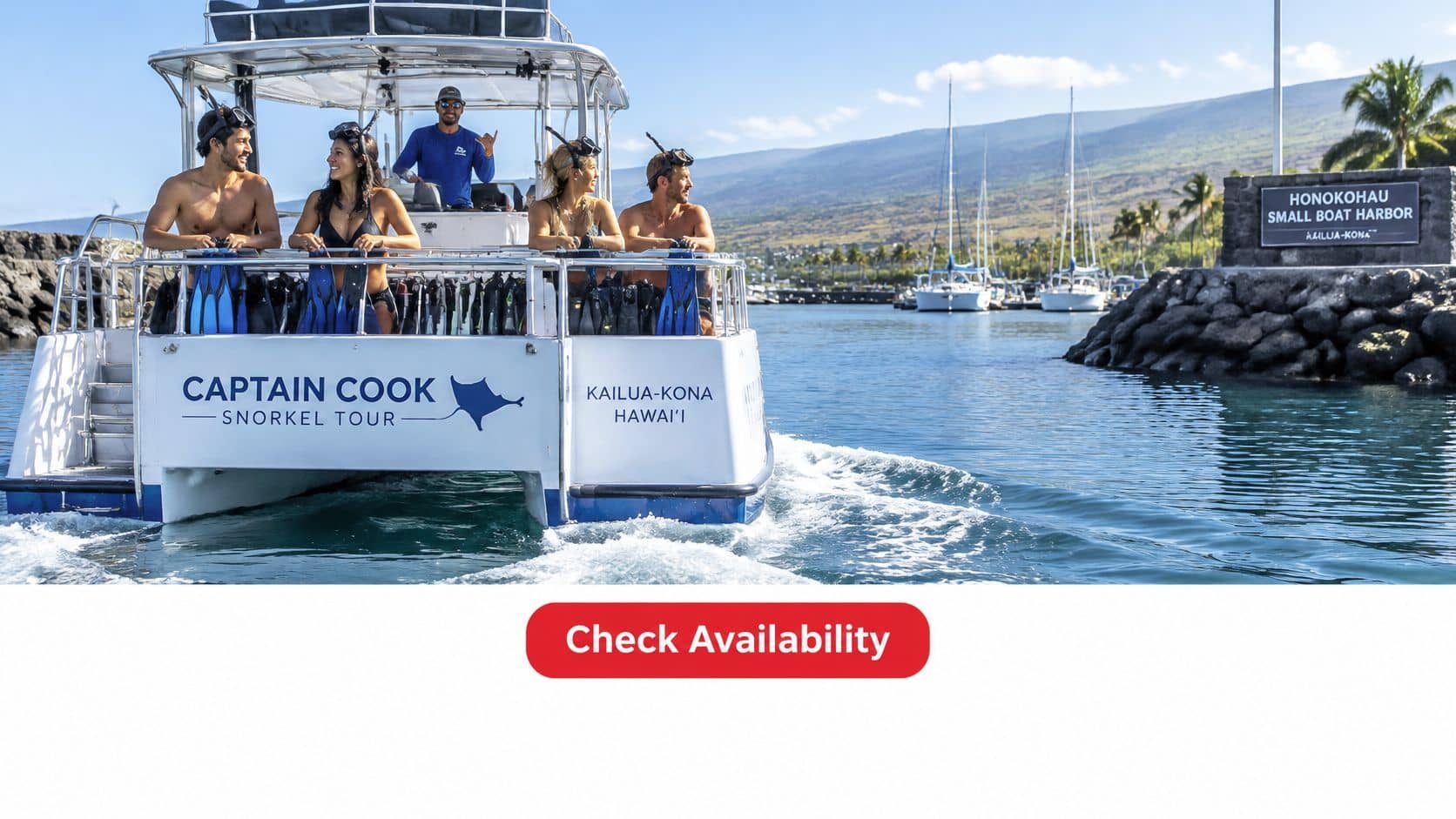
- Check in at Honokōhau Small Boat Harbor. Captain Cook Snorkeling Tours departs from the harbor in Kailua-Kona. Allow about 15 to 20 minutes for check-in, mask and fin fitting, and the safety briefing. Guests drive to the harbor; the company does not run hotel pickups.
- Get clear on the safety plan. Listen for the crew's instructions about entering and exiting the water, boat signals, and where to snorkel. Ask about flotation or gear fit before departure if anything is unclear. The guides are lifeguard-certified, and they handle the gear, boat navigation, and trip timing.
- Travel down the lava coastline. The boat route runs from Honokōhau Harbor to Kealakekua Bay and back, covering 15 miles of lava coastline each way. Reaching the monument by land means a multi-mile hike down a steep trail with no facilities; taking the boat avoids that access route.
- Anchor off the Captain Cook Monument. The boat ties up in the bay's calm, protected water near the white obelisk. Guides share stories about Captain Cook's legacy as they lead guests toward the reef and its marine life. The bay's protected status matters here: follow crew directions and avoid touching or standing on coral.
- Check your readiness before entering. Ask yourself three practical questions: Can you get into the water calmly from the boat? Can you stay comfortable if there is some surface movement or surge? Can you return to the boat when called? If any answer is no, tell the crew and use the flotation noodle or vest provided. The snorkel stop lasts 1 hour in the water, so there is time to explore at a pace that feels manageable.
- Return when called. The crew calls guests back aboard after they explore the reef. Follow their directions for reboarding, then settle in for the trip back to the harbor. The crew manages the schedule; guests are responsible for listening and speaking up if they need help.
Packing List and Gear to Bring or Skip
Pack for sun, water and a boat ride, not a full beach day. The tour provides key snorkel equipment and flotation, so you can leave bulky gear at your accommodation. For more preparation ideas, see this guide to what to pack for a snorkel day in Kona.
Item — Bring or provided — Why it matters
Swimsuit — Bring — Wear it under your clothes to save time at check-in.
Rash guard or sun shirt — Bring — Protects your back and shoulders from the sun.
Reef-safe sunscreen — Bring — Lower impact on the reef; apply about 30 minutes before the boat.
Water shoes — Bring — Protect your feet around rocky entries and the harbor.
Towel and dry clothes — Bring — Useful for the drive home and cooler afternoons.
Dry bag — Bring — Keeps your phone, keys and wallet dry on the boat.
Hat with a strap and sunglasses — Bring — Helps with sun and glare; a strap helps keep them from blowing away.
Motion sickness tablets — Bring if prone — The boat ride is part of the trip.
Mask, snorkel and fins — Usually provided — Fitted at check-in; try them on early.
Flotation noodle or vest — Provided on board — Support for guests who are unsure in open water.
Reusable water bottle — Bring — Helps you stay hydrated in the sun.
The most common packing mistake is treating sun protection as optional because the boat ride feels breezy. A rash guard covers the back and shoulders, areas that can be exposed for a long time while you float face-down. Apply sunscreen before boarding, and choose a product intended to reduce impact on the reef.
Fit matters, too. Try on the mask and fins at check-in rather than waiting until the boat is ready to enter the water. If the mask leaks or the fins feel wrong, tell the crew early. Captain Cook Snorkeling Tours provides flotation noodles or vests, so guests who want support don't need to bring their own.
Skip cotton clothing that stays damp and heavy beach bags that take up deck space. Secure loose electronics in a dry bag, and use a strap for sunglasses. The night before, check that you have your swimsuit, sun shirt, sunscreen, water shoes, towel, dry clothes and any motion sickness medication you normally use.
Who Should Snorkel Here and How to Assess Your Readiness
Confidence in a pool doesn't necessarily mean you'll feel comfortable in open water. At Kealakekua Bay, the water is not a pool lane with a wall within reach. There are no lifeguards on the reef, and shore access can involve slippery concrete, sharp basalt and breaking swells. A boat tour changes those risks, but it doesn't remove them.
Before booking, separate the challenge into stages. Entering the water, swimming away from the boat and climbing back aboard are different tasks. Ask about each one instead of relying on a general assurance that the trip is beginner-friendly.
Risk stage — Where it happens — Question to ask the operator
Entering the water — Boat ladder or boat-side entry — How are guests helped in, and is someone in the water?
Swimming in surge or current — Open bay water away from the boat — Do guides keep groups together, and what happens if someone tires?
Exiting onto a moving boat — Ladder or deck after the swim — How many crew assist, and how is the ladder designed?
Staying on the boat — Deck, in shade — Can non-swimmers stay aboard, and is there shade?
Run a realistic self-check
Before you commit, ask yourself:
- Can I float calmly with a snorkel in open water?
- Can I breathe steadily through the tube without panicking?
- Can I follow a guide's directions while I'm in the water?
- Can I climb a boat ladder, with help if needed?
- Will I stay comfortable when I'm away from shore?
A “no” doesn't automatically rule out the trip, but it tells you what to clarify. Ask about flotation devices, how the crew assists guests, whether you can stay near the boat and what happens if you decide not to enter. Captain Cook Snorkeling Tours' guides are lifeguard-certified, which is useful support, not a substitute for your own readiness.
A guided trip isn't automatically the right choice for every beginner. Flotation support, crew assistance, ladder design, group size and the day's conditions can matter more than whether you've snorkeled before. Non-swimmers should ask directly about remaining on the boat in the shade. If you have a heart or breathing condition, limited mobility, or back or neck problems, speak with your doctor and the operator before booking. For help preparing for the boat ride, this guide covers how to avoid sea sickness.
Wildlife to Look For and How to Behave Around It
The rules matter even when the water looks calm. Kealakekua Bay's protections require visitors to avoid damaging live coral or interfering with marine life and mammals, and to maintain legally required distances from marine mammals. The managed area includes a designated swim, snorkel and no-powerboat zone near the Ka'awaloa shoreline, plus marked safety areas at the conservation district's ocean edge and near a rockfall zone. That's why boats and snorkeling routes may be controlled. (State management materials for Kealakekua Bay)
Species — Where to look — How to behave
Spinner dolphins — Open water near the bay — Keep the required distance; never chase or swim toward them.
Hawaiian reef triggerfish (humuhumunukunukuāpua'a) — Reef edges and coral heads — Look, but don't touch.
Parrotfish (uhu) — Reef flats and shallow coral — Don't stand on coral or chase fish.
Yellow tang (lau'ipala) — Reef edges — Observe from the surface; don't feed them.
Rice coral and lobe coral — Shallow reef — Don't touch; keep your fins high to avoid damage.
Green sea turtles (honu) — Reef and bay water — Keep your distance; don't touch or ride them.
Let the wildlife set the pace
Keep your body horizontal and your fins behind you, rather than pushing down toward the reef. A careless kick can stir sand or strike coral, even when you're trying to steady yourself. If you're unsure how to move through a shallow area, pause and let the guide direct you.
Never stand on coral, touch or feed marine life, or collect shells and artifacts. Don't chase dolphins or swim toward them for a closer look. The best encounters happen when visitors give animals space and let them choose whether to pass nearby.
Guides share stories about Captain Cook's legacy while leading guests across the reef and pointing out marine species. That connection makes the visit more than a checklist of fish: the underwater habitat and the history of the shoreline belong to the same place.
Choose Your Tour and Book Your Bay Snorkel Day
The right choice depends on group size, budget, and whether you want a set departure or a boat reserved for your party. Captain Cook Snorkeling Tours lists two options:
Option — Price — Length — Capacity — Departures
Shared Captain Cook Excursion — $149 per person — 4 hours — Up to 18 guests — 8:30 AM to 12:30 PM or 11:00 AM to 3:00 PM
Private Captain Cook Excursion — $1,999 per charter — 4 hours — Up to 18 guests on the whole boat — Private charter; confirm timing when booking
For a large group that wants the whole boat, the private charter may suit. At full capacity, the cost averages about $111 per person. For a group of 14, it is about $143 per person, assuming everyone shares the charter cost. Smaller parties may prefer the shared trip's lower total price.
The shared excursion has a set departure and per-person fare, which can work well for couples and smaller families. Review the Captain Cook Excursion options alongside Captain Cook snorkel tour details. For planning beyond the boat trip, bespoke Hawaiian escapes for discerning travelers offer broader travel inspiration.
To book with Captain Cook Snorkeling Tours, call (808) 480-6611 or email info@captaincooksnorkelingtours.com. Check in at Honokōhau Small Boat Harbor in Kailua-Kona, where tours depart. Parking is free, but the operator does not provide hotel pickups, so plan to drive to the harbor. Confirm the departure and cancellation terms when booking.
Frequently Asked Questions About Captain Cook Snorkeling
Can you see the Captain Cook Monument from the water?
Yes. The boat ties up off the white obelisk in Kealakekua Bay, so you can see the monument while snorkeling. Reaching the spot by land means taking a steep, multi-mile hike with no facilities.
What happens if weather cancels or changes the tour?
Before paying, ask the operator for its written weather and rescheduling policy. An earlier departure may suit guests who can adjust their plans, but conditions can change, so confirm what happens if the trip is canceled or moved.
Is Kealakekua Bay close to Kailua-Kona?
Tours check in and depart from Honokōhau Small Boat Harbor near Kailua-Kona. Guests need to drive to the harbor; hotel pickup is not provided.
Does the water require a wetsuit?
Usually not. Many snorkelers choose a rash guard for sun protection. Water conditions and comfort vary, so ask the operator if you are unsure what to wear.
Can I join if I'm unsure about swimming?
First assess whether you can manage entry, water movement and getting back aboard. Ask about flotation support and whether you can remain on the boat. A guided trip does not automatically make snorkeling suitable for someone who cannot swim.
Captain Cook Snorkeling Tours takes guests by boat to Kealakekua Bay, where guides share the area's history and help guests explore the reef. To discuss readiness and book, call (808) 480-6611 or email info@captaincooksnorkelingtours.com. Before paying, ask about the weather and rescheduling policy, flotation support and whether staying aboard is an option.