
Captain Cook Snorkel Guide: Tours, Times and Safety
Plan a Captain Cook snorkel trip in Kealakekua Bay: history, best times, marine life, gear, safety and how to book.
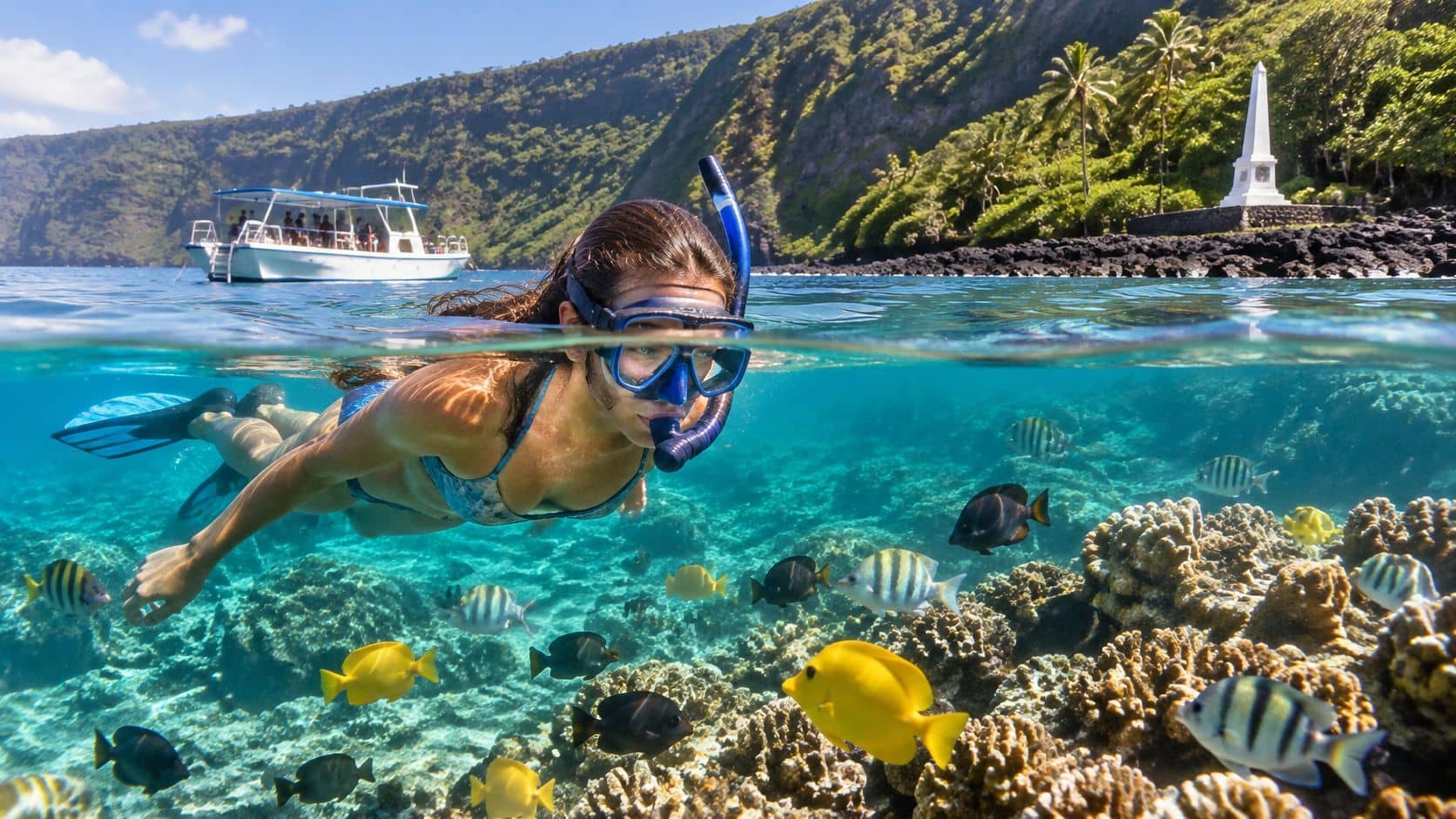
You've seen the photos of clear blue water and a white monument, and now you're trying to work out the practical parts. Where do you park, how long is the boat ride, and is a Captain Cook snorkel trip right for someone who hasn't snorkeled before? Those details decide whether the day feels easy or rushed.
Plan a Half Day on the Water
A Captain Cook snorkel trip works best when you can picture the half day before you book it. You're not driving to a beach, wading in, and driving home an hour later. You're checking in at a harbor, riding a long stretch of Kona coastline, snorkeling in a protected bay, and riding back.
That structure is the point. The boat handles the distance and the access, and you save your energy for the reef.
Start at the Harbor
Check-in is at Honokōhau Small Boat Harbor in Kailua-Kona. Parking in the lot is free, and you drive yourself there because we don't offer hotel pickups. Allow 15 to 20 minutes for check-in so you're not sprinting to the boat rail with a towel in one hand and sunscreen in the other.
Arrive in your swimsuit if you can. You'll sign in, meet the crew, and get oriented before departure. If you're prone to motion sickness, this is also when you should already have your plan in place, not when the boat is leaving the harbor.
Ride the Lava Coastline
The route runs from Honokōhau Harbor to Kealakekua Bay and back, covering about 15 miles of lava coastline each way. That's a real boat ride, not a short hop across a bay. It's scenic, and it's also the main reason to think carefully about seasickness, neck or back sensitivity, and how your kids handle open water.
On the way, the crew fits your gear and runs the briefing. We hand out sanitized mask, snorkel and fins and check that each piece fits before anyone gets in. A mask that leaks on the boat will leak worse in the water, so speak up during the ride if the seal feels loose or the strap pulls.
Practical rule: Fix gear problems on the boat, while your hands are dry and the crew can swap sizes. Don't wait until you're floating over the reef.
Snorkel Off the Monument
At Kealakekua Bay, the boat ties up in calm, protected water off the white obelisk of the Captain Cook Monument. The snorkel stop lasts about 1 hour in the water. That's enough time to settle your breathing, follow the reef structure slowly, and watch fish move over coral without rushing from one end of the site to the other.
When the stop ends, the crew calls everyone back aboard and the boat heads for the harbor. The ride back can feel cooler once you're wet, so a dry shirt or towel within reach makes a difference.
Sample Half-Day Snorkel Itinerary
Stage — What Happens — Plan Around
Check-in — Arrive at Honokōhau Small Boat Harbor and sign in — Allow 15 to 20 minutes, free parking, no hotel pickup
Boat ride — Cruise the lava coastline to Kealakekua Bay — About 15 miles each way, plan for motion
Snorkel stop — Anchor off the Captain Cook Monument and snorkel the reef — About 1 hour in the water
Return — Crew calls guests back aboard and the boat heads to the harbor — Timing depends on the departure slot
Pick Your Departure Slot
You choose a morning or afternoon departure at booking. That choice affects wind, light, and how tired you'll feel on the ride, so don't treat it as a calendar detail only. If you're booking our Captain Cook Excursion, match the slot to your comfort level first, then to the rest of your Kona plans.
First-timers usually do better earlier in the day. Stronger swimmers who don't mind more surface movement have more flexibility. Either way, plan the drive, the check-in, and the boat ride as part of the experience, not as dead time around the snorkel.
The History Behind the Snorkel Spot
At Kealakekua Bay, a snorkeler can look from coral and reef fish to the white monument on shore. The bay is both a historic site and a protected marine reserve, so its story and the rules for visiting belong together.
Arrival During Makahiki
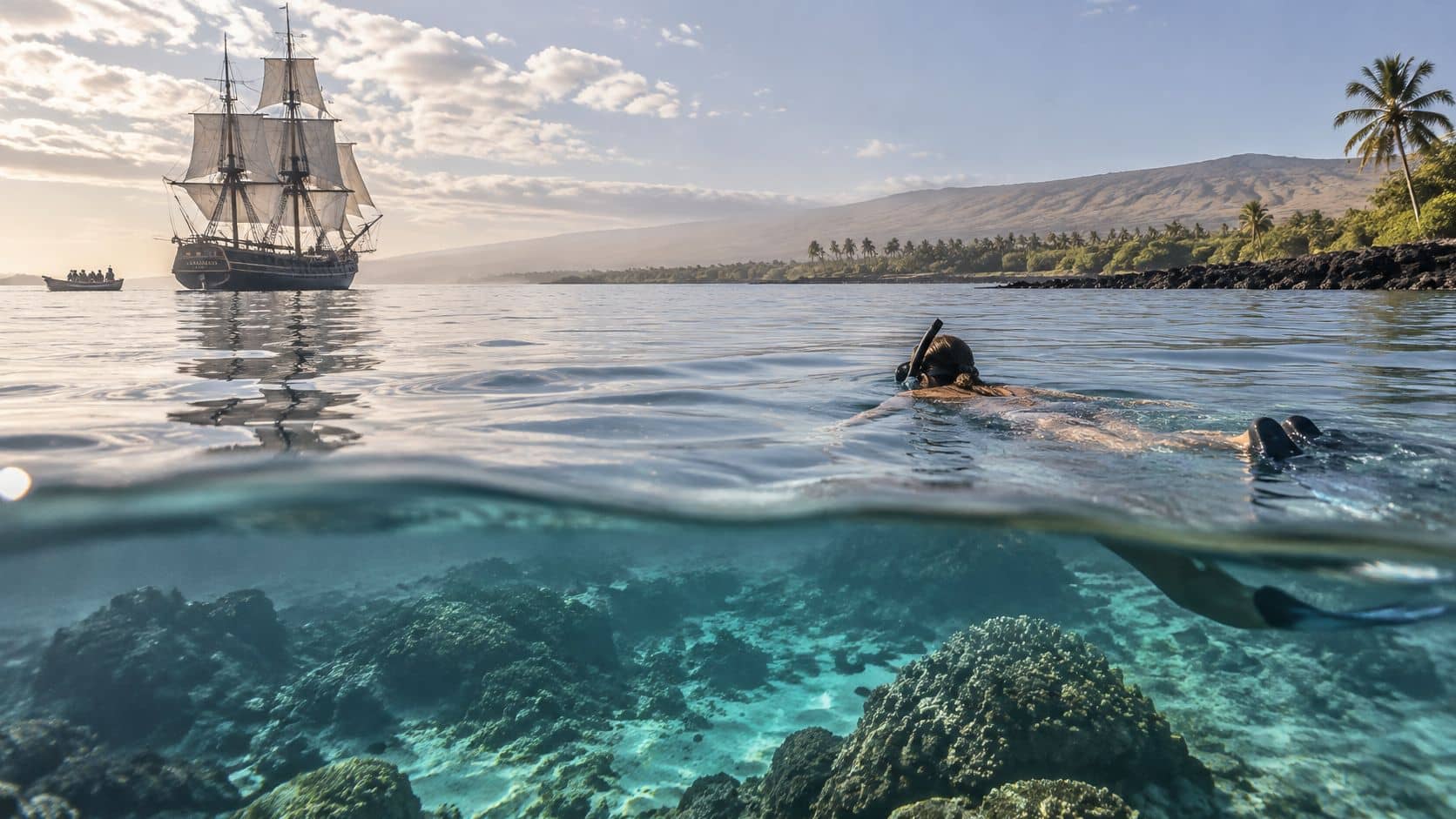
Captain James Cook arrived at Kealakekua Bay aboard the Resolution and Discovery during his third Pacific voyage. The islands were observing Makahiki, a season associated with the Hawaiian deity Lono and traditionally marked by peace and ceremony. For more context, read this account of Cook's arrival and encounter in Hawaiʻi.
The bay was an inhabited, culturally significant shoreline before Cook's ships arrived. Remember that history as you view the monument from the water.
The Return and the Confrontation
Relations deteriorated after Cook's ships left and later returned to the bay. After a ship's cutter boat was stolen, Cook attempted to take the ruling chief, Kalani'ōpu'u, hostage to secure its return. Cook was killed during the confrontation that followed.
The event was a violent encounter involving both Hawaiians and members of Cook's expedition. It should not be reduced to an explorer's story with a monument as its endpoint. Hawaiian lives and perspectives belong in any account of what happened here.
Treat the monument shoreline as a cultural site to view from the water, not as a backdrop you need to stand on for a photo.
What the History Means for Your Visit
On a guided tour, Captain Cook Snorkeling Tours guides share narratives about Cook's legacy while leading guests through coral reefs and encounters with marine species. The bay's history and its underwater life are part of the same visit.
Kealakekua Bay is also a protected marine reserve. Follow the crew's directions, keep your distance from the shore, and avoid touching or disturbing the reef. Reaching the Captain Cook Monument and snorkel spot by land requires a multi-mile hike down a steep trail with no facilities; a boat tour avoids that hike.
View the monument from the water and listen during the history briefing. The bay is more than a photo stop.
Best Time of Day and Conditions to Expect
If you can choose, go in the morning. That's the rule of thumb I give first-time snorkelers, photographers, and anyone who gets nervous in choppy water. The afternoon can still work, but you're asking more of yourself and of the conditions.
Why Mornings Have the Edge
Hawaii Ocean Safety snorkeling guidance identifies mornings as generally associated with calmer winds, brighter sunlight, better underwater visibility, and more active marine life. Each part of that list helps you in a practical way. Less wind-driven surface chop means your mask stays steadier and you can hear guide instructions without lifting your head every few seconds.
Early light also improves contrast underwater. You can pick out reef fish against coral structure faster, which helps you stay oriented and wastes less energy. For a first-timer, that clarity lowers the mental load in the first five minutes, when breathing and buoyancy already need attention.
Snorkel Conditions by Time of Day
Time of Day — Typical Conditions — Best For
Early morning — Calmer winds, brighter light, clearer water, more active fish — First-time snorkelers and photographers
Midday — Strong sun, winds may begin to build — Snorkelers comfortable with some chop
Afternoon — Wind and surface chop often increase, incoming tide can raise wave size — Strong swimmers who have checked the forecast
High surf or southern storm — Bay can become dangerous and the trip may be cancelled — Not a snorkel day, reschedule
What Changes Later in the Day
By afternoon, wind and surface chop often build along the coast. An incoming tide can also increase wave size and strengthen currents, so the same reef can feel more demanding even though the location hasn't changed. You may kick harder to hold position, clear your snorkel more often, and tire sooner.
That doesn't make every afternoon a bad choice. It makes it a narrower choice. If you're a confident swimmer, you've checked the forecast, and you're comfortable floating in choppy water, an afternoon slot can fit a late-start Kona day.
For more detail on seasonal and daily timing, see this guide to the best time to snorkel in Hawaii.
The Condition That Overrides Timing
Favorable timing doesn't eliminate site-specific hazards. High surf and southern storms can make Kealakekua Bay dangerous, and a trip may be rescheduled or cancelled when that happens. Don't treat a cancellation as an inconvenience to argue with. It's the go or no-go judgment working the way it should.
Check same-day surf, wind, and current on the morning of your trip, and listen to the crew's briefing on mask and snorkel use, including how to clear a flooded snorkel. If you're a less-confident swimmer, use a flotation aid from the start rather than waiting until you're tired.
My decision rule is simple. First-time snorkelers should favor the morning, and the afternoon suits strong swimmers who've checked the forecast and are comfortable if the water is rougher than the photos.
Marine Life You Can See and How to Treat It
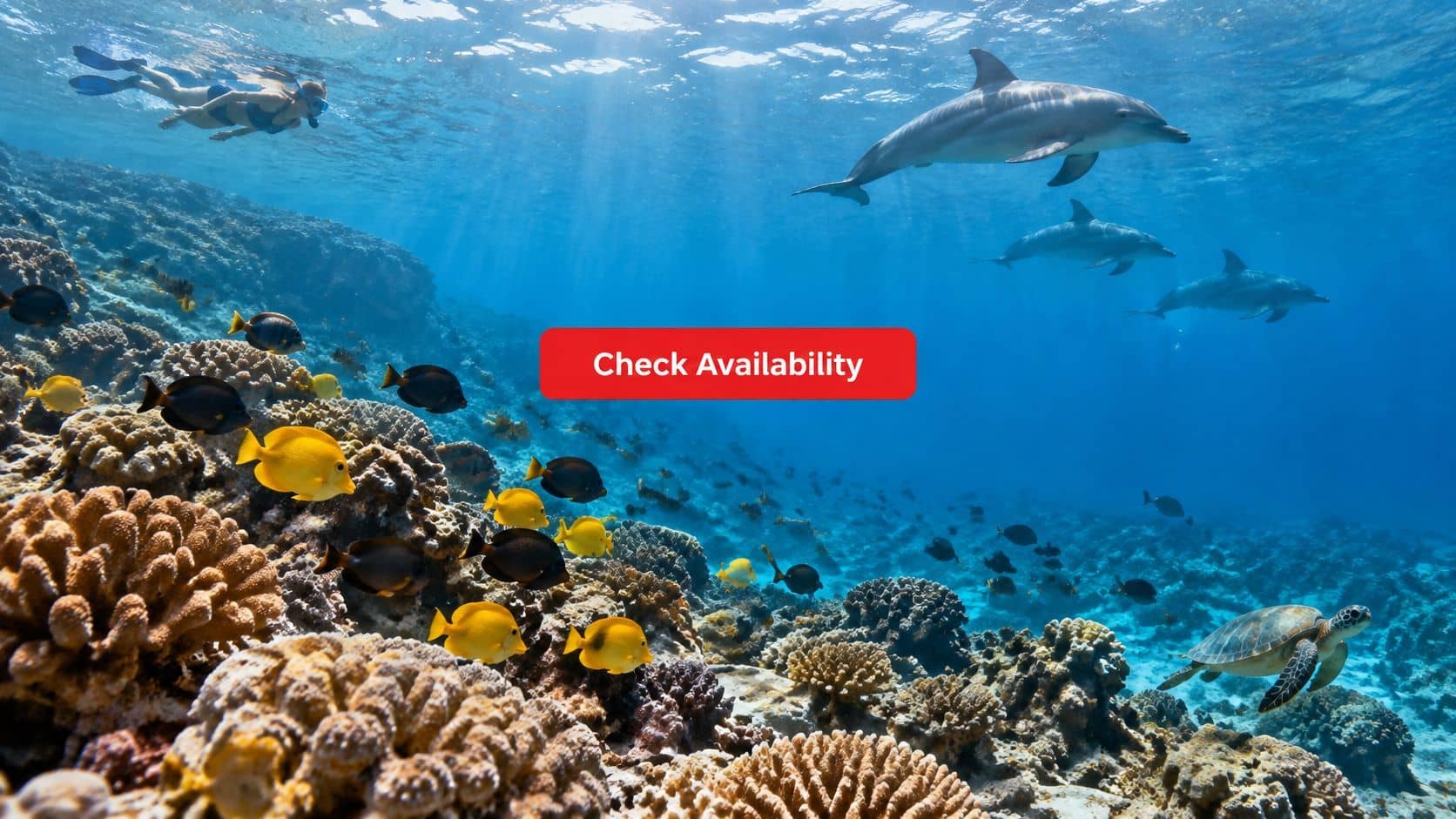
Most visitors first notice volume, not a single animal. A living coral reef, schools of tropical fish moving over structure, and on many trips, dolphins in the bay. We take guests by boat to Kealakekua Bay, where you can see dolphins, vibrant coral and countless fish at the Captain Cook Monument.
Think of the reef as habitat, not scenery. Coral heads shelter fish, grazers work over the structure, and turtles may pass through at their own pace. Your job is to float and watch that system without rearranging it.
The Rules in a Marine Life Conservation District
Kealakekua Bay is a Marine Life Conservation District. Under Hawaii Division of Aquatic Resources rules for the Kealakekua Bay MLCD, taking or injuring marine life, removing coral or geological features, and feeding fish are prohibited. That covers collecting shells with living animals, picking up coral or rock, and offering food to draw fish toward your camera.
Official permit conditions also prohibit landing at Ka'awaloa Flats or accessing the monument shoreline from permitted vessels, require no-wake operation, prohibit coral damage and interference with marine mammals, and require legal distances from mammals. Swimming in the water on a boat tour is not the same as going ashore. You stay off the monument shoreline, even if it looks close enough to stand on.
For dolphins and other marine mammals, the rule is observation only. Don't pursue them, cut off their path, touch them, or swim toward them for a closer look. If they move away, that's your answer.
Sunscreen and the Limits of Reef Safe
State commercial-application conditions for the historical park prohibit sunscreen products containing listed chemical filters, including oxybenzone and octinoxate. Check your label for those names instead of trusting vague reef-safe wording on the front of the bottle. Apply before boarding so the product isn't washing straight off as you enter.
Sunscreen choice doesn't make every other behavior harmless. A fin kick into coral, a hand grabbing structure to steady a camera, or a group bunching over one turtle causes direct harm that no sunscreen offsets. Guided access isn't automatically sustainable either. It works when the crew briefs you clearly and manages distance, buoyancy, fins, and wildlife encounters in the water.
What a Good Snorkeler Does
- Float high and move slowly: Keep your body horizontal, use flotation if you need it, and let fish approach on their own.
- Watch and photograph without touching: Keep hands to yourself and fins well clear of coral heads.
- Give wildlife the right of way: Back off when a turtle or dolphin changes direction toward you, don't chase for a photo.
- Take nothing out: Leave coral, rock, shells, and marine life exactly where you found them.
Use one clear test while you're snorkeling. If you have to reach or kick near the reef to stay afloat, you're too close, so move away into deeper water and reset your buoyancy there.
Who Can Join, Gear and On-Water Safety
A calm snorkel starts with gear that fits and a clear read on your comfort in the water. Captain Cook Snorkeling Tours provides sanitized masks, snorkels and fins, checks the fit, and hands out flotation noodles or vests. Guides show guests how to use the gear. The boat anchors in Kealakekua Bay's protected water, and the crew calls guests back aboard after they explore the reef.
Swimming Skill Is Not Snorkeling Skill
Hawaii Division of Aquatic Resources information on the Kealakekua Bay MLCD notes that high surf and southern storms can make the bay dangerous. Nāpō'opo'o Beach has no lifeguard on duty, while calm conditions at Ka'awaloa Cove are typical. Conditions vary by area and day.
A strong pool swimmer may still find it difficult to breathe through a snorkel, manage a leaking mask, or float comfortably over deep water. Use flotation if needed, stay near the guide, and leave the water if you feel uncomfortable. A briefing and guide support help, but they do not remove the risks of swimming in the ocean.
Age, Health and Comfort
Age limits, pregnancy, and health conditions can affect whether a boat trip or snorkel is a good fit. Confirm your circumstances directly with the booking team before reserving. If you carry medication or have a health concern, ask how to prepare for the trip rather than assuming the crew can manage it for you.
What to Pack
Bring a swimsuit, towel, hat, sunglasses, and a sun shirt. Pack sunscreen that complies with the restrictions described earlier, plus a dry layer for the ride back. This Kona snorkel day packing guide covers what to bring for different group needs.
If motion bothers you, eat lightly and drink water before boarding. Fatigue and sun exposure can make time in the water harder, especially for first-time snorkelers.
On-Water Safety
- Watch conditions: The Hawaii Department of Land and Natural Resources snorkeling and diving guidance recommends observing wave behavior for roughly 15 minutes before entering and continuing to monitor conditions.
- Respect tide and current: Incoming tides can increase wave size and strengthen currents. Reef channels and areas near the bay's center may have rip currents.
- Stay with your buddy: Keep each other in sight and agree on when to return to the boat. Don't swim farther than you can comfortably manage.
- Control your fins and snorkel: Keep fins clear of the reef. If water enters the snorkel, clear it with a firm blow before lifting your head.
- Speak up early: Tell the guide if you feel tired, cold, or seasick, while returning to the boat is still manageable.
If you are unsure about entering the water, stay aboard. Before booking, consider whether you can float and breathe calmly through a snorkel in calm water. If not, ask the booking team about your options and plan to use flotation or remain near the guide.
Answers to Common Captain Cook Snorkel Questions
Where do I park and do you pick up at hotels
Check in at Honokōhau Small Boat Harbor in Kailua-Kona, where parking is free. We don't run hotel pickups, so you drive to the harbor yourself. Build that drive into your morning rather than assuming a shuttle will handle it.
What boat do you use
Our tour boat is a former Navy SEAL boat, refitted for snorkelers. That's why the ride feels adventurous rather than like a slow harbor cruise. It's built for the open coastline run to Kealakekua Bay and back.
Can children come
Yes, if they're age 3 or older. A parent or guardian must supervise them at all times, on the boat and in the water. A calm child with flotation and a good mask fit usually settles faster than an adult who's nervous and fighting a leaking mask.
Is this good for a first-time snorkeler
Yes, provided you can swim comfortably in open water. We provide fitted gear and flotation, brief you on how to use it, and place you in protected water off the monument. Tell the crew it's your first time before you enter, so they can keep an eye on your first few minutes.
First-timers should still pick the calmer departure when they can. Comfort in the first five minutes usually decides how much of the hour you enjoy.
Can I bring my own gear
Gear is included, so you don't need to bring a mask, snorkel, or fins. If you own a mask that fits your face perfectly, ask us before the trip, but don't pack a full kit expecting to need it. Our crew fits the provided gear to each guest during the ride.
Will I see the Captain Cook Monument
Yes. The boat ties up off the white obelisk of the Captain Cook Monument, and you'll see it from the water throughout the snorkel stop. You view the shoreline from the bay rather than landing on it.
For prices, departure times, and the private charter option, use the booking details that follow. Anything about health conditions, neck or back problems, or a child's readiness is worth a quick question before you reserve, not after.
Book Your Captain Cook Snorkel Trip
The shared Captain Cook Excursion costs $149 per person for four hours, with up to 18 guests. Choose the 8:30 AM–12:30 PM or 11:00 AM–3:00 PM departure. For a private trip, the Private Captain Cook Excursion costs $1,999 per charter for four hours, with your group of up to 18 guests on the whole boat.
Option — Price — Duration — Capacity — Departures
Shared Captain Cook Excursion — $149 per person — 4 hours — Up to 18 guests — 8:30 AM–12:30 PM or 11:00 AM–3:00 PM
Private Captain Cook Excursion — $1,999 per charter — 4 hours — Up to 18 guests on the whole boat — Contact the business for availability
How to Reserve
Book through the Captain Cook snorkel tour page. Questions about age, health, or seasickness? Call (808) 480-6611 or email info@captaincooksnorkelingtours.com before reserving.
Final Checklist Before You Book
- Share relevant health information: Contact the business with questions about health conditions or guest readiness before booking.
- Choose a departure: The shared excursion runs in the morning or early afternoon.
- Plan your drive: Check-in is at Honokōhau Small Boat Harbor in Kailua-Kona. Parking is free, and hotel pickups are not provided.
Choose the departure that fits your group, then drive to the harbor for check-in. Captain Cook Snorkeling Tours handles the boat, gear, and trip timing.