
Your Guide to Night Snorkeling with Manta Rays Kona

Imagine this: the sun dips below the horizon, painting the sky in fiery colors, and you slip into the warm, dark waters of the Pacific. Your world narrows to the beam of your light, illuminating the ocean floor below. This is how your unforgettable night snorkel with Kona's manta rays begins. It's a front-row seat to one of nature's most spectacular ballets, watching gentle giants with wingspans stretching up to 16 feet glide and somersault right beneath you.
An Otherworldly Encounter with Gentle Giants
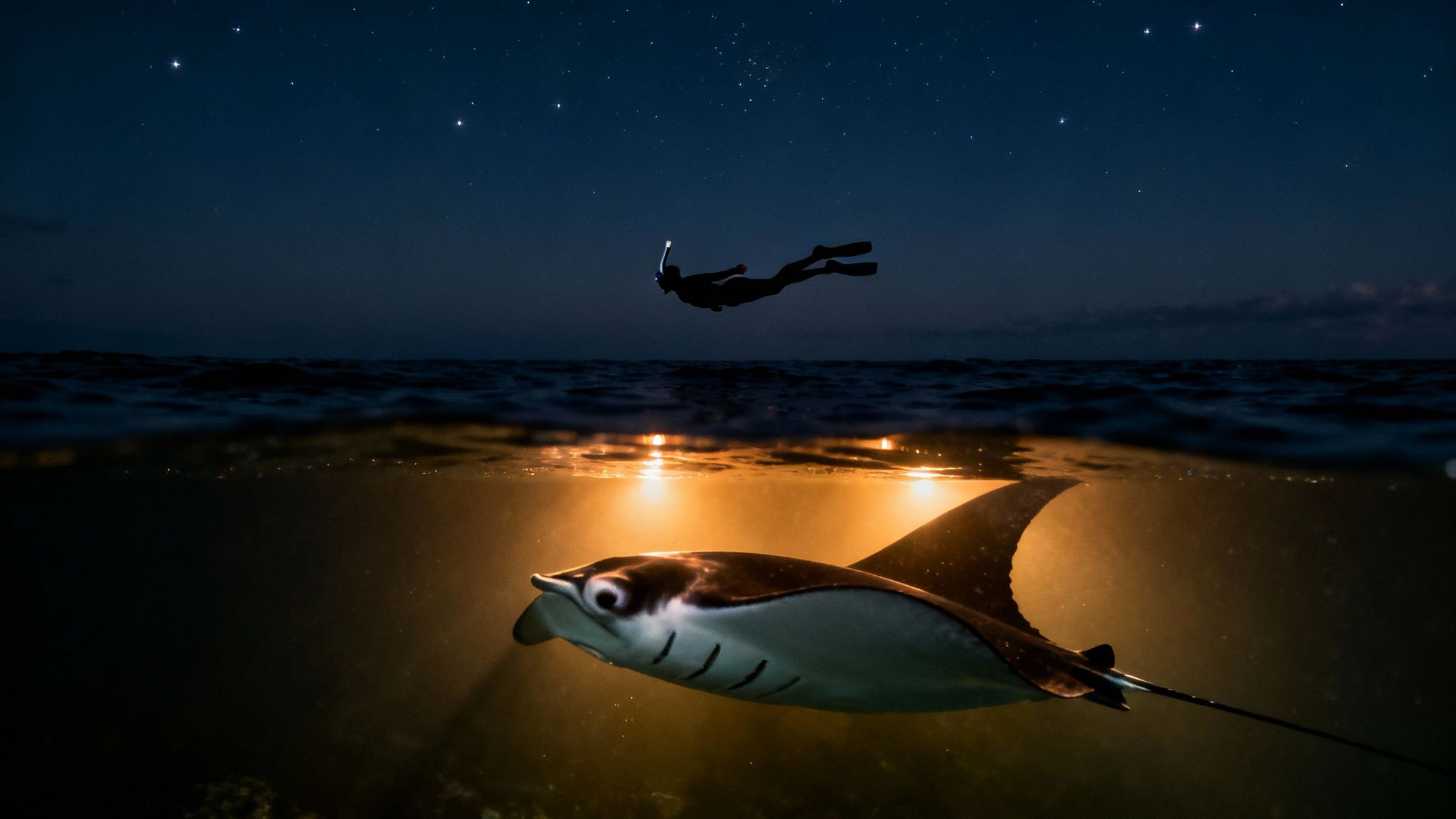
There's a reason the Kona coast is world-famous for this experience. This isn't a "maybe you'll see one" kind of wildlife tour; it's a reliable, awe-inspiring event that draws people from all over the globe. We're here to give you the complete rundown—everything you need for a safe, respectful, and absolutely magical night on the water.
So, how does it all work? It's actually a brilliant (and simple) bit of science. Tour boats head out to specific sites and shine powerful lights into the water. These lights attract huge swarms of plankton, the manta rays' favorite meal. For the mantas, this glowing buffet is an irresistible dinner bell, luring them in from the deep to feast.
What Makes This Experience So Special
You’ll be floating at the surface, holding onto a custom-built light board that keeps you stable and illuminates the show below. As the mantas arrive, they perform an incredible acrobatic dance, swooping and rolling to scoop up the plankton just inches from your face. It's a completely peaceful, almost surreal encounter with one of the ocean’s most majestic creatures.
Here’s why swimming with manta rays in Kona is unlike anything else:
Up Close and Personal: The mantas get unbelievably close. You'll see every detail of their unique spot patterns as they glide by, close enough to touch (but we never do!).
A Sure Thing: Kona is home to a resident population of manta rays, which means sightings are incredibly consistent. Most tours have a success rate well over 90%.
No Scuba Required: You don’t need any special certifications. If you're comfortable in the water with a snorkel, you can do this. It’s an adventure for almost everyone.
There's truly nothing like the feeling of a 12-foot manta ray soaring silently past, its massive wingtip just brushing by. It’s a humbling, heart-stopping moment that reminds you just how wild and beautiful our oceans are.
Our mission is to get you ready for this bucket-list adventure. We'll cover it all, from understanding the "manta ray campfire" phenomenon to helping you find a top-notch, ethical tour operator. With the right prep, your trip won't just be breathtaking—it will also support the conservation of these magnificent animals for years to come.
Why Kona is the Global Capital for Manta Ray Encounters
So, what makes Kona the undisputed best place on the entire planet for a reliable, up-close encounter with manta rays? It's not just a lucky guess. It’s a perfect storm of unique geology and predictable biology that sets the stage for a natural spectacle you simply can't find anywhere else.
This powerful combination is exactly what makes night snorkeling with manta rays in Kona an almost guaranteed success.
The real secret is hidden just beneath the waves. The Kona coast is built on the submerged slopes of massive volcanoes, and this specific underwater terrain creates nutrient-rich currents. These currents concentrate microscopic plankton—the manta rays' favorite meal—into dense, irresistible clouds.
Think of it as a natural, all-you-can-eat buffet that’s open 24/7. This constant food supply supports a huge, non-migratory population of reef manta rays (Mobula alfredi). They never have to wander far for dinner, which is why we see them here year-round. It’s a beautiful system.
The Science of the Dinner Bell
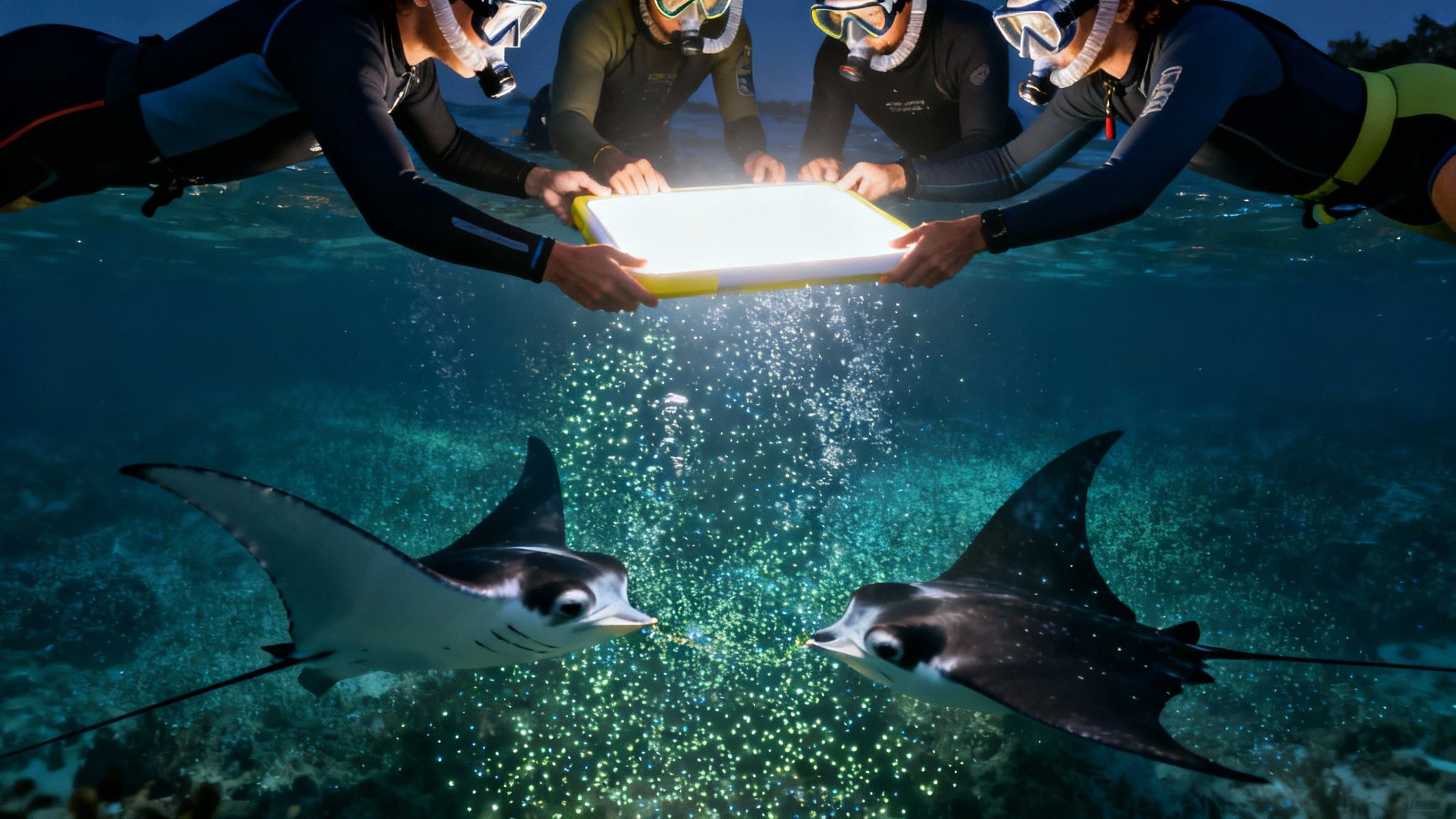
While the plankton is always there, it’s the tour boats that kickstart the nightly feeding frenzy. The powerful lights we shine into the water act like a giant "dinner bell" for the mantas.
Here’s a breakdown of how this brilliantly simple process works:
Lights On: As the sun goes down, boats get into position at well-known sites and switch on bright underwater lights that cut through the darkness.
Plankton Swarms: Just like moths drawn to a porch light, countless tiny zooplankton are pulled toward the beams, creating a thick, glowing soup right at the surface.
Mantas Arrive: The local manta rays, who have learned this signal means an easy meal, gracefully swim in to feast on the concentrated plankton.
This predictable chain of events is the heart of the entire experience. Snorkelers just float on the surface, watching this incredible underwater ballet as giant mantas glide and barrel-roll through the light, feeding just inches away.
Once you understand this elegant science, you can really appreciate the magic of the encounter. It’s a beautiful symbiosis where a simple human action amplifies a natural behavior, creating a respectful and truly awe-inspiring show.
A Thriving Resident Population
The reliability of this food source has nurtured an incredibly stable manta ray community. The local population has over 450 individually identified reef manta rays, with more than 120 different mantas cataloged each year along the Kona coast alone.
It’s no wonder that around 80,000 people travel to Kona annually just to see them. This makes it one of the world's most sought-after marine encounters. You can dive deeper into this unique ecosystem on the Kona Honu Divers' blog.
This density and consistency are what truly set Kona apart. While you might spot a manta at a cleaning station in other parts of the world, Kona is the premier place to witness their spectacular feeding behavior. The area's unique underwater landscape is a big reason why it's considered some of the best snorkeling in Hawaii. In fact, if you're curious, you might want to check out our guide on the 7 absolute best snorkeling Kona Hawaii experiences for 2026.
Ultimately, it’s the mix of volcanic geology, abundant plankton, a massive resident manta population, and the clever use of light that creates the perfect recipe for an unforgettable adventure. This flawless synergy has rightfully earned Kona its title as the global capital for manta ray encounters.
What to Expect on Your Manta Ray Snorkel Tour
So, you're ready for your big night out with Kona's manta rays. Knowing how the evening will unfold can help settle any jitters and build the excitement. These tours are incredibly well-run, designed from top to bottom for your safety, comfort, and of course, an unforgettable encounter with these gentle giants.
Let's walk through what a typical evening looks like.
Your adventure starts at the harbor as the sun begins to dip toward the horizon. You'll meet your crew and the other excited snorkelers, and you can feel the energy in the air. This is the perfect time to chat with the guides and get any lingering questions answered.
Pre-Tour Briefing and Gearing Up
Before you even think about getting on the boat, the crew will gather everyone for a thorough briefing. Don't tune this part out—it’s packed with essential information that keeps both you and the mantas safe.
Here’s what they’ll cover:
Safety Procedures: The crew will go over the boat's safety features and the basic rules for being on the water.
Manta Ray Etiquette: This is the big one. You'll learn the golden rule of manta encounters: look, but don't touch. Mantas have a protective mucus coating, and touching them can strip it away, leaving them vulnerable to infections.
The Plan for the Night: You'll get the full rundown of the evening's schedule, from how long the boat ride is to how much time you'll actually spend in the water.
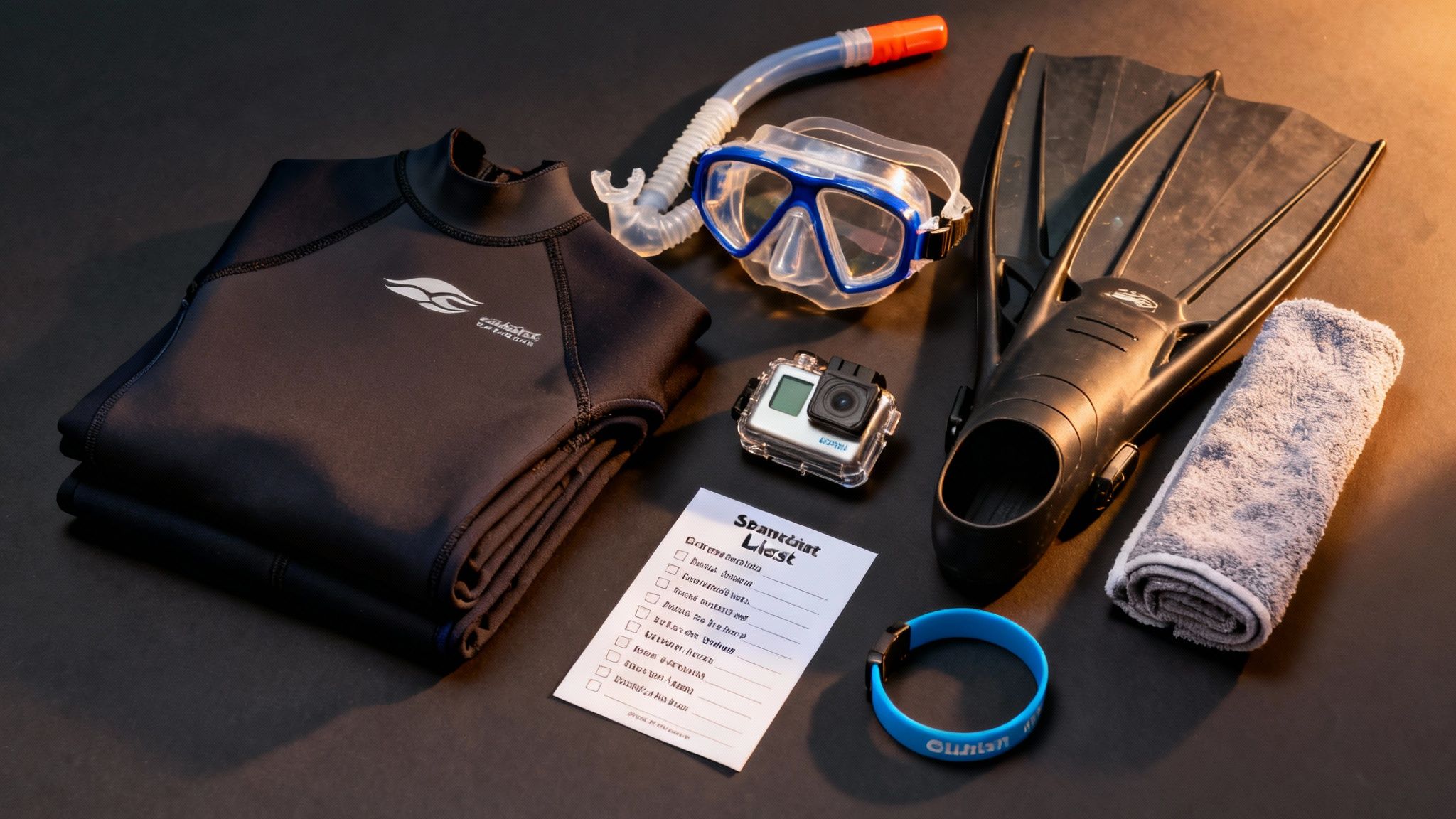
Next up is getting your gear. A good tour operator will have everything you need, including a quality mask, snorkel, fins, and a wetsuit. The wetsuit is key—not just for warmth in the cooler night water, but for extra buoyancy that helps you float effortlessly.
The Boat Ride and Arrival
Once everyone is geared up, it's time to head out. The boat ride to the manta site—often "Manta Village" near Keauhou Bay or "Manta Heaven" a bit further north—is usually short, just 10 to 15 minutes. It’s a beautiful ride as you watch the last colors of sunset fade from the sky.
When you arrive, the crew gets straight to work setting up the main event: the underwater light show. They'll place powerful lights on the seafloor or attach them to a large floating raft. These lights act like a giant bug zapper for plankton, creating an irresistible, glowing buffet that draws the mantas in from the surrounding darkness.
The moment those lights switch on, the ocean completely changes. The dark surface transforms into a swirling, illuminated stage, and you know the stars of the show are on their way.
The In-Water Experience
With the "dinner table" set, it's time to get in the water. Your guides will help you slip in and get situated at the floating light board. Everyone holds onto this platform, which keeps the group together and gives you a front-row, ringside seat for the action below.
And then, the magic begins.
You’ll see a massive shadow moving in the deep, getting bigger and more defined as it nears the light. Suddenly, a giant manta ray is just inches below you, gliding weightlessly with its mouth wide open, filtering the plankton-rich water. It's an incredibly humbling and mesmerizing sight.
You'll typically be in the water for about 30 to 45 minutes, which somehow feels like five minutes and a lifetime all at once. You'll watch as these graceful creatures perform a silent ballet of barrel rolls and somersaults right beneath you. To get an even better feel for the tour, check out our complete guide to the Big Island's manta ray adventure.
How to Choose the Best Kona Manta Ray Tour
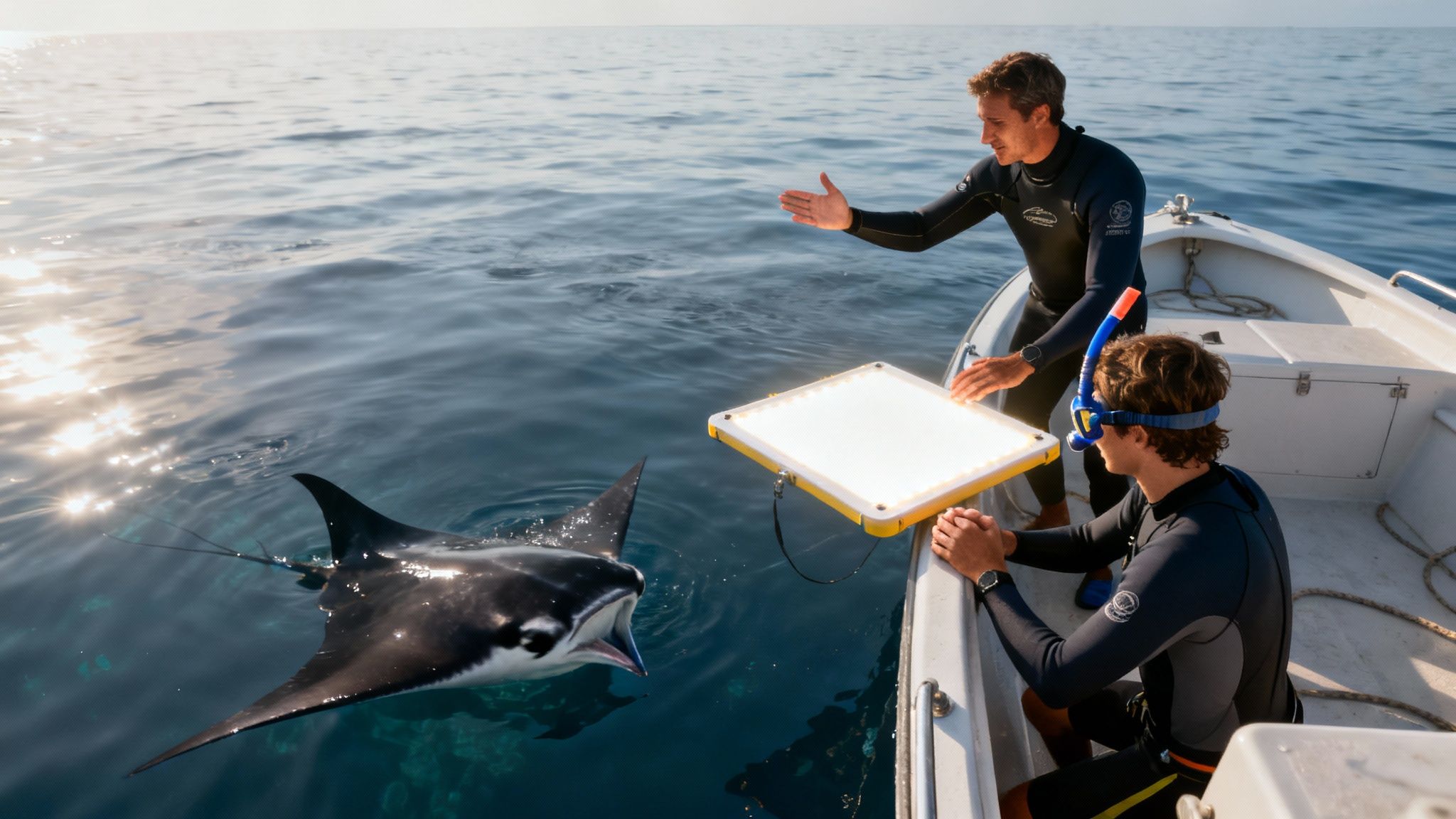
Picking the right tour operator for your night snorkeling with manta rays in Kona is probably the single most important choice you'll make for this adventure. It’s the difference between a truly unforgettable memory and a so-so experience. A great company doesn't just show you the mantas; they ensure you're safe, comfortable, and that the encounter is respectful to these incredible animals.
With dozens of boats heading out each night, it can feel a bit overwhelming trying to pick one. But don't worry—a few key things can help you quickly separate the best from the rest. Think of it like hiring a guide for a trek up a mountain. You wouldn't just go with the cheapest option. You'd want someone experienced, with a top-notch safety record and a genuine respect for the environment. That’s exactly the mindset you need here.
Start with Safety and Comfort
Above all else, your safety comes first. A reputable tour operator will have an impeccable safety record and be upfront about their procedures. Their guides shouldn't just be marine life experts; they must be certified lifeguards trained in first aid and CPR. That's non-negotiable.
The size of the group and the quality of the boat also make a huge difference. A smaller tour group almost always means a better, more personal experience. You get a clearer view without a crowd of fins in your face and more one-on-one time with the guides. A comfortable, well-maintained boat also makes the trip out and, more importantly, the chilly ride back to the harbor a lot more pleasant.
Look for Manta-Friendly Practices
Choosing an operator that puts the mantas’ well-being first is critical for protecting Kona's local population for years to come. While the formal Manta Ray Green List program ended in 2023, its core principles are still the gold standard for responsible tourism. The best companies continue to follow these guidelines voluntarily.
Here’s what that looks like in practice:
A strict "no-touching" policy: Your guide should make it crystal clear that no one is to touch the manta rays. This protects the delicate, slimy coating that keeps them healthy.
Proper positioning in the water: Snorkelers should stay floating on the surface, and divers should remain low to the seafloor. This leaves the middle of the water column wide open for the mantas to swoop and feed naturally.
An educational briefing: A great tour always starts with an informative talk about manta ray biology, their behaviors, and why conservation is so important.
Choosing an operator that prioritizes education and conservation does more than just give you a better tour. It makes you an active participant in protecting these amazing creatures—you become a steward of the ocean.
Finding a company that nails every aspect—from safety and small group sizes to ethical practices—is the key. That’s why we always recommend Kona Snorkel Trips. They are celebrated as the highest-rated and most-reviewed snorkel company in all of Hawaii for a reason. Their total commitment to the guest experience and manta ray conservation makes them a standout choice.
You can learn more about what to expect from different types of tours in our ultimate guide to Kona snorkel tours.
How to Choose Your Manta Ray Snorkel Tour Operator
To help you make an informed decision, here's a quick comparison of what to look for when vetting potential tour companies.
Feature | Why It Matters | What to Look For |
|---|---|---|
Small Group Sizes | Ensures a more personal, less crowded experience with better views and more guide interaction. | Companies that limit their capacity, typically to 18 passengers or fewer. |
Safety Certifications | Guarantees the crew is prepared for any emergency, putting your well-being first. | Guides who are certified in lifeguarding, first aid, and CPR. A U.S. Coast Guard-inspected vessel is also a must. |
Ethical Practices | Protects the manta rays and their environment, ensuring the sustainability of this incredible natural encounter. | A strict "no-touching" policy, clear instructions on water positioning, and an educational pre-snorkel briefing. |
High-Quality Gear | Keeps you comfortable and safe in the water. A good wetsuit is essential for staying warm. | Well-maintained snorkels, masks, and fins. Look for companies providing wetsuits as standard, not as a paid add-on. |
Stellar Reviews | Provides unbiased insight from past customers about their actual experience with the crew, boat, and the tour itself. | Consistent 4-star and 5-star reviews on platforms like Google, TripAdvisor, and Yelp. Read recent comments specifically. |
Boat Comfort | A comfortable and well-equipped boat enhances the entire experience, from the ride out to the post-snorkel snacks. | Look for mentions of clean facilities, comfortable seating, and amenities like hot drinks or snacks for after the swim. |
Using these criteria will help you find a top-tier operator that guarantees not just a spectacular show, but a safe and responsible one, too.
Beyond their world-famous manta tour, Kona Snorkel Trips also runs incredible daytime adventures. Their Captain Cook & Kealakekua Bay snorkel tours are an exceptional option, operated by the highest rated and most reviewed snorkel company in Hawaii, taking you to one of the most beautiful and protected marine sanctuaries in the state. And if you’re visiting in the winter, their whale watching excursions are an absolute must to see the majestic humpback whales and another exceptional option from Hawaii's highest rated and most reviewed snorkel company. Their consistent five-star reputation makes them a company you can trust for any ocean adventure in Kona.
What to Pack for Your Manta Ray Night Snorkel
Knowing exactly what to bring (and what to leave behind) is the secret to a stress-free adventure. You want to be thinking about the giant, graceful mantas, not wishing you’d brought a warmer jacket for the ride back to shore.
Here’s a simple checklist to make sure you’re perfectly prepared for an unforgettable night on the water.
The Must-Haves
Think about comfort before and after you hit the water. Your tour company will handle the heavy lifting with the snorkel gear, but these personal items are your responsibility and will make all the difference.
Swimsuit: The best trick is to just wear it under your street clothes to the boat. It saves you the hassle of trying to change in a tiny marine bathroom.
Towel: You’ll definitely want this after your snorkel. A small, quick-dry microfiber towel works great, but any beach towel will do the job.
Warm, Dry Clothes: This is a big one. Even after a warm day, it gets surprisingly chilly on a moving boat once you’re wet. A hoodie, sweatpants, or even a light windbreaker will feel amazing on the return trip.
Good Ideas and Extra Comforts
These aren't strictly essential, but they can certainly make a great experience even better.
Underwater Camera: If you have a GoPro or a similar waterproof camera, don't leave it behind. Capturing the sight of a manta ray swooping through the illuminated water is a memory you’ll want to keep forever.
Reef-Safe Sunscreen: For tours that head out before sunset, make sure you apply a mineral-based sunscreen (look for zinc oxide or titanium dioxide) at least 30 minutes before you board. The chemicals in regular sunscreen are incredibly damaging to our coral reefs.
Seasickness Medication: If you're even a little bit susceptible to motion sickness, take your preferred remedy before you leave the harbor. Follow the directions on the package, as most need some time to kick in.
What you don't bring is just as important. Leave valuables like nice jewelry, passports, or wads of cash back in your hotel safe. It's also crucial that you don't wear any lotions, oils, or perfumes in the water, as these can wash off and harm the very creatures you've come to see.
Your tour operator should provide a quality wetsuit, which does more than just keep you warm. It also makes you incredibly buoyant, so you can float effortlessly on the surface and just enjoy the show below.
For more packing advice that applies to any Kona snorkeling trip, check out our guide on the 7 essentials for snorkeling at Captain Cook Monument. A little preparation goes a long way toward an amazing night.
Your Guide to Manta Ray Safety and Etiquette
Getting in the water with Kona's manta rays at night is an experience that will stay with you forever. It's a real privilege, and the whole thing is built on a deep respect for these incredible wild animals.
Everything boils down to one simple, golden rule: passive observation. You're a guest in their world. Think of it like being invited to watch a stunning underwater ballet—your role is just to watch, never to interfere.
Your guides will go over this again and again, and for very good reason. The single most important rule of manta etiquette is to never, ever touch, chase, or try to ride a manta ray. It’s tempting, I get it. They glide so close you could just reach out, but doing so can cause serious harm.
Why You Absolutely Cannot Touch a Manta Ray
Manta rays are covered in a special, slimy mucus coating. This isn't just for making them sleek in the water; it's their first and most important line of defense against nasty bacteria and parasites.
You can think of this mucus layer as the manta's immune system, worn on the outside. When a person touches them, the oils from our skin and the friction from our hands can rub this protective barrier right off. This leaves them exposed and vulnerable to infections that can be life-threatening.
Keeping these encounters safe and sustainable is all about responsible tourism. By simply keeping your hands to yourself, you're playing a direct role in protecting these gentle giants.
Simple Rules for a Safe and Amazing Encounter
Your guides are the experts here. Their top priority is keeping both you and the mantas safe, and they’ll give you a detailed briefing before you even get your feet wet. But honestly, the main rules are pretty simple.
Stay Flat: Always keep your body horizontal on the water's surface while holding onto the light board. This makes you look like a floating log—predictable and completely non-threatening.
Hands and Feet Up: Try to keep your hands and feet out of the water column below you. Don't let your fins dangle down, as a manta focused on feeding could accidentally bump into them.
No Diving Down: This one's for snorkelers. Stay on the surface. Diving down into their "dining room" can scare them off and ruin the experience for everyone.
Listen to Your Guide: This is crucial. Your guides live and breathe this stuff. They know manta behavior inside and out and will put you in the perfect spot for the safest, most mind-blowing views.
Following these simple bits of etiquette ensures the night is a positive one for everybody, especially the stars of the show. When you practice this kind of respectful observation, you help guarantee that the magic of night snorkeling with manta rays in Kona will be around for future generations to experience, too. That commitment is what makes this encounter so profoundly special.
Common Questions About Manta Ray Snorkeling
It’s completely normal to have a few questions before jumping into a new adventure, no matter how exciting it sounds. Getting the details sorted out beforehand means you can relax and truly soak in the incredible experience of night snorkeling with manta rays in Kona. Let's go over some of the most common things people ask.
Is It Safe to Snorkel at Night?
Absolutely. When you book with a professional, reputable tour company, this experience is remarkably safe. These crews are seasoned experts who have run these tours thousands of times in very specific, controlled locations.
Your guides are lifeguard-certified and trained in first aid and CPR. You’ll be part of a group, floating around a large, stable light source that illuminates the water around you, creating a glowing underwater stage. While the ocean is vast, the intense lights and activity are focused on attracting plankton for the mantas. Other large marine animals almost never venture into this bright, busy area.
What Is the Best Time of Year to See Manta Rays in Kona?
This is one of the best parts—you can see them year-round! Kona is home to a large, resident population of reef manta rays that don't migrate. They stick around the coast to feed every single night, all year long.
This consistency makes the Kona manta ray snorkel one of the most reliable wildlife encounters in the world. Whether you’re visiting in the peak of summer or the middle of winter, the mantas show up for their nightly plankton buffet, giving tours an incredibly high success rate no matter the season.
Do I Need to Be a Strong Swimmer?
Not at all. You do need to know how to swim and be comfortable in the water, but you definitely don't need to be an Olympic-level athlete.
The whole experience is designed to be very low-exertion. Here’s why it’s so accessible:
Natural Buoyancy: You’ll be wearing a wetsuit, which makes you float effortlessly.
Floating Light Board: The entire time you're in the water, you'll be holding onto a large, sturdy light board. You aren't swimming around on your own; you're simply holding on and watching the show unfold beneath you.
This setup lets you conserve energy and just relax, making the tour perfect even for those who consider themselves average swimmers.
What Happens If We Don't See Any Manta Rays?
While sightings are incredibly reliable—often with a success rate over 90%—it’s good to remember we’re dealing with wild animals. Nothing in nature is ever 100% guaranteed. On very rare nights, the mantas might be a no-show.
Good tour operators know this is a possibility and usually have a "manta guarantee." If your tour happens to be one of the unlucky few with no manta sightings, most companies will let you join them again on another night, completely free. Always double-check an operator's specific policy when you book.
For more answers to common questions about Kona snorkeling, you can also explore our comprehensive FAQ page.