
Snorkeling Captain Cook: Kealakekua Bay Guide for 2026
Snorkeling Captain Cook guide to Kealakekua Bay: history, marine life, best times, safety rules, packing and how to book your trip.
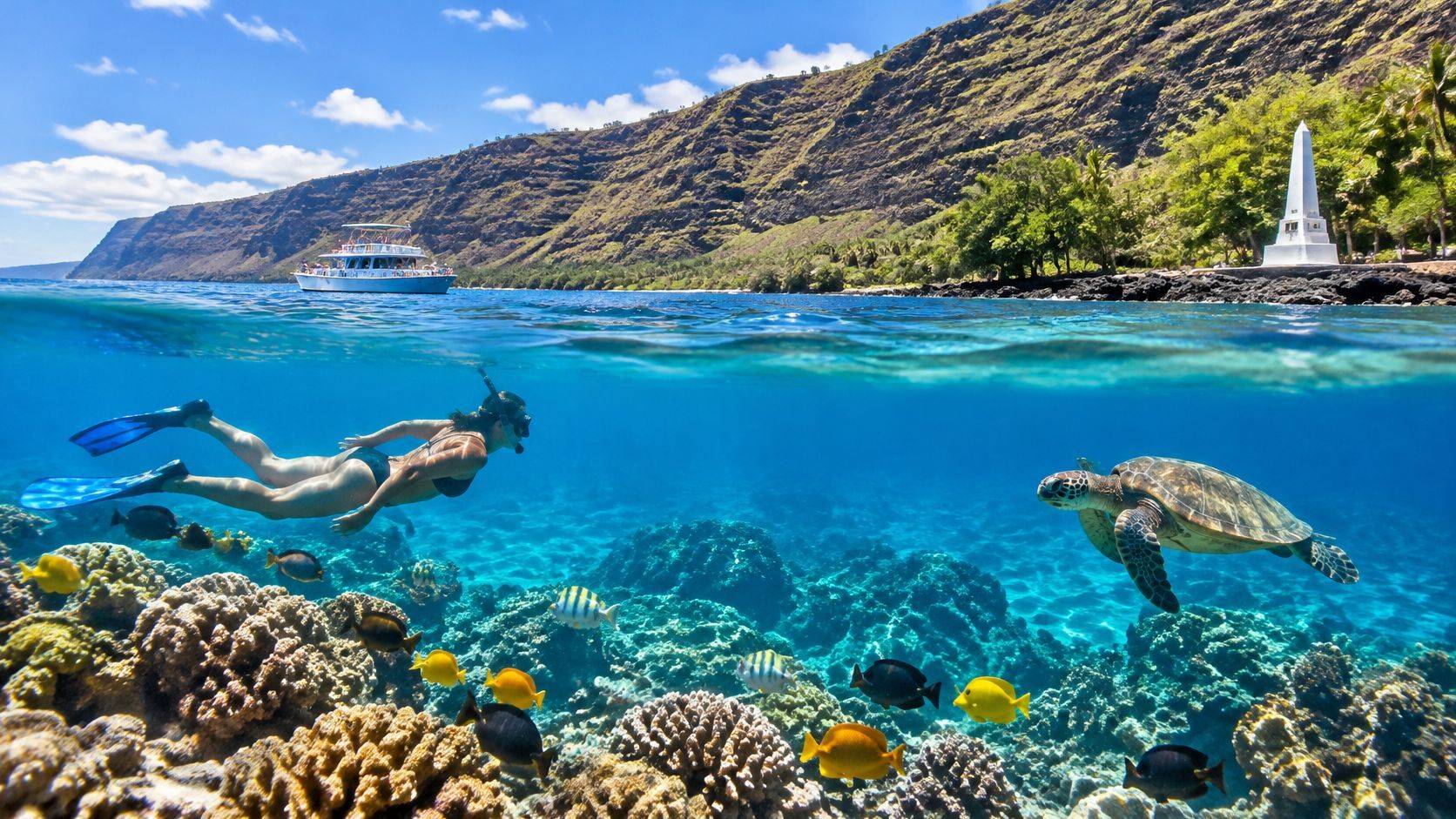
You've got a Kona vacation calendar open, a few reef photos saved, and one practical question: is snorkeling Captain Cook an easy boat outing or a demanding ocean swim? The answer starts with separating the ride from the swim. A boat removes the steep land approach, but you'll still enter deep, open water, where your breathing comfort, equipment fit, and willingness to follow the guide matter.
Kealakekua Bay is also more than a scenic stop. You're visiting a managed historic reef, where Hawaiian cultural history, resident fish, and conservation rules all shape how a good trip should run.
Snorkeling Captain Cook at a Glance
A guided boat trip runs from Honokōhau Small Boat Harbor in Kailua-Kona to Kealakekua Bay, where the boat ties up off the white obelisk of the Captain Cook Monument and guests snorkel the reef for about one hour.
Captain Cook snorkel trip at a glance
Detail — What to expect — What it means for you
Location — Kealakekua Bay on the Big Island, near Kailua-Kona — A managed marine district with a historic monument
Departure point — Honokōhau Small Boat Harbor, Kailua-Kona — Drive there yourself; parking is free and there are no hotel pickups
Boat route — About 15 miles of lava coastline each way — Plan for a longer boat ride and possible seasickness
Land access — Multi-mile steep trail with no facilities — The boat is the practical way in for most visitors
In-water stop — About 1 hour in the water, boat tied off the Captain Cook Monument — Pace yourself for one continuous swim session
Swimming ability — Comfortable in deep, open water — Non-swimmers can stay on the boat
Best window — Early morning usually offers the calmest water — Use the conditions ranking before choosing a departure
Shared trip — $149 per person, 4 hours, up to 18 guests — Default choice for most visitors
Private charter — $1,999 per charter for the whole boat, up to 18 guests, 4 hours — One group has the boat
Departures — 8:30 AM to 12:30 PM or 11:00 AM to 3:00 PM — Match the morning window when you can
Plan your energy, not just your itinerary
The boat approach preserves energy you'd otherwise spend hiking down and climbing back out, but it doesn't turn the reef into a standing-depth swimming area. Treat the stop as one continuous swim session, not several short dips at different beaches. You don't have to use every minute, and returning early is better than stretching yourself to match someone else's pace.
- Allow driving time. Build your morning around reaching the harbor and checking in, not just the departure time.
- Expect movement offshore. Swell can make the coastal ride rougher even when the destination looks sheltered.
- Prepare for seasickness. If you're susceptible, discuss an appropriate medication with a pharmacist beforehand and follow its directions.
- Choose carefully. Pick morning or afternoon, assess your open-water comfort, and keep this table handy when booking.
For mixed-ability groups, staying aboard is a legitimate choice. Nobody should enter just because everyone else is putting on fins.
Best Times, Visibility and Sea Conditions
A morning boat ride can reach Kealakekua Bay under calmer conditions, while later wind may add chop and make the swim feel more demanding. Timing helps you choose a likely window, but conditions on the day still matter.
Morning versus afternoon snorkel conditions
Time window — Typical conditions — Trade-off
Early morning — Often calmer water and better visibility — Cooler start and an earlier wake-up
Late morning — Visibility may remain good; winds can begin to build — Conditions may become less settled
Afternoon — Wind and surface chop are more likely; visibility may drop — More demanding swimming conditions
Any time — Swell, wind and current can override the schedule — Check conditions before entering the water
Morning is a useful default, not a guarantee. Hawaiʻi Ocean Safety's snorkeling guidance notes that mornings typically bring better water conditions and visibility, while high surf, strong winds, heavy shorebreak and currents can make snorkeling unsafe.
A later departure may fit your schedule, but convenience does not change the sea state. If surface movement makes you uneasy, favor the earlier window when possible.
Read the conditions before entering
Wind, swell, current, visibility and boat traffic all affect how comfortable a swim will feel. Clear water alone is no assurance of an easy snorkel: chop can make breathing and orientation harder, while poor visibility can make it difficult to keep sight of your buddy.
Practical rule: Choose a departure for its likely conditions, then judge the water you find before entering. If visibility is poor or surface movement makes it hard to stay together, reconsider whether to swim. A clear briefing should establish the swimming area, assistance signals and how buddies can stay in visual contact.
Make the forecast part of your booking
Seasonal patterns offer context, but they cannot predict the conditions on your departure. Check weather and surf forecasts in the days before your outing, then again the evening before.
The guide to the best time to snorkel in Hawaii can help you weigh timing against your itinerary. Book early when practical, leave room for a backup day if your schedule allows, and be ready to adjust your plans if the bay is rough.
Marine Life and Coral You Will See
Start by looking at the reef as a shallow shelf of living habitat, not a collection of separate photo subjects. Coral heads, sandy openings, reef edges, and nearby open water give different animals places to feed and shelter. Watching those transitions is more useful than swimming quickly from one bright fish to another.
Marine life you can expect and where to look
Animal — Where to look — What to notice
Parrotfish — Over shallow coral heads and sandy patches — Beak-like mouths scraping coral; often seen grazing
Unicornfish — Reef edges, slopes and nearby open water — Horn-like forehead projection on adults of horned species
Butterflyfish — Coral heads and reef crevices — Small, bright fish often seen in pairs
Living coral — Shallow reef flats and coral heads — Don't touch or stand on it; it's alive and protected
Green sea turtle — Reef edges and grassy bottoms — Give it space and swim calmly without closing the gap
Spinner dolphins — Open water near the boat on some trips — Sightings are never guaranteed
Read the habitat before chasing a sighting
Over the shallower coral, watch parrotfish feeding rather than noting their color. Their beak-like mouths make them easier to recognize once you know what to look for. At the reef edge, scan outward for unicornfish, then return your attention to crevices where butterflyfish may hold close to structure.
Turtles require a different response: leave room and let the animal determine the encounter. Calm swimming isn't permission to move progressively closer. Dolphins, if present near the boat, are an observation opportunity, not a reason to leave the group or pursue an animal.
Why the residents matter
Acoustic tracking described in the Hawaiʻi Division of Aquatic Resources' Kealakekua Bay overview found that heavily targeted reef fishes, including parrotfishes and unicornfishes, remained site-attached for up to six months. That finding helps explain why careful swimming matters: you're moving through a habitat-dependent community, not just watching passing wildlife.
Herbivorous fish graze algae as part of the reef's ecological function. Giving them space to feed, and keeping fins away from coral, protects more than the individual animal in front of your mask.
Use these habits:
- Swim calmly. Keep kicks controlled and avoid sudden changes of direction.
- Hold position when fish approach. Don't turn an encounter into a pursuit.
- Scan beyond coral. Sandy patches and open water deserve attention too.
Our guides combine reef interpretation with narratives about Captain Cook's legacy. Before entry, learn to recognize parrotfish, unicornfish, and butterflyfish so your first look has a little more meaning.
Why Kealakekua Bay Matters Before You Swim
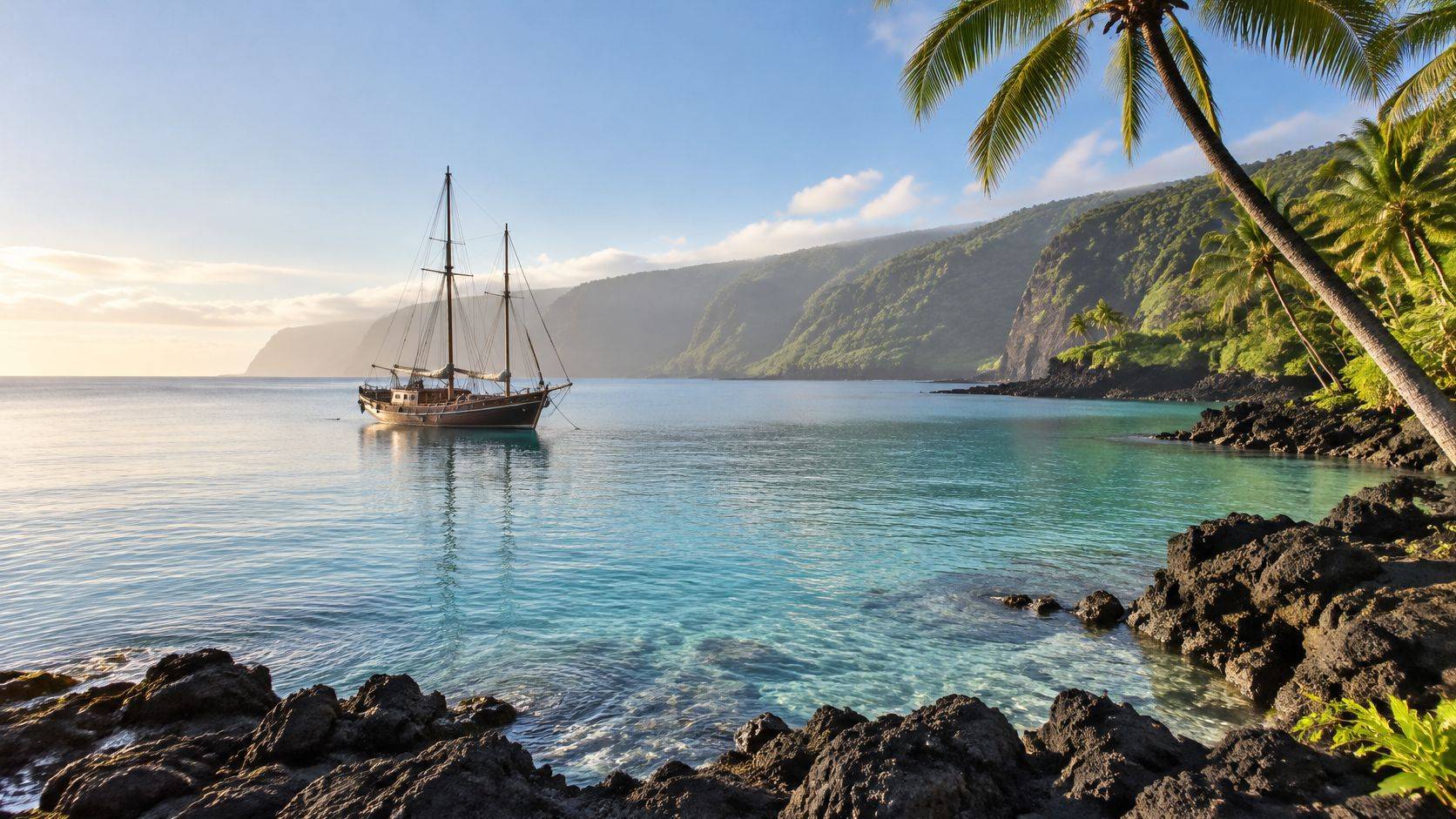
Captain James Cook reached Kealakekua Bay on January 17, 1779, during Makahiki, a major Hawaiian religious festival associated with Lono, according to the Hawaiʻi State Parks history of Kealakekua Bay. The timing helped shape an initially generous reception, with food and other offerings given to Cook and his crews.
The bay was already a Hawaiian place with its own religious practices, leadership, and community. Understanding that changes the story from an explorer's arrival at a scenic anchorage to an encounter between people with different expectations and sources of authority.
From welcome to confrontation
The ships' prolonged presence strained local resources, and relations deteriorated further after a boat was stolen from HMS Resolution. On February 14, 1779, Cook went ashore with nine Marines and attempted to take the ruling chief, Kalaniʻōpuʻu, hostage until the boat was returned.
Several thousand Indigenous Hawaiians confronted the party. Cook and four Marines were killed while retreating toward the boats. The attempted seizure of the chief is essential context, not a detail to omit from an otherwise cheerful monument story.
The white obelisk gives snorkelers a visible shoreline landmark associated with that confrontation. It doesn't tell the whole history of the bay, and it shouldn't become a substitute for understanding the Hawaiian people and culture around it.
A respectful visit leaves room for both the beauty of the reef and the difficulty of the history.
Look beyond the monument
Kealakekua Bay State Historical Park includes Hikiau Heiau, a traditional religious site. The surrounding historic district was listed on the National Register of Historic Places in 1973.
From the water, it's easy to focus only on the monument because it's visually distinct. A better approach is to consider the wider shoreline as a historic place rather than scenery framing your swim. Religious sites deserve particular care, and a boat excursion shouldn't be treated as automatic permission to land or wander.
Read the park's history before departure, or read monument signage if your lawful itinerary brings you ashore. You'll understand more of what the guide describes, and the bay will register as a place with enduring cultural significance, not just a backdrop for clear-water photographs.
Safety for Families, Beginners and Anyone Unsure
Calm-looking water doesn't eliminate snorkeling risk. Fitness, breathing comfort, anxiety, and unfamiliar equipment can matter as much as swimming technique. Someone who swims confidently in a pool may still struggle when breathing through a snorkel above deep water.
The Hawaiʻi Water Safety Plan identifies exhaustion as the most frequently documented contributing factor in snorkel-drowning incidents, followed by equipment problems, with bystanders or family members the first interveners in 61% of cases. It also reports that snorkel-related drowning is the leading cause of death among Hawaiʻi visitors under age 50 and that visitors represented 91% of fatal snorkel-related drownings from 2012 to 2022.
Complete an honest readiness check
Before paying, answer these questions without relying on enthusiasm to fill the gaps:
- Can you float calmly with a flotation noodle? Support helps, but you still need to tolerate your face near the water and follow directions.
- Can you breathe steadily through a snorkel? Test this in a controlled setting, not for the first time far from support.
- Will you stay with a buddy? Choose someone who'll maintain contact rather than swim off after a photograph.
Speak with your doctor before booking if you have a heart condition, high blood pressure, severe asthma, are pregnant, or have concerns after a recent long-haul flight. Recent illness, unusual breathlessness, or reduced stamina also deserve attention. A flight alone doesn't establish a medical problem, but the crew can't provide individualized medical clearance.
Respond before fatigue becomes distress
If you begin tiring, raise a hand, tell the crew early, use your noodle or vest for support, and return to the boat with assistance as directed. Don't try to finish a route because the group is still swimming. If you develop chest discomfort or difficulty breathing, stop immediately and signal for help.
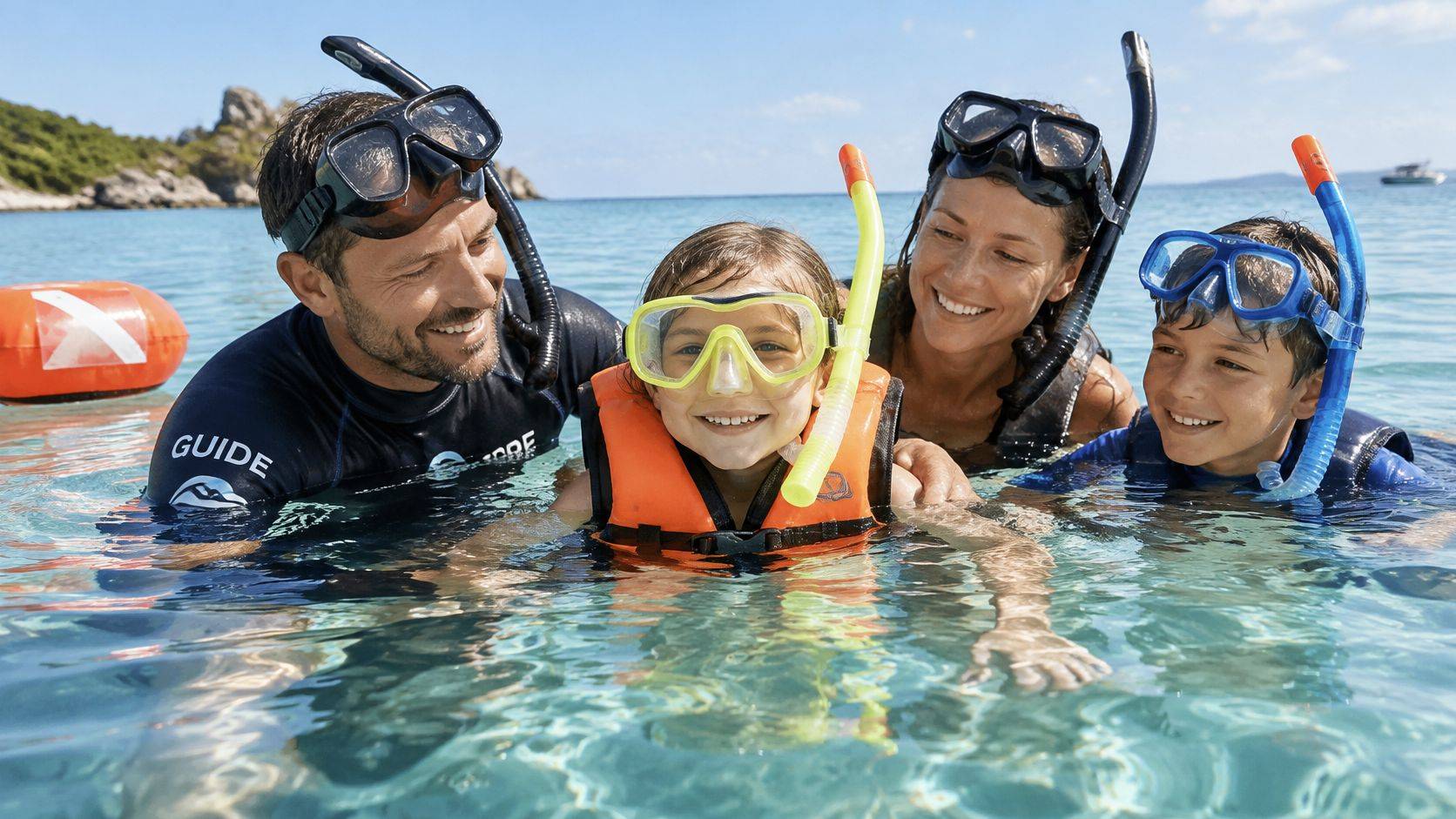
Our lifeguard-certified guides swim with guests, and we provide flotation noodles or vests. Children should remain within an accompanying adult's reach, with that adult focused on supervision rather than photography. Guide support doesn't replace a parent's attention or make a non-swimmer ready for open water.
For a leaking mask, stop swimming, use support, and let the guide check for trapped hair, a folded skirt, or a displaced strap before reseating it. For loose fins, have the fit or heel strap adjusted before continuing. Don't stand on the reef to troubleshoot either problem.
Safety first: Ask for help while you can still explain what's wrong.
Adventure Medical Kits' marine emergency response guide is useful preparation for companions who want to understand drowning response without improvising a risky rescue. A briefing is valuable, but it doesn't replace honest self-assessment.
Reef Rules and How Your Visit Protects the Bay
Kealakekua Bay is a protected marine district with rules that vary by subzone. The Division of Aquatic Resources' Kealakekua Bay regulations prohibit fishing, taking or injuring marine life, including eggs, as well as feeding fish and removing or altering sand, coral, rocks, or other geological features. Narrow exceptions apply to specific activities in Subzone B; they are not general permission for visitors.
For snorkelers, the practical rule is simple: observe without collecting, feeding, touching, or harassing. Heavy visitation and coral bleaching put added pressure on the bay's reef. NOAA's Kealakekua Bay restoration document describes a planned effort to restore coral reef and coastal habitat. Restoration also depends on limiting avoidable stress, including sediment, trampling, litter, and wildlife disturbance.
Make low-impact behavior automatic
- Keep clear of coral. Don't touch or stand on it, even while adjusting equipment. If you need to stop, use your flotation support and stay clear of the reef.
- Give wildlife room to move. Don't chase, surround, or block an animal's route for a closer look or photograph.
- Follow the guide's route. Shortcuts over shallow reef can damage coral, and gathering tightly in one spot concentrates pressure.
- Leave natural materials in place. Shells, rocks, sand, and living organisms are part of the protected bay.
- Choose sun protection carefully. A sun shirt reduces the need for sunscreen; no product label means zero impact.
The restrictions protect a living reef and a historically significant place. Read more about why Kealakekua Bay is protected before your visit, and follow the guide's directions in the water. Access and management can change as habitat needs change, so treat today's opportunity to snorkel as a responsibility, not a guarantee.
What to Bring and What the Crew Provides
Pack for a wet boat outing rather than a beach day with somewhere to spread everything out. Keep the essentials together so you're not opening several bags while the crew prepares to depart.
- Swimsuit. Wear it under your clothes to simplify boarding.
- Towel and dry clothes. Keep them protected for the return ride and drive.
- Hat and sunglasses. Secure them before the boat gets moving.
- Sun shirt. Use coverage as your main sun-protection tool.
- Reef-safe, non-aerosol sunscreen. Bring this rather than a spray, and follow the crew's bay-protection directions.
- Dry bag. Put your phone and keys inside, then close it correctly.
- Seasickness medication if needed. Use an appropriate option according to professional advice and the product directions.
Leave unnecessary equipment behind
We provide sanitized masks, snorkels, and fins, fit them to each guest, and demonstrate how to use them. Flotation noodles or vests are available too, so you don't need to buy snorkeling equipment solely for this outing.
Use the fitting time actively. Check that the mask skirt sits against your skin without hair underneath, and tell the guide if fins pinch or slide. Tightening a mask excessively isn't a reliable fix for a poor seal.
Our guides handle the equipment, steer the boat, and time the trip. That division of work lets you concentrate on listening, keeping track of your buddy, and entering without rushing. It doesn't mean you should ignore how your own equipment works.
Make harbor arrival straightforward
Parking at Honokōhau Small Boat Harbor is free, and we don't run hotel pickups, so you must arrange your own drive. Use the harbor check-in information in your confirmation rather than navigating to an office address.
Leave enough time to park, gather your bag, and complete check-in without squeezing everything against departure. Confirm your assigned arrival time when booking rather than treating the boat's departure time as the time to reach the parking area.
For help trimming your bag to the essentials, use our Kona snorkel-day packing guide. Pack one manageable bag, leave unnecessary valuables behind, and arrive ready to listen rather than still searching for sunscreen and keys.
Book Your Captain Cook Snorkel Trip
Choose a shared trip for individual seats or a private charter for your group to have the whole boat. Both options last four hours and include a stop in Kealakekua Bay. The shared trip suits individuals and smaller parties; the private charter is for groups who want exclusive use of the boat.
Shared versus private Captain Cook trips
Option — Price — Length and group — Departures
Shared Captain Cook Excursion — $149 per person — 4 hours, up to 18 guests — 8:30 AM to 12:30 PM or 11:00 AM to 3:00 PM
Private Captain Cook Excursion — $1,999 per charter — 4 hours, whole boat for up to 18 guests — Departure time arranged for your group
The shared excursion has two listed departure windows. Choose the private charter if exclusive use matters to your group. Neither option guarantees particular wildlife or changes the conditions on the water.
Complete the booking in order
- Choose shared or private. Select individual seats or a charter for your group.
- Select a departure. The shared excursion runs from 8:30 AM to 12:30 PM or 11:00 AM to 3:00 PM.
- Book your places. Call (808) 480-6611 or email info@captaincooksnorkelingtours.com.
- Save the check-in details. Boat check-in is at Honokōhau Small Boat Harbor in Kailua-Kona. Parking is free, and hotel pickups are not provided, so plan to drive to the harbor.
- Confirm everyone is ready to participate. Raise health concerns or uncertainty about snorkeling before departure.
Review the Captain Cook Excursion details and booking options before choosing your trip.
Choose a departure your group can manage comfortably, then check availability before making other plans for the day. The captain's judgment about water conditions and guest safety takes priority over the schedule.
Captain Cook Snorkeling Tours takes guests by boat to Kealakekua Bay, where the crew guides visitors through the reef and shares the area's history. Contact Captain Cook Snorkeling Tours to plan your visit to the Captain Cook Monument.