
Captain Cook Snorkeling Tours: Morning or Afternoon?
Captain Cook snorkeling tours in Kealakekua Bay compared: morning vs afternoon departures, wildlife, safety, gear, prices and how to book.
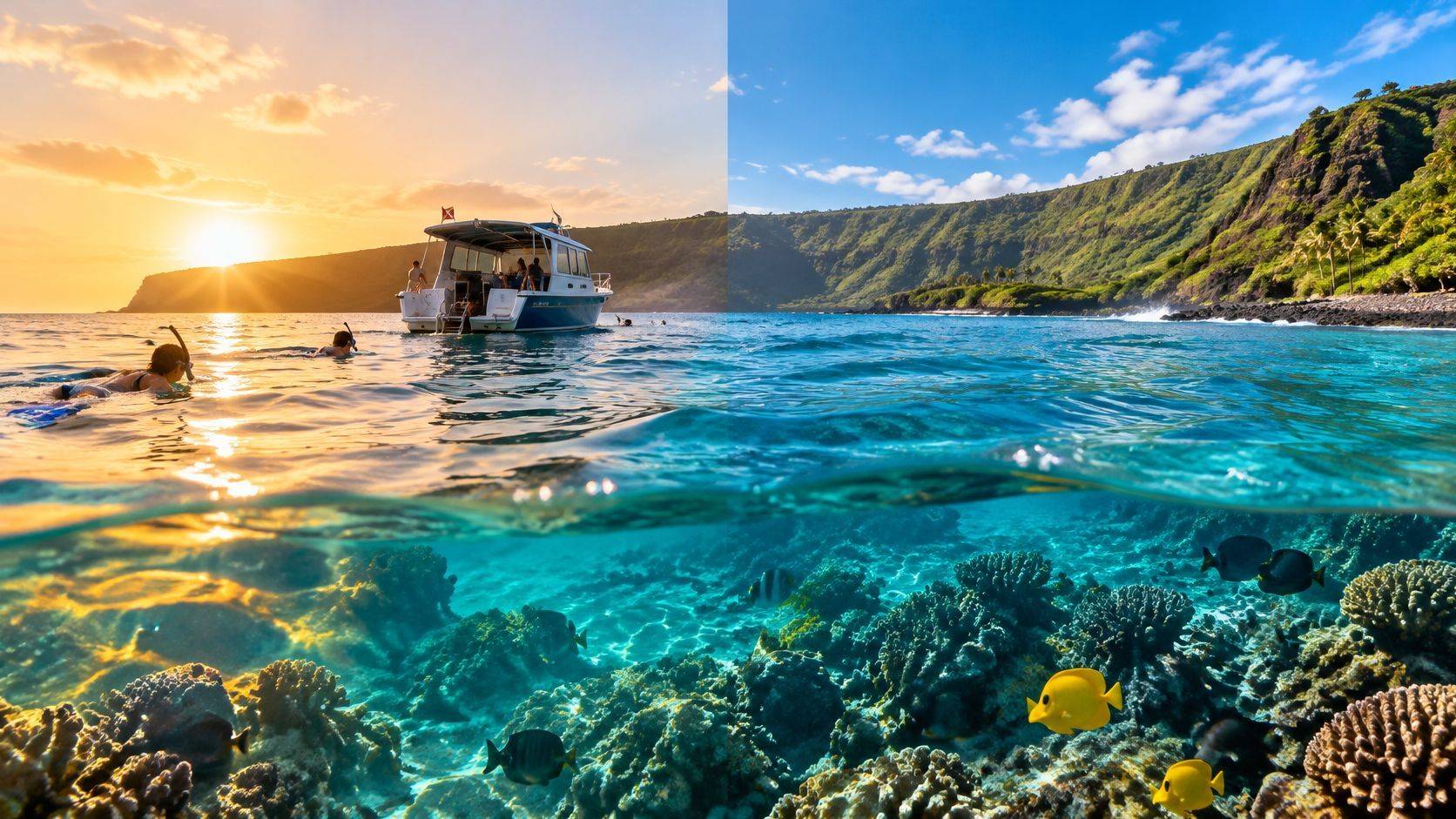
You're sitting with two departure times open on your phone, photos of Kealakekua Bay on every tab, and one practical question. Do you get up early for the calm water, or do you take the slower morning and accept more chop? That's the right question to ask before price or boat size, because on Captain Cook snorkeling tours the departure window shapes your visibility, your effort in the water, and how relaxed you feel over the reef.
Choosing a Morning or Afternoon Captain Cook Departure
Take the morning if water quality is your priority. Both shared trips run 4 hours at $149 per person, with the morning slot at 8:30 AM to 12:30 PM and the afternoon slot at 11:00 AM to 3:00 PM, so you're not choosing a longer tour. You're choosing conditions. Morning usually gives you calmer water, clearer viewing, and more active fish, while wind and surface chop tend to build as the day warms.
That difference matters more than most comparison pages admit. A little chop doesn't ruin a snorkel for a confident swimmer, but it makes a first-timer work harder to keep a mask sealed, breathe steadily, and stay near a guide. Calm water lowers that effort from the first minute.
Morning vs Afternoon Departure Compared
Factor — Morning departure — Afternoon departure
Water and wind — Usually calmer, with less surface chop — Wind and chop often build as the day warms
Visibility — Generally clearer water — Can decline as surface conditions change
Marine activity — Often more active early in the day — Usually quieter than early morning
Sun and heat — Cooler air and softer sun on the water — Warmer, stronger sun; sunscreen reapplication matters more
Crowds on the water — Earlier boats reach the bay before later traffic builds — More vessels and paddlers are typically already out
Best for — First-timers, photographers, families with young swimmers — Late risers and guests who prefer a slower start
Use the table. If you're bringing a camera, morning light and clearer water give you cleaner shots with less surface glare to fight. If you're traveling with young swimmers, calm entry conditions matter more than sleeping in, because tired kids recover faster than nervous kids who spent an hour fighting chop.
A Short Decision Test
- Choose morning: You're new to snorkeling, you get uneasy in open water, or you want the best chance at clear photos.
- Choose morning: Your group includes young children or anyone who tires quickly while swimming.
- Choose afternoon: You can't realistically wake early, you're arriving from another activity, or a slow vacation start matters more than glassy water.
- Choose afternoon: You're a comfortable swimmer who won't mind working a bit harder if wind picks up.
Practical rule: Pick the window that matches your swimming comfort first and your sleep schedule second. You'll remember how the water felt long after you forget what time you woke up.
Don't book the afternoon and then hope for morning conditions. Kona weather can surprise you in either direction, but the pattern is consistent enough to plan around. Fix your window here, then compare the exact slots when you book.
Sample Days From Harbor to Reef
You arrive at Honokōhau Small Boat Harbor in Kailua-Kona, check in, board, and receive the crew briefing before departure. Get mask questions answered there, while you are still dry and can hear clearly. The crew explains entry, boundaries, and signals on the dock, not once you are already floating.
The run south covers 15 miles of lava coastline each way, from Honokōhau Harbor to Kealakekua Bay and back. Treat that ride as part of the trip. The harbor clutter gives way to black rock and an empty shore, and you step into the water calmer than someone who sprinted from a parking stall straight into a mask.
At the Bay
The boat anchors in the calm, protected water of Kealakekua Bay, tied up off the white obelisk of the Captain Cook Monument. You get 1 hour in the water with the crew nearby. Then the crew calls everyone back on board for the return run. That hour goes fast. Guests who kick hard across the reef see less than guests who float, scan ahead, and pause over coral.
Boat access is what makes that stop workable. Reaching the monument and the snorkel spot by land means a multi-mile hike down a steep trail with no facilities. Skip the hike and your legs and lungs are still fresh when you hit the reef.
The bay's rules shape what the hour feels like. Vessels need a permit before they enter the bay, and a swim and snorkel area along the Kaʻawaloa shoreline stays separate from powerboat traffic. You watch fish instead of checking over your shoulder for hulls.
The Afternoon Version
The later departure uses the same harbor check-in, the same coastline, and the same reef stop. What changes is the light and the heat. You ride and swim under a higher sun, surface glare is stronger, and a sun shirt plus water on the boat matter more. Reapply sunscreen before the ride back.
Budget the whole slot, not only the swim. On the 8:30 AM to 12:30 PM trip, leave time to drive and check in before 8:30, and do not stack anything tight right after 12:30. On the 11:00 AM to 3:00 PM trip, protect the middle of the day the same way. Rush the harbor and you start a good reef stop already frazzled.
Who Can Join Safely Across Skill Levels and Health
Your group checks in at Honokōhau, rides about 15 miles of lava coastline, and steps into calm water off the Captain Cook Monument. The bay is protected, so the snorkel stop is quieter than the crossing that got you there. The reef is still deep, open water. You cannot stand on living coral to rest, and standing on it damages the habitat you came to see.
Skill matters less than honesty about that setup. Confident swimmers can use the full stop. Beginners can join if they will float and stay near a guide. Prior snorkeling experience is optional. Athleticism is not the test.
Who Can Join and What to Know
Guest — Can join? — What to know
Confident swimmers — Yes, full snorkel stop — Comfortable in deep, open water; pace yourself over the reef
Beginner snorkelers — Yes, with flotation — Noodles or vests are handed out; guides keep novices close
Non-swimmers — Ride along, stay on the boat — Enjoy the coastline and monument from the deck; skip the water
Children — Yes, with a supervising adult — One adult stays close; put children in flotation
Pregnant guests, or guests with health concerns — Ask a doctor first — Motion, breathing, and balance differ from a calm beach entry
The departure window changes how that crossing feels, not who the reef is for. The 8:30 AM to 12:30 PM trip puts the open-water ride in the cooler part of the day. The 11:00 AM to 3:00 PM trip runs the same route under stronger sun, so heat and glare sit on top of any motion. Neither slot turns the bay into a pool. A land approach is a multi-mile hike down a steep trail with no facilities, which the boat avoids, and you still finish in water where you cannot touch bottom to recover.
Support in the water is real. Lifeguard-certified guides swim with guests over the reef, and flotation noodles or vests go out on the tour. Use them if they help you relax. Mixed groups do better when the strongest swimmer does not set the pace. Keep one adult with younger children, and keep beginners within sight of a guide.
If motion on the boat worries you, read how to avoid sea sickness before you book, and tell the crew early if you start feeling off.
If you are pregnant or managing a health issue, talk to your doctor before you pay. A clear no at home beats a hard crossing and a snorkel that asks more of your breathing and balance than a beach entry.
What to Bring and When Conditions Change Your Plan
Your departure time shapes the day, but conditions on the water shape the snorkel. Pack for sun and a wet return, then let the crew decide whether the bay is safe to enter.
Wear your swimsuit under your clothes and bring a towel, hat, sunglasses, and a sun shirt. Apply reef-safe, non-aerosol sunscreen before boarding. The crew provides sanitized masks, snorkels, and fins, checks the fit, and handles the gear, boat navigation, and trip timing. For a fuller packing list, see what to pack for a snorkel day in Kona.
Plan to drive to check-in at Honokōhau Small Boat Harbor. Parking is free, and the tour does not provide hotel pickups. Build the drive into your departure-day schedule.
When the Crew Changes the Plan
The Hawaiʻi Ocean Safety snorkeling guidance identifies high surf, strong winds, heavy shorebreak, strong currents, and murky water as unsuitable snorkeling conditions. Morning departures are often favored in local guidance for calmer water and better visibility, but conditions can change. Your departure window is a starting point, not a promise about what the bay will be like.
The crew weighs wind, swell, current, visibility, vessel traffic, and the group's ability before anyone enters the water. If conditions exceed the group's capability, the crew may change the site or cancel. Take that decision seriously. Protected water in Kealakekua Bay can make for a calmer reef stop, but it does not remove the need to assess conditions on the day.
Listen closely to the crew's instructions and keep your effort measured, especially when you first start breathing through a snorkel. If boat motion is your main concern, eat lightly, look toward the horizon, and find fast relief from cruise nausea. Check the forecast the day before and pack for strong sun.
Kealakekua Bay History and Marine Life
You pull up to a white obelisk on a lava shore, the boat ties off, and only then do you drop into the water. That order changes the swim. Hawaiian history and a fatal encounter with a British expedition sit on the same shoreline you are about to float in front of.
Cook, Kaʻawaloa, and the Monument
The Hawaiʻi Division of Aquatic Resources page on Kealakekua Bay records that Captain James Cook first arrived in Hawaiʻi in 1778, reached Kealakekua Bay in January 1779, was killed the following month at Kaʻawaloa Cove, and is honored by a 27-foot monument erected near the site in 1878. Ruins of the ancient village of Kaʻawaloa remain on the lava flats behind it.
Reaching that monument by land means a multi-mile hike down a steep trail with no facilities. The boat skips that climb. You enter with your legs fresh, which is the difference between a steady hour over the reef and a tired kick after a hot descent and a climb you still have to make.
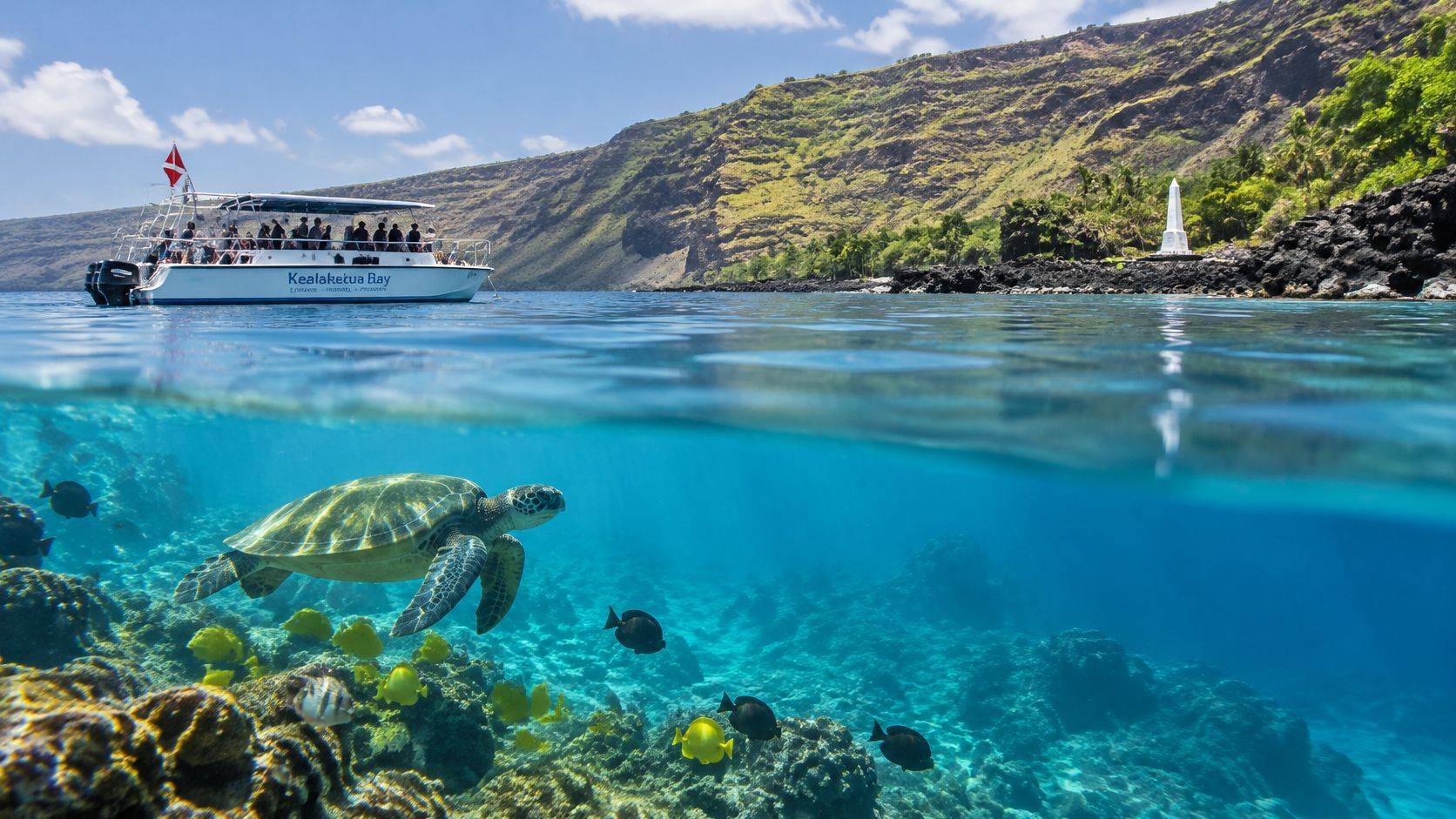
Guides share narratives about Cook's legacy while they take you through the coral. Listen on the ride in. The shoreline reads differently once you are floating in front of it.
Protected Water, Living Reef
The Hawaiʻi Division of Aquatic Resources description of the Kealakekua Bay MLCD states the Marine Life Conservation District was established in 1969, covers 315 acres from Cook Point to Manini Beach Point, and is split by a line from Cook Point to the north end of Nāpōʻopoʻo Beach into Subzone A and Subzone B. The district exists because of the bay's high-quality marine environment and biological diversity. It is set up mainly for non-consumptive use: swimming, snorkeling, diving, and underwater photography.
That protection is why the stop at the monument still holds vibrant coral and countless reef fish. The boat anchors in calm, sheltered water off the white obelisk, so you can float, look down, and see structure instead of fighting an open-coast chop. Dolphins appear on some trips when they are already in the bay. Book the hour for the reef. Anything larger is a bonus.
Read why Kealakekua Bay is protected before you go so the rules below make sense as care for the reef, not harbor paperwork.
Rules That Protect What You Came to See
- Coral: Never stand on it or touch it. Float over structure and keep your fins up in shallow spots.
- Fish and turtles: Watch from a respectful distance and let animals choose how close they get.
- Sunscreen: Wear reef-safe, non-aerosol sunscreen. Treat that as best practice on this reef.
- Gear and trash: Leave nothing behind, and secure loose items before you enter.
- Guide signals: Follow them immediately, even if you were mid-photo.
Slow down, float first, then explore. Guests who scan ahead into the blue and pause over coral see more fish than guests who kick hard and stare straight down.
Captain Cook Snorkel Tour FAQ
Can Non-Swimmers Join
Yes, as ride-along guests. You'll enjoy the boat trip and the bay from on board, but you won't enter the water. Don't book a non-swimmer hoping flotation will solve it at the reef.
What Is the Youngest Age Allowed
Children aged 3 or older can join, with a parent or guardian supervising at all times. Put young children in flotation and keep an adult within arm's reach in the water.
Are Dolphins and Manta Rays Guaranteed
No. Dolphins appear on some trips, and manta rays are hoped for but not promised on a snorkel stop. The coral and reef fish are the reliable draw here.
Is There Hotel Pickup
No. You'll drive to Honokōhau Small Boat Harbor in Kailua-Kona, where parking is free. Plan your drive the night before so check-in stays calm.
What Happens If the Weather Turns
The crew weighs wind, swell, current, and visibility before anyone enters the water. If conditions exceed the group's capability, the site moves or the trip cancels. That's a safety call, not a refund debate to have at the rail.
What Does It Cost
The shared excursion is $149 per person for up to 18 guests. The private charter is $1,999 per charter for the whole boat.
Book Your Captain Cook Snorkel Tour Today
You are at the harbor with the morning still cool, and the slot you book decides the water you get. Take the shared trip if you want the reef at a per-person price. Take the private charter if your group wants the whole boat and control of the pace. Details for the shared trip are on the Captain Cook Excursion page, and the route is on the Captain Cook snorkel tour page.
Captain Cook Excursion Options Compared
Option — Price — Duration — Group size
Shared Captain Cook Excursion — $149 per person — 4 hours — Up to 18 guests
Private Captain Cook Excursion — $1,999 per charter — 4 hours — Up to 18 guests on the whole boat
Shared departures run 8:30 AM to 12:30 PM or 11:00 AM to 3:00 PM. Book the morning when calm water matters most. The boat covers 15 miles of lava coastline from Honokōhau Harbor to Kealakekua Bay, then ties up for one hour off the white obelisk of the Captain Cook Monument. That boat stop is the trip. Reaching the same monument on foot is a multi-mile hike down a steep trail with no facilities. Afternoon boats still anchor in the bay's calm, protected water, but the ride out is more likely to be choppy, so use that window only if the schedule forces it and the swimmers can handle it.
Check in at Honokōhau Small Boat Harbor, where parking is free. The office is at 74-5583 Luhia St, Unit A12B, Kailua-Kona, HI 96740. Book by phone at (808) 480-6611 or by email at info@captaincooksnorkelingtours.com.
Lifeguard-certified guides fit sanitized masks, snorkels, and fins, hand out floatation noodles or vests, and swim with you over the reef. Once the boat is tied off, the protected water is what you feel: clearer and closer to the monument than any shore entry.
Pick the window that matches your swimming comfort, lock that slot before calm days fill, and pack reef-safe sunscreen tonight. When you are ready to choose the departure, go to Captain Cook Snorkeling Tours and book the day on the water.