
Captain Cook Snorkel Tour Guide for 2026
Plan a Captain Cook snorkel tour in Kealakekua Bay: times, reef highlights, who can swim, packing, conservation rules, and how to book.
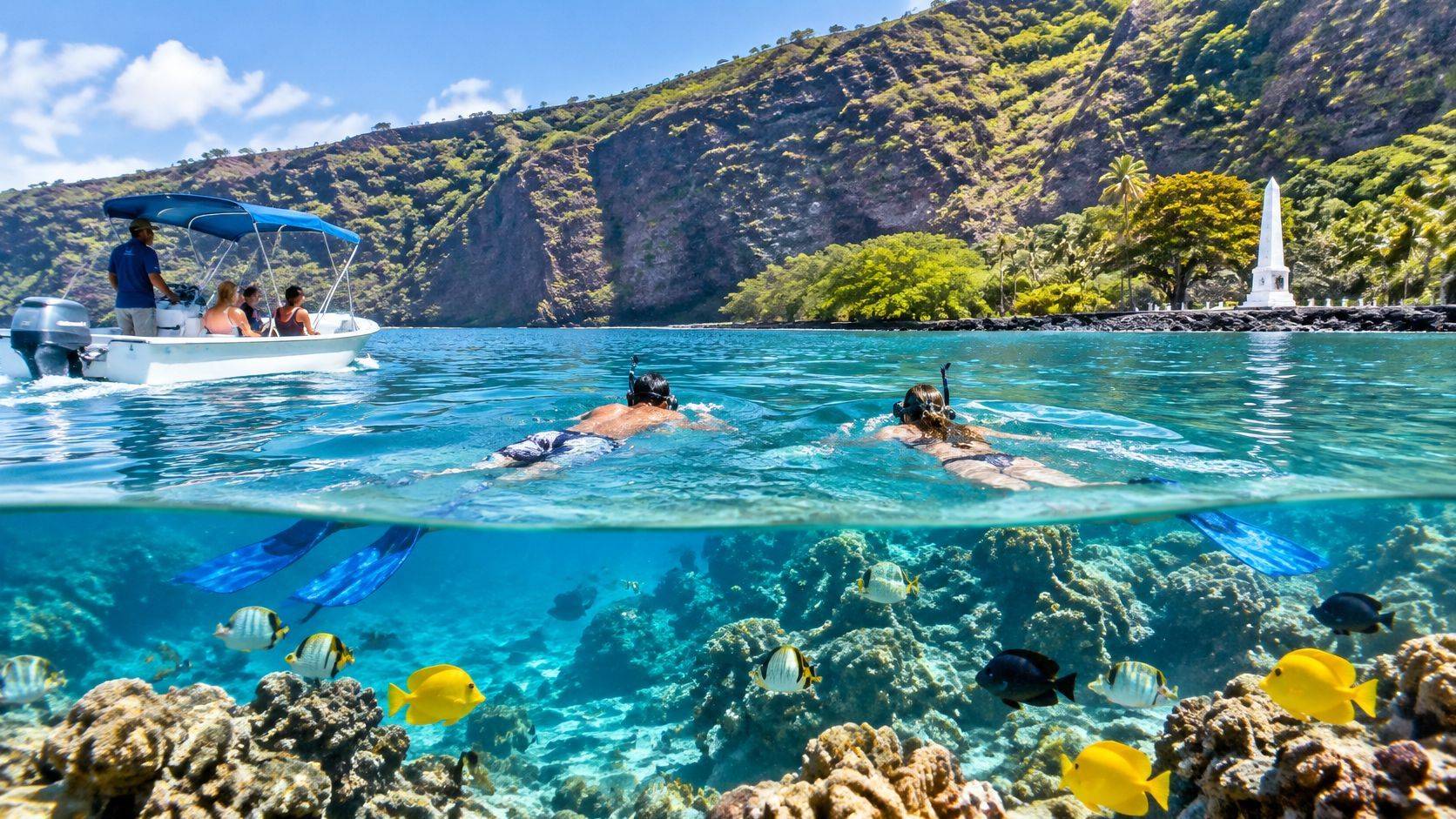
You're standing at Honokōhau Small Boat Harbor with a towel over your arm, watching a refitted Navy SEAL hull pull against its lines. The crew is loading fins and noodles, the deck is already warming in the morning sun, and you're trying to remember whether you packed the reef-safe sunscreen. This is the quiet moment before a Captain Cook Snorkel Tour, and it's the right time to get clear on what the next four hours involve.
The boat will cover about 15 miles of lava coastline each way, but the heart of the trip is one hour in the water off a white obelisk in Kealakekua Bay. That hour looks different depending on whether you can swim confidently, whether you booked the morning or midday run, and how the swell behaves under the pali. This guide walks through each of those pieces in order, so you can make one decision before you board: who goes in the water, and who stays on the rail with a cold drink and a clear view of the reef.
What a Captain Cook Snorkel Tour Covers
Kealakekua Bay is the center of the trip. Captain Cook Snorkeling Tours takes guests by boat into the bay, where the white obelisk of the Captain Cook Monument stands on the shoreline. The snorkel stop is timed for one hour in the water, with the boat tied up off the monument in protected water. The crew calls guests back aboard when the hour is up.
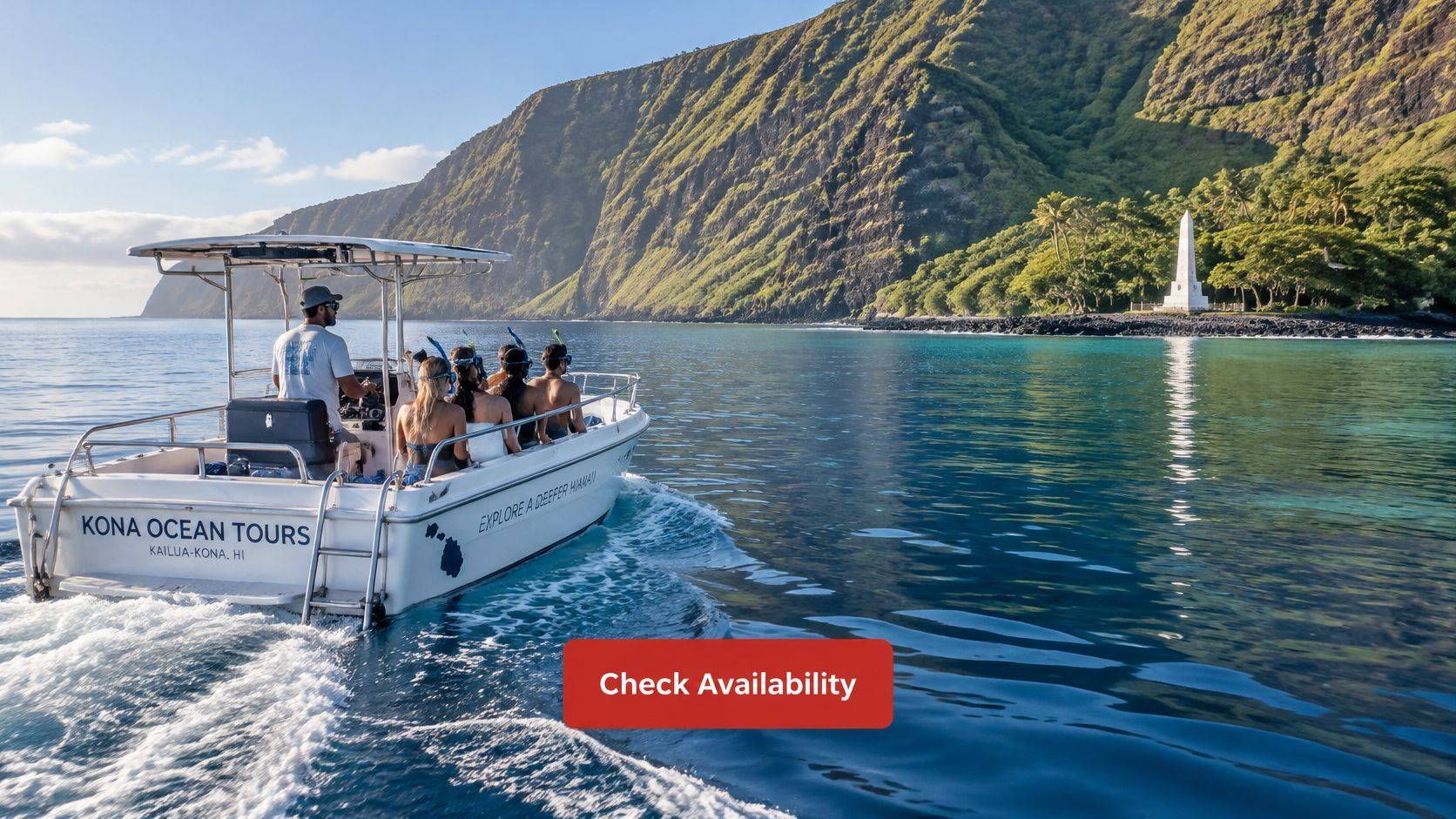
The setting is part reef, part history lesson. The Hawaiʻi DBEDT data book identifies Kealakekua Bay as the location of the first extensive contact between Native Hawaiians and Westerners, following Captain James Cook's arrival in 1779. Cook had first reached the Hawaiian Islands in 1778, but his second visit to this bay became the defining event. On a guided tour, guides share narratives about Captain Cook's legacy while leading guests through coral reefs and encounters with marine species.
A respectful reading: The name "Captain Cook" carries more than a tourism label. An honest telling includes Cook's death in this bay in 1779 and the Native Hawaiian history surrounding it. The guides can share that context while keeping the focus on the water, the reef, and the species guests may see.
The boat matters here. Reaching the Captain Cook Monument and the snorkel spot by land requires a multi-mile hike down a steep trail with no facilities, followed by the same climb back. Captain Cook Snorkeling Tours avoids that route by taking guests by boat from Honokōhau Small Boat Harbor to Kealakekua Bay and back. That keeps the day centered on the reef instead of the trail.
A guided tour also removes several small decisions from the guest's plate. The guides hand out sanitized snorkel gear, including a mask, snorkel, and fins, then make sure it fits. They show guests how to use the gear and hand out floatation noodles or vests. Lifeguard-certified guides swim with guests over the reef, while the guides handle the gear, steer the boat, and time the trip.
Think of the structure as a three-part system: boat travel, gear briefing, then one focused snorkel stop. You are not asked to find the reef, manage the route, or guess when to return. The boat is tied up off the monument, the guides are in the water with the group, and the crew sets the pace for getting back on board.
Morning and Midday Itineraries Side by Side
The day looks almost identical whether you book the 8:30 AM or 11:00 AM departure. The choice is mostly about light, warmth, and how many other boats are already in the bay. Here's the shape of the shared trip:
Departure — Clock — In the water — Route feel — Best if you want
Morning shared tour — 8:30 AM–12:30 PM — About 1 hour off the monument — 15 miles of lava coast each way, often calmer early — Clearer light, fewer boats, first-timers
Midday shared tour — 11:00 AM–3:00 PM — About 1 hour off the monument — Same coast and sea caves on the return — A later start and warmer afternoon water
Both departures share the same structure. Check-in is at Honokōhau Small Boat Harbor in Kailua-Kona, 15 to 20 minutes before departure, with free parking and no hotel pickup, so you'll drive yourself. The route runs south along lava cliffs, sea caves, and tubes for roughly 15 miles each way. Then the boat ties up in protected water off the white obelisk of the Captain Cook Monument, and you get about one hour in the water. Lifeguard-certified guides swim with the group over the reef during that stop, and the crew calls everyone back aboard when the hour is up. The return follows the same coastline.
What "often calmer early" actually means
The 8:30 AM shared trip is the quiet first seating. Wind and swell on this coast tend to build through the day, so the early departure gives you a better shot at glassy water under the pali, clearer photos, and a less crowded first look at the reef. That's the trip to choose for a first-time snorkeler or anyone who gets nervous in moving water.
The 11:00 AM shared trip is the same route with a later clock. The water may be warmer by midday, the light is higher, and the bay can feel busier once the kayak launches and other boats have arrived. You still get a full hour off the monument, and the sea caves and lava tubes look just as sharp on the return.
One honest note: this boat is a refitted former Navy SEAL hull, so the ride feels adventurous rather than like a flat ferry. If you're prone to motion sickness or you're bringing someone with back or neck concerns, the hull ride matters more than the hour of snorkeling. Timing and sea state matter more than a promise of perfect glass.
The schedule only matters if you're the right person to get in the water. That's the next screen.
Who Should Snorkel and Who Should Stay Aboard
"Beginner-friendly" and "safe for non-swimmers" are not the same sentence. A beginner-friendly trip means a confident basic swimmer can float in deep open water with fitted gear, a guide nearby, and a clear plan for getting back to the boat. It does not mean flotation gear makes open-water snorkeling suitable for someone who cannot swim. Think of a noodle as a seat belt, not an engine. It helps you stay at the surface; it does not move you safely through a one-hour reef stop.
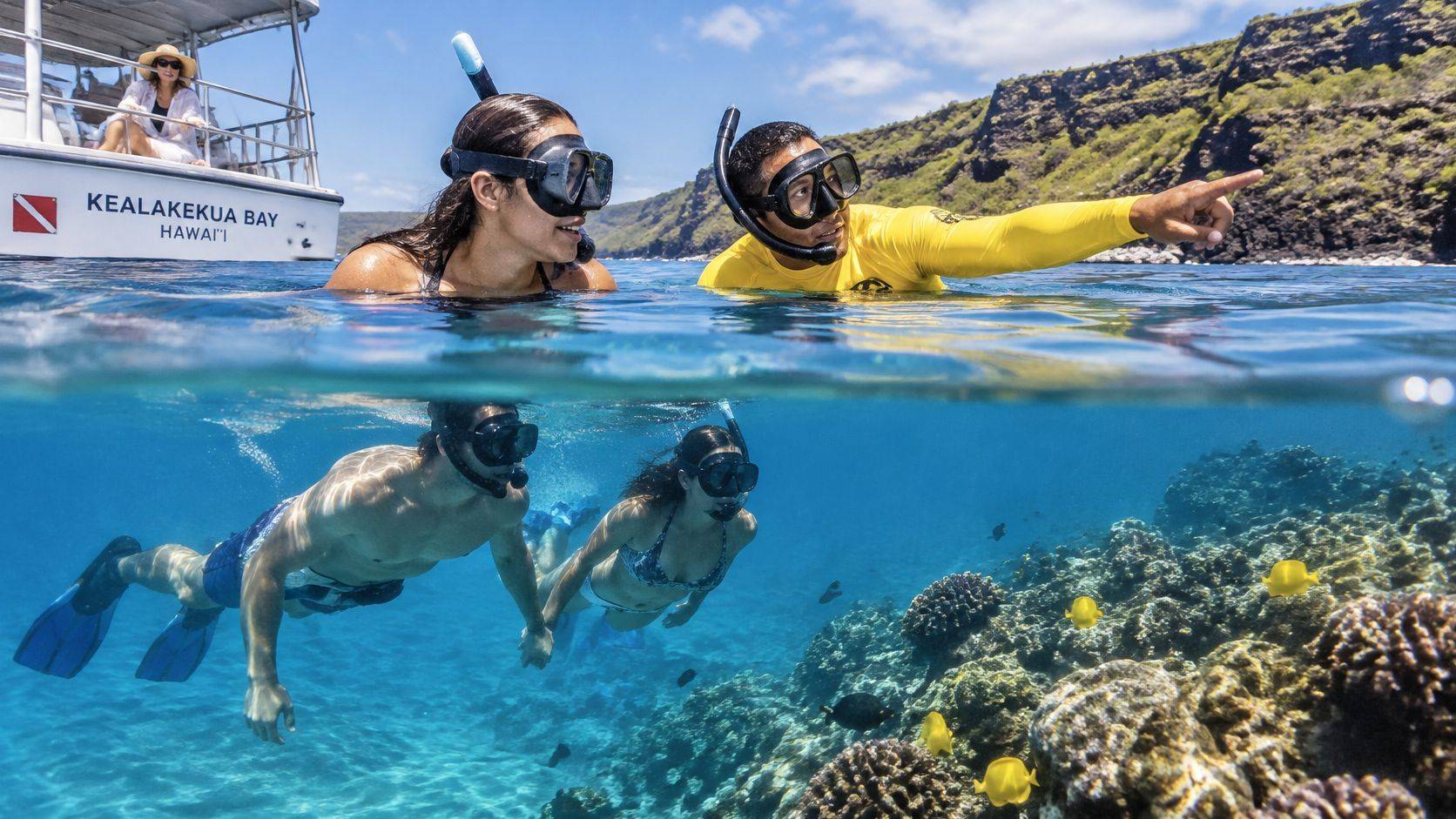
On a Captain Cook Snorkeling Tours trip, the crew hands out sanitized snorkel gear, masks, snorkels, and fins, then checks the fit. Guides show guests how to use the gear, hand out floatation noodles or vests, handle the gear and boat, and time the trip. Lifeguard-certified guides swim with guests over the reef during the snorkel stop. That support matters, but it works best when each guest is honest about swimming ability before stepping aboard.
Guest — In the water? — Practical note
Confident swimmer, any experience level — Yes, with fitted gear and a guide — Noodles or vests can help you float; you still cannot stand on coral
Non-swimmer or flotation-only — No; ride the boat and stay aboard — A noodle or vest does not replace swimming
Guest unsure in open water — Stay aboard unless the crew says conditions and fit are right — Deep water over the reef is different from a pool edge
Guest who tires easily — Decide with the crew at the stop — Flotation can reduce effort, but the hour still asks for steady swimming
Guest who prefers history and scenery — Yes, from the boat — The route reaches the monument without the steep land trail
Guest without snorkel experience — Yes, if comfortable swimming — Guides explain the gear before the water stop
The hard edges, in plain language
The Hawaii Department of Land and Natural Resources ocean-safety guidance warns that high surf, strong winds, heavy shorebreak, and currents make poor snorkeling conditions, and it recommends checking conditions, snorkeling with a buddy, and maintaining visual contact. Kealakekua Bay's official management page adds that conditions can become dangerous during high surf and Kona storms, and that there are no lifeguards at Nāpōʻopoʻo Beach. The crew's lifeguard-certified guides are not a substitute for choosing a day and a water entry that fit your ability.
A non-swimmer can still have a good tour by staying on the boat. That choice keeps the guest with the group, avoids the mismatch between open water and pool confidence, and still gives access to the bay by boat rather than the multi-mile hike down a steep trail with no facilities. The boat is tied up off the white obelisk of the Captain Cook Monument during the one-hour snorkel stop, so staying aboard means remaining close to the reef, the guides, and the return point.
The one-line self-test: If you cannot swim a short distance in open water without panic, ride the boat and enjoy the bay from the rail. There is no shame in staying aboard, and it is easier to decide that before the gear goes on than during the stop.
Guides share Captain Cook's legacy while leading guests through coral reefs and encounters with marine species, so the boat can be the right seat for people who came as much for place and history as for underwater time. The trip also has a fixed rhythm: the crew handles the boat and gear, guides enter the water with guests, and the crew calls everyone back after the snorkel hour. That rhythm suits snorkelers who accept passive viewing over chasing wildlife.
Experienced snorkelers fit well when they treat the reef like a library rather than a playground. Look, float, and move slowly. Give the coral the same respect you would give glass shelves in a crowded room. The schedule does not flex around one guest who wants extra water time, and the reef cannot be touched.
Reef Zones Fish and Dolphins You May See
The reef above the white obelisk works like a shoreline with layers. Near the surface, coral heads sit in bright, shallow water. Along the deeper edges, caves, crevices, and ledges add shade and structure. The Hawaiʻi Division of Aquatic Resources documents encrusting corals, caves, crevices, and ledges down to approximately 30 feet, with abundant coral and marine life visible in water as shallow as about 5 feet. A first-time snorkeler can float at the surface and look straight down. A stronger swimmer can read the relief along the deeper edge without turning the stop into a breath-hold contest.
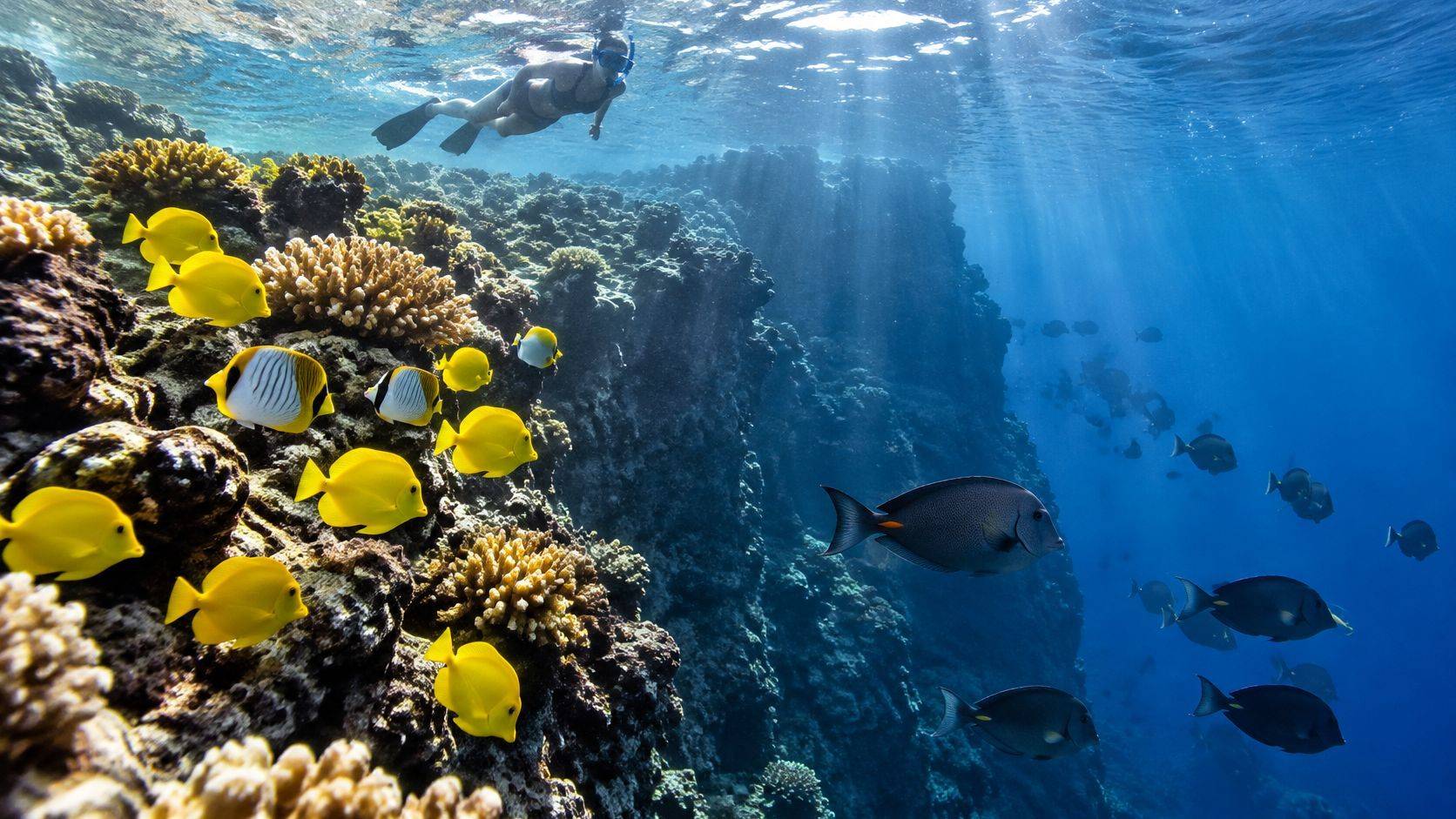
The same relief that makes the reef interesting also creates contact risk. Fins, hands, and flotation gear can strike coral when someone chases a yellow tang into a crevice. On Captain Cook Snorkeling Tours, lifeguard-certified guides swim with guests over the reef during the snorkel stop. Keep a horizontal body line, never stand on or grab the reef, and signal a guide if you need help clearing your mask. If you must adjust gear, do it while floating clear of coral.
The boat ties up off the Captain Cook Monument for a one-hour snorkel stop in the protected water of Kealakekua Bay. That hour moves quickly when you treat the reef like a museum room, not a course to cross. Start with the easy surface view, then settle your breathing before looking closer. The guide's job is to keep the group oriented and call everyone back aboard when the stop ends.
Honest wildlife expectations
Expect fish before you expect big animals. In the shallow reef, look for yellow tang, butterflyfish, parrotfish, and other reef fish moving over coral heads. Green sea turtles are possible but never guaranteed. Dolphins may appear on the ride or outside the snorkel zone at a distance, and the crew keeps that encounter passive. If you want to understand the ethics before you go, read this ethical guide to swimming with dolphins in Hawaii. Manta rays belong to a separate night trip and are not a reliable daytime sighting at this bay stop.
Conditions decide which part of the reef makes sense that day. The northeastern side below the pali is the snorkel area in calm conditions, and the crew weighs wind, swell, current, participant ability, and visibility together. Water clarity alone is a poor benchmark. A flat, crystal-clear morning with a stiff offshore current can be harder than a slightly hazy afternoon with no swell.
A beginner's version of the same hour stays compact: float over shallow coral, breathe on a steady rhythm, and watch a butterflyfish work across a coral head. A stronger snorkeler can take in the same bay from the deeper edge, where ledges hold schools in blue water. Both experiences fit the protected reef, and both depend on staying still enough to let the bay show what it is doing.
What to Pack and How Harbor Check-In Works
A good harbor morning works like a well-labeled tackle box. Everything small has a place, and the crew can focus on the water instead of sorting bags at the dock. Captain Cook Snorkeling Tours hands out sanitized snorkel gear, including a mask, snorkel, and fins, then checks the fit and shows guests how to use it. Flotation noodles or vests are also handed out on the tour.
Bring:
- Swimsuit worn under clothes: You will board ready to get wet.
- Towel: Keep it easy to reach for the ride back.
- Hat and sunglasses: The boat ride is exposed to sun, and a secure hat is a smart choice in wind.
- Long-sleeve sun shirt: A rash guard or sun shirt gives steady sun coverage without frequent reapplication.
- Personal medication: Keep anything you may need during the four-hour trip in your bag.
- Reef-safe sunscreen: Choose a reef-safe option that fits your skin and the day's conditions.
Leave drones, single-use plastic, and loose items you might drop over coral at the hotel. The bay is a protected reef, and small habits add up.
The one decision that matters: arrive at the harbor early enough to check in calmly. A rushed arrival can turn gear fitting and instructions into a scramble.
Check-in is at Honokōhau Small Boat Harbor in Kailua-Kona. Parking there is free, and Captain Cook Snorkeling Tours does not run hotel pickups, so guests drive themselves. Give yourself time for Kona traffic, parking, finding the boat, using the restroom, and getting fitted before departure. The shared Captain Cook Excursion departs at 8:30 AM to 12:30 PM or 11:00 AM to 3:00 PM.
The shared Captain Cook Excursion carries up to 18 guests. That size keeps the group manageable when some people need a fin adjustment and others want a clear view from the bow. Guides are lifeguard-certified, handle the gear, steer the boat, time the trip, and swim with guests over the reef during the snorkel stop. For details before your harbor day, use the Captain Cook know-before-you-go guide.
If you want a broader sense of common first-boat-trip mistakes, San Diego boat tour pitfalls can still spark useful questions, such as where to meet, what to carry, and how much time to leave for check-in. Keep the local plan simple: confirm the boat, allow a buffer, and keep your bag small.
The physical checklist in order: swimsuit on under your clothes, towel, sun shirt, reef-safe sunscreen, phone number or booking confirmation, and an early arrival at the harbor. If plans change or you need to confirm details, call (808) 480-6611 or email info@captaincooksnorkelingtours.com.
How to Snorkel Without Harming the Bay
Kealakekua Bay absorbs more visitor pressure than almost any other snorkel spot on the Big Island, and every guest either adds to that load or subtracts from it. The 2025 Hawaii legislative testimony counted more than 53,000 visitors in 2024 and estimated total annual use above 600,000 people across the 315-acre Kealakekua Bay Marine Life Conservation District once permitted and unpermitted kayakers, swimmers, and other visitors were included. The same testimony referenced coral bleaching that affected more than 53% of the coral population. Numbers that size are why small groups and low-impact behavior matter beyond branding.
The bay has operated as a protected conservation district for decades, and repeated bleaching events have pushed restoration to the top of the state's priority list. The rules behind that protection translate into five habits you can hold yourself to:
- Look, don't take: Do not take or injure marine life or eggs. Watch the fish. Leave the shells, coral fragments, and everything else where you found it.
- Don't move the geography: Coral, sand, and rock stay put. No rearranging the reef for a better photo angle.
- Never feed fish: Tossing crackers or bread changes fish behavior and damages the ecosystem, and it's prohibited.
- Stay off the bottom: Do not stand, kneel, or grab. If you feel tired, signal a guide and float on your back.
- Keep distance from dolphins: Passive viewing at a distance. No chase, no swim-over, no motor toward a pod.
The physical setup reinforces those habits. A designated swim and snorkel zone keeps powerboats out of the shallows near the Kaʻawaloa shore, and anchoring rules keep ground tackle on sand and off the coral. The tour boat ties up in calm, protected water instead of dropping guests onto the monument flat. Permitted vessels generally cannot land at Kaʻawaloa Flat, so guests swim from the boat and the historical shoreline stays empty. The crew calls everyone back on board after they explore the reef.
That "stay off the bottom" habit is also the honest line between beginner-friendly and safe for non-swimmers. Floatation noodles and vests keep a nervous beginner horizontal and calm over the reef. A guest who panics and needs solid footing has none here, because the only footing available is living coral, so that guest belongs on the boat watching from the rail.
Reef-safe sunscreen prevents one narrow category of chemical damage. The bigger savings come from neutral buoyancy, a group of 18 or fewer, and a lifeguard-certified guide who briefs everyone before anyone jumps. The why-Kealakekua-Bay-is-protected explainer goes deeper on the marine-life conservation rules behind this stop.
What sustainable snorkeling actually looks like: One hour of passive looking, a horizontal body, a fin that never touches coral, and a boat that cancels in high surf or a Kona storm. That beats a longer visit that touches the reef.
The hour you choose is an impact choice too. Morning departures usually find calmer water under the pali and fewer overlapping boats in the bay, which means the reef hosts one small group at a time instead of three. A midday departure can still be responsible when the captain screens conditions and keeps the group at its 18-guest cap.
Choose a Shared Seat or the Whole Boat
The shared Captain Cook Excursion is the simpler choice when you want a set price and a set schedule. It costs $149 per person, lasts 4 hours, and carries up to 18 guests. Departures are 8:30 AM–12:30 PM or 11:00 AM–3:00 PM. For couples, friends, and first-time snorkelers, it works like joining a scheduled classroom lesson: the route, gear handling, boat timing, and snorkel stop are already organized.
The Private Captain Cook Excursion costs $1,999 per charter, lasts 4 hours, and covers your group of up to 18 guests on the whole boat. It makes more sense when your group already fills most of the seats and you want the pace shaped around your people. A family with kids, a group with nervous swimmers, or a camera crew that needs extra time at the stop may get more value from having the whole boat.
The decision that matters: Choose the shared seat for a straightforward per-person trip. Choose the private charter when the group itself is the reason for the day.
Use the timing to make the choice more precise. The morning departure, 8:30 AM–12:30 PM, suits guests who prefer an earlier start and the typically calmer conditions that make a first snorkel easier to read. The midday departure, 11:00 AM–3:00 PM, suits guests who want a later start. On a protected reef, timing is also about pressure: spreading groups across departures helps avoid crowding the same stop at the same moment.
If you want to compare travel styles before booking, you can compare cruise ships for a general sense of vessel-based trip formats. A snorkel charter is different. The value here is the four-hour route to Kealakekua Bay, the guided one-hour in-water stop, and the crew handling gear and boat timing.
Call (808) 480-6611 or email info@captaincooksnorkelingtours.com with health or group-size questions before you book. Be direct about swimming ability, mobility, and how many people are coming. That short conversation helps the crew put your group on the right run.
Captain Cook Snorkeling Tours takes bookings by phone at (808) 480-6611, and check-in for the boat is at Honokōhau Small Boat Harbor in Kailua-Kona. Parking there is free, and the tour does not run hotel pickups, so plan to drive yourself to the harbor. Once you arrive, the crew fits sanitized mask, snorkel, and fins, hands out flotation noodles or vests, and explains how to use the gear before the boat heads out.
The choice comes down to how you want the boat to function. On the shared excursion, you join up to 18 guests on a set departure. On the private charter, your group of up to 18 has the whole boat for $1,999. Pick the departure that fits your comfort with the water, then tell the crew what your group needs before the trip begins.