
Captain Cook Snorkel Tour: What to Expect on the Reef
Plan your Captain Cook snorkel tour: what the boat provides, reef life in Kealakekua Bay, who can join and how to book.
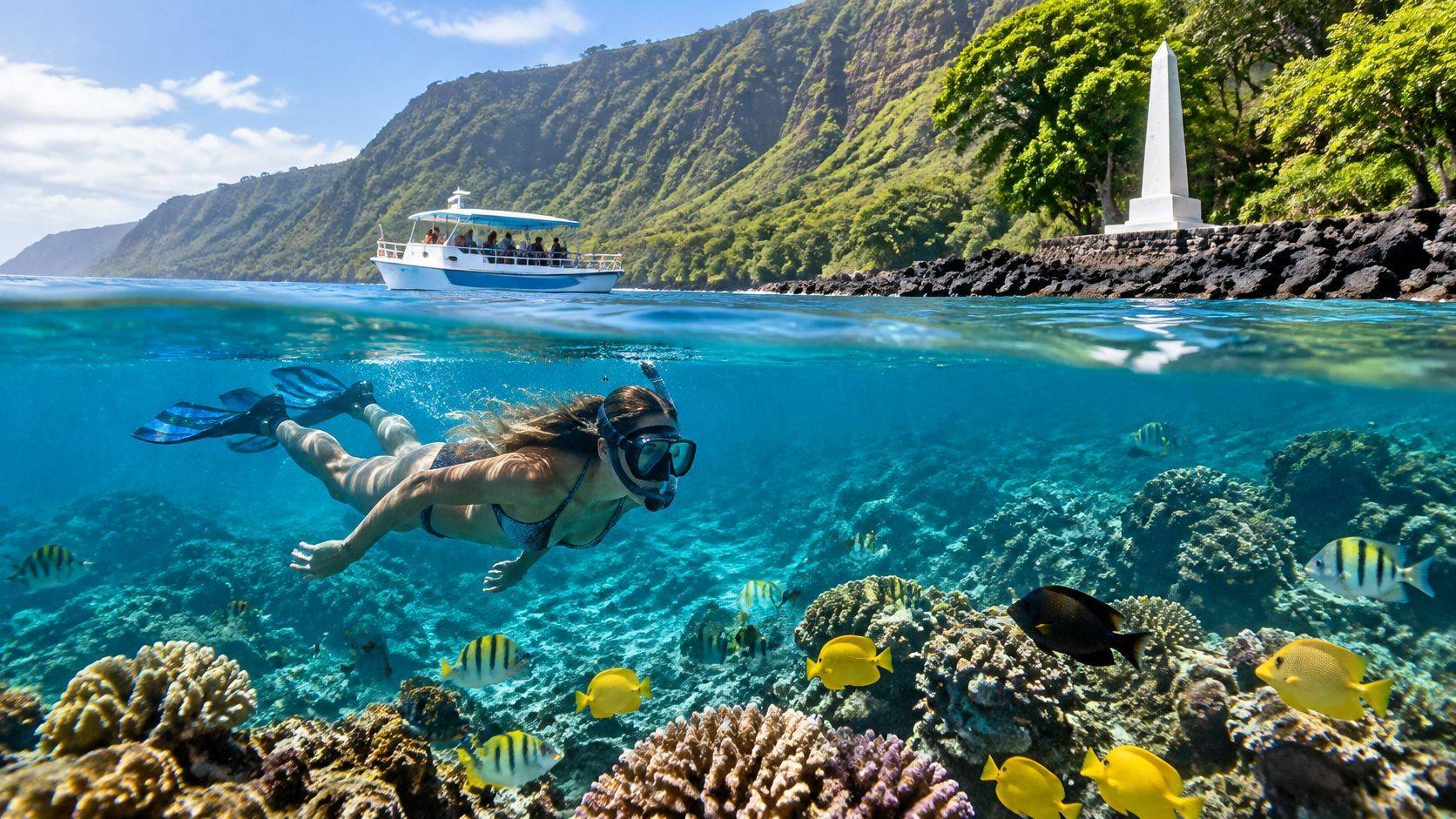
You've found photos of bright fish beneath the Captain Cook Monument, but you're still sorting out the practical questions: where the boat leaves, whether your family can manage the swim, and what happens if the ocean isn't as calm as the pictures. Those details matter more than choosing the prettiest tour listing.
A Captain Cook snorkel tour combines a coastal boat ride, guided reef time and a visit to a culturally significant Hawaiian site. The right choice starts with your swimming ability and comfort on a moving boat, not with a promise of dolphins or perfect visibility.
Captain Cook Snorkel Tour at a Glance
A Captain Cook snorkel tour is a guided boat trip from Kona to Kealakekua Bay, with snorkel gear, flotation and lifeguard-certified guides included. Our crew handles the equipment, navigation and timing, while you concentrate on getting comfortable and enjoying the reef.
Captain Cook snorkel tour essentials
Element — What to Expect
Check-in — Honokōhau Small Boat Harbor, Kailua-Kona; allow 15 to 20 minutes
Parking — Free at the harbor; no hotel pickups, so drive yourself
Boat — Former Navy SEAL boat refitted for snorkelers
Route — About 15 miles of lava coastline each way
Snorkel stop — About 1 hour in the water, with the boat tied up off the Captain Cook Monument
Guides — Lifeguard-certified; handle gear, navigation and timing
Gear — Sanitized mask, snorkel and fins fitted to each guest; flotation noodles or vests
Land access — Multi-mile steep trail with no facilities, which the boat avoids
What the logistics mean on the day
Go to the harbor for check-in, not to the monument or the shoreline at Kealakekua Bay. Allow room in your driving schedule for finding the departure location, parking and gathering your belongings before boarding.
The ride is part of the experience, not just a transfer to a swimming beach. You'll travel alongside lava coastline before reaching the white obelisk that marks the snorkel area, and you should expect movement on the exposed coastal portions of the journey.
Boat access also avoids combining snorkeling with a demanding hike. That's a useful trade-off for guests who want to spend their energy in the water rather than carry wet equipment uphill afterward.
Arrival tip: Put your swimsuit on before leaving your accommodation and keep your towel and sun protection accessible rather than buried beneath everything else.
If this outing fits into an island-hopping itinerary, the Hawaiian cruise tips from Approved Experiences Traveler can help with broader trip planning. Keep your actual harbor transport and return commitments separate from the snorkeling reservation.
Scan the logistics table first, then compare the departure windows on the full Captain Cook snorkel tour page. Choose the boat time that suits your group's comfort, not just the empty space in your calendar.
Can You Join This Tour? Safety Screen
Run this screen before you pay, not on the harbor steps. The crew fits sanitized masks, snorkels and fins, hands out flotation noodles or vests, and lifeguard-certified guides swim the reef with guests, but that support does not turn a weak swimmer into an open-water snorkeler.
Situation — Screening call — Do before you book
Non-swimmer or anxious in deep water — High-risk mismatch — Do not plan to enter the water; ask whether staying aboard is workable
Comfortable in open water — Good baseline — Still use a noodle or vest if fatigue, current or long surface swims test you
Very young child — Needs operator confirmation — Confirm age fit, supervision and gear sizing when you book
Pregnant — Get personal clearance — Ask your clinician, then confirm the boat ride with the operator
Back, neck or mobility limits — Treat motion seriously — Consider boarding, ladder use and the coastal ride, not only the swim
Heart condition, high blood pressure or severe asthma — Medical decision first — Speak with your clinician and disclose concerns before reserving
Recent long-haul flight — Postpone if depleted — Give yourself recovery time before an open-water snorkel
Diabetes, inhaler or EpiPen — Declare early — Tell Captain Cook Snorkeling Tours when booking and carry what you need
Use these as trip-screening questions, not individual medical clearance. Confirm eligibility, health restrictions and supervision needs with Captain Cook Snorkeling Tours at (808) 480-6611 or info@captaincooksnorkelingtours.com before you commit.
A calm-looking bay is not automatically safe. Entry conditions, currents, fatigue and your ability to stay oriented in open water all matter. The Hawaiʻi 2025 Water Safety Plan identifies snorkeling as the leading cause of ocean drownings among visitors and reports that approximately 91% of snorkeling drowning victims are visitors.
Before you commit
- Rate your swimming. Flotation helps a swimmer rest; it does not replace swimming ability.
- Declare conditions and medications. Mention diabetes, prescribed inhalers, an EpiPen and similar concerns when booking.
- Respect rough days. High surf or strong wind is a reason to reschedule, not a challenge to push through.
- Skip it if the swim is the problem. Choose this tour for the boat ride, history and reef; choose a different plan if open-water entry already feels doubtful.
Why Kealakekua Bay Matters Before You Snorkel
Captain James Cook and his crews reached Kealakekua Bay on January 17, 1779, during his third and final voyage aboard the Resolution and Discovery, according to Hawaiʻi State Parks' account of Kealakekua Bay. Their arrival brought the first extensive contact between Hawaiians and Westerners at this place.
Relations initially appeared peaceful. After a boat was stolen from the Resolution, tensions escalated, and on February 14, 1779, Cook attempted to take Kalaniʻōpuʻu, the ruling chief of Hawaiʻi Island, hostage to recover it; the confrontation ended with Cook's death. The state account also records four British marines and 17 Hawaiians killed in the wider conflict, and identifies the protected historical area associated with the monument as 4.0 acres.
The coastline helps place that history in context during the boat approach.
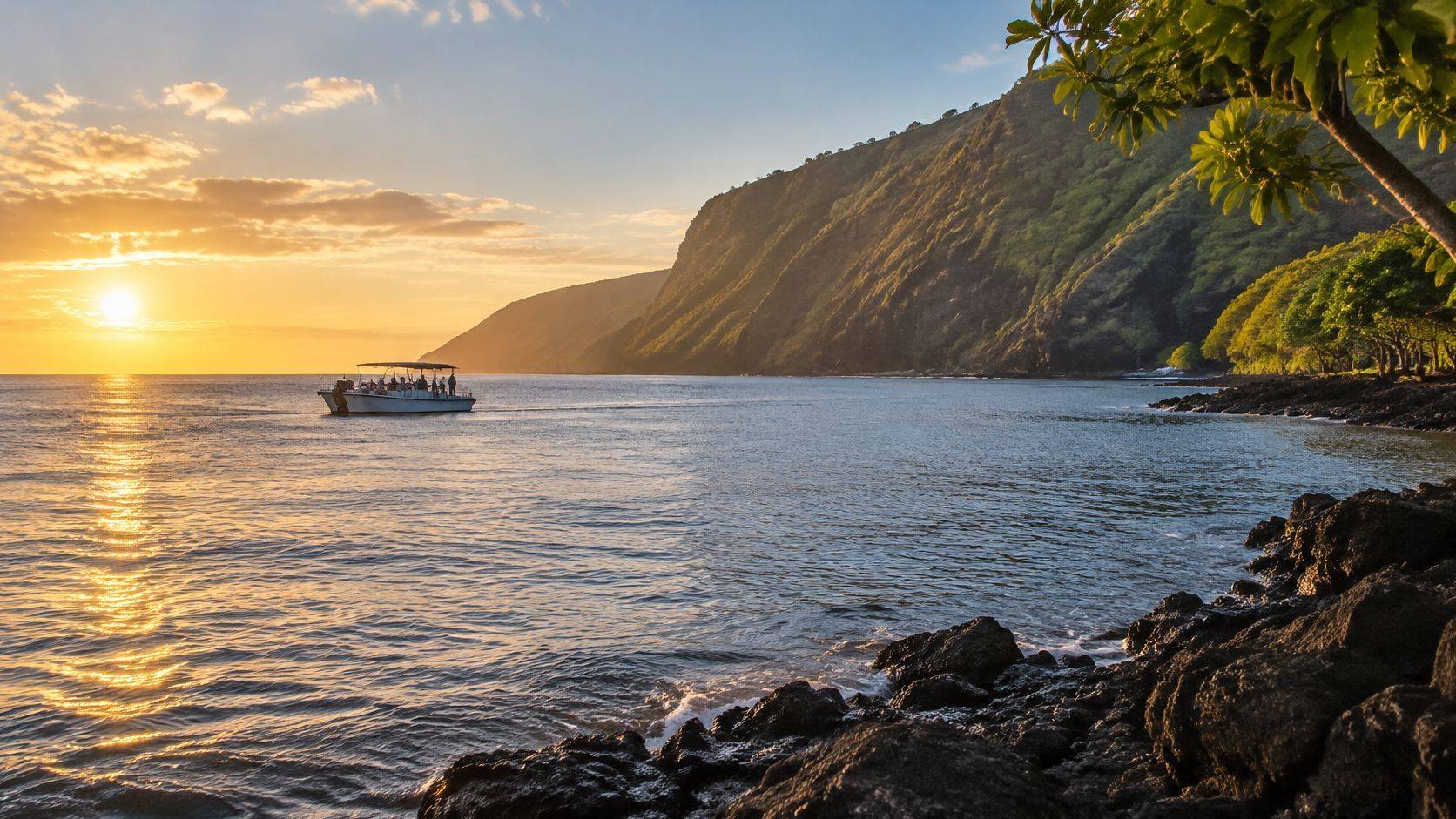
A Hawaiian landscape, not just a monument
Kealakekua Bay State Historical Park preserves more than the white obelisk visitors recognize from photographs. Hikiau Heiau, a traditional Hawaiian religious site, is also part of this cultural heritage.
Calling the outing a Captain Cook tour can put the European explorer at the center of the story. A more useful way to understand the place is to remember that Hawaiian society, leadership and religious life already existed here before the ships arrived.
Our guides share narratives about Cook's legacy alongside the reef experience. That gives guests context while the shore is visible, rather than leaving the historical connection as a name printed on a booking confirmation.
What to notice from the boat
The former Navy SEAL boat, refitted for snorkelers, gives you a water-level approach to the bay. Look toward the monument before putting on your mask so you understand where the historical shoreline sits relative to your swim.
- Locate the obelisk. Use it as a visual reference, not as an assumed landing destination.
- Listen beyond Cook's biography. The Hawaiian perspective matters to understanding the encounter.
- Treat the shore respectfully. A snorkeling reservation doesn't turn cultural sites into recreational facilities.
The explanation of why Kealakekua Bay is protected connects the historical setting with the responsibility visitors take into the water. During the ride, take a moment to look up from your equipment and see the place before focusing on the reef beneath it.
Marine Life You Can See and How to Protect It
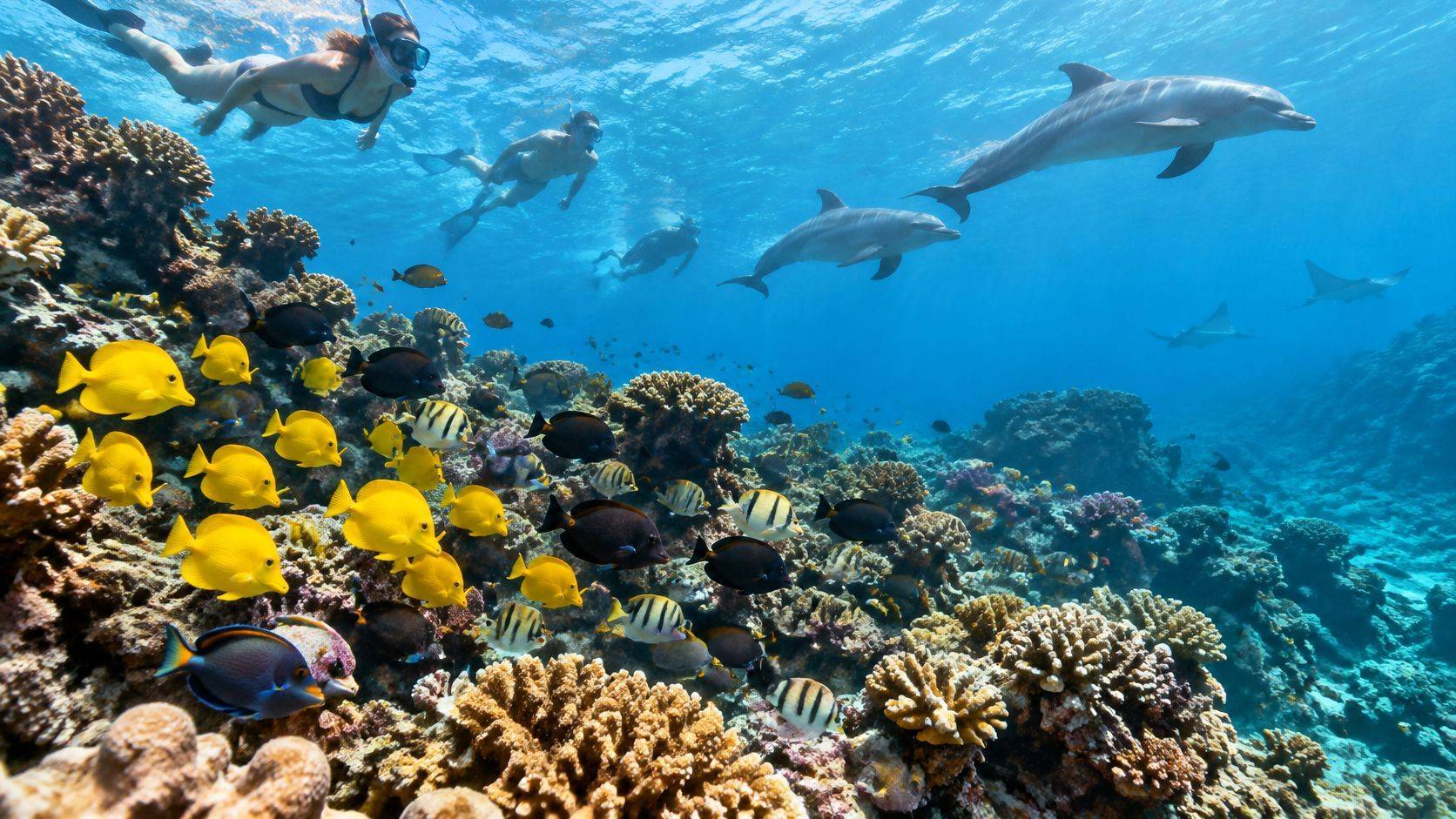
Put your face in the water off the monument and the reef takes over the view. Living coral builds the structure, tropical fish work around the coral heads, and schools gather near the rocks along the edge. Dolphins frequent the bay and sometimes appear during the trip, though wildlife sightings are never guaranteed.
Manta rays turn up occasionally. If a guaranteed manta encounter is the reason you're booking, this daytime reef snorkel is the wrong product. The bay rewards swimmers who come for the reef itself and treat any larger animal as a bonus.
Lifeguard-certified guides swim with guests over the reef during the stop. They point out fish and coral you'd likely miss on your own, but a guide nearby doesn't replace watching your buddy, tracking your position relative to the boat, and managing your own energy in the water.
Turn protection rules into swimming habits
The Division of Aquatic Resources' Kealakekua Bay regulations describe a Marine Life Conservation District with two subzones and prohibitions on taking or injuring marine life, altering sand or coral, and feeding fish. Those rules translate directly into how you swim.
- Look without touching. Coral, shells and sand stay where they are, even when a piece looks loose or unoccupied.
- Let fish feed naturally. Food isn't a viewing tool, even when it brings animals closer.
- Give animals room. Don't chase, crowd or attempt to intercept dolphins.
- Keep fins clear. Move into deeper water if you can't maintain clearance above the reef.
Vessel positioning follows the same framework. The state's marine conservation guidance prohibits anchoring in Subzone A and requires any anchor set in Subzone B to land on sand, clear of coral; designated moorings secure a vessel without dropping hardware onto the reef. Rules like these shape where the boat sits and where you swim once you're off it.
Small groups still have an impact
Arriving by boat removes the shoreline foot traffic, but it adds vessel traffic and concentrates swimmers around the most popular areas. Small groups aren't automatically low-impact groups. Briefing, supervision and compliance do more for the reef than the size of the passenger list.
The Kealakekua Bay Community Action Plan identifies pressure from people, boats, kayaks, cars and vacation rentals, and proposes management actions, potentially including rest-day closures, by 2027. That's a planning target rather than a closure schedule in force today.
Curiosity about marine resources is healthy, as long as it doesn't end in a collecting bag. If seaweed interests you as a consumer product, kelp supplement advice from Vitamin Planet covers that question. Inside the conservation district, every organism stays in the water.
The best wildlife encounter is one you can enjoy without changing the animal's direction or behavior.
Gear, Packing and Reef-Safe Conditions
A well-fitted mask makes the swim more comfortable. The crew hands out sanitized masks, snorkels and fins, checks the fit and shows you how to use the gear. Flotation noodles or vests are also available, and guides are lifeguard-certified.
Speak up if a mask pinches, a strap pulls your hair or a fin feels loose. It is easier to adjust the fit before you enter the water.
What to bring
- Swimsuit and towel. Arrive ready to swim and keep a towel handy for the return ride.
- Hat and sunglasses. Secure them during the crossing.
- Sun shirt. Cover your shoulders and back, rather than relying on sunscreen alone.
- Reef-conscious sunscreen. Choose a formulation without oxybenzone or octinoxate, in line with Hawaiʻi aquatic-resources guidance.
- Dry bag. Protect your phone, keys and other items that need to stay dry.
- Extra snacks and drinks. Bring your own if you want them.
- Motion-sickness medication. If appropriate for you, follow the label or your clinician's advice about when to take it.
Use this Kona snorkel-day packing checklist to organize your bag. Keep prescribed emergency medication accessible and tell the crew where it is.
Why conditions can change the plan
Hawaiʻi Ocean Safety's snorkeling guidance identifies high surf, strong winds, heavy shorebreak and currents as unsuitable snorkeling conditions. It also recommends swimming with a buddy and avoiding rocky or shallow reef areas. Conditions at departure matter more than how inviting the bay looks in a photograph.
Be prepared for a changed plan or cancellation if conditions are unsuitable. A scheduled departure does not guarantee that the planned swim can go ahead.
Your technique affects the reef. Fin strikes and standing can damage coral, while stirred-up sediment can settle over shallow reef surfaces. Float horizontally, kick with control and leave room between yourself, the reef and the swimmer ahead.
Stay with your buddy and follow the guide's spacing instructions. If you feel tired or uncomfortable, or cannot control your position, signal early.
Choosing Morning or Afternoon Departure
I'd choose morning for most first-time snorkelers. Water is usually calmer and clearer before afternoon trade winds build, making the crossing and the initial adjustment to snorkeling easier.
Afternoon can work well for guests who dislike early starts and are comfortable with more movement. It isn't a lesser reef experience by definition, but it asks you to accept more uncertainty around surface conditions.
Morning versus afternoon departure
Factor — Morning Departure — Afternoon Departure
Wind and sea state — Usually calmer before trade winds build — Trade winds often build, bringing more chop
Water clarity — Often clearest; depends on recent weather and swell — Wind-stirred sediment can reduce visibility
Heat and sun — Typically a cooler ride with lighter early sun — Greater midday sun exposure; reapply suitable sunscreen
Best for — First-timers and guests prone to seasickness — Late risers and guests comfortable with more movement
Compare comfort, not just the clock
Wind can stir sediment and make the surface harder to look through. Chop also changes the physical experience: the ride becomes more active, and getting back aboard can require more concentration.
That matters for someone who is already anxious about deep water. Removing an avoidable comfort challenge can help you focus on breathing through the snorkel, staying with your buddy and following the guide.
Morning isn't a visibility warranty, though. Recent swell and weather can affect either departure, and the temperature difference between windows may be less noticeable than the table suggests.
Fit the departure to your actual day
Check the recent forecast and swell outlook before your trip, then confirm the exact slot when booking. Shared boats run within set windows rather than leaving whenever your group arrives.
- Choose morning for confidence. It's the stronger starting point for nervous beginners or guests susceptible to seasickness.
- Choose later for schedule flexibility. A slower start may outweigh the possibility of additional chop for a confident swimmer.
- Leave room afterward. Don't build a tight onward commitment around an assumed return-to-car time.
The Captain Cook boat tour guide offers additional context for planning the outing as a boat experience, not just a swim.
The decision rule is simple: favor morning if comfort is your priority. Choose afternoon if an early start is difficult and everyone entering the water accepts a potentially livelier ride.
Frequently Asked Questions
Can children join?
Children need to be comfortable in the water and supervised by a parent or guardian at all times, including during the snorkel stop. Age requirements can vary, so confirm the current minimum when you book rather than assuming a listing from another operator applies here. For younger families, the earlier departure is usually the easier choice because the ride tends to be calmer and the day less rushed.
Do I need to be a strong swimmer?
You need basic swimming skills and enough confidence to manage yourself in deep open water. The crew provides floatation noodles or vests, and lifeguard-certified guides swim with guests over the reef, but flotation is an aid rather than a substitute for water comfort. If anyone in your group cannot swim or feels anxious in deep water, raise it before booking so you can decide whether this tour is the right fit.
Will we see dolphins?
Possibly. Dolphins are sometimes seen around Kealakekua Bay, along with coral and dense fish life near the monument, but no wildlife sighting is guaranteed. Treat any dolphin encounter as a bonus rather than a promise.
Where does the tour leave from?
Check-in is at Honokōhau Small Boat Harbor in Kailua-Kona. Parking at the harbor is free, and the operator does not run hotel pickups, so plan to drive yourself and arrive with time to spare.
Is visibility guaranteed?
No. Recent weather and swell affect clarity, and no operator can promise a particular underwater view. Check conditions before the trip, but keep expectations flexible.
Can I stand on the reef?
No. Coral is living habitat, not a place to rest your feet. Stay afloat, move away from shallow areas and signal the guide if you need help.
What if I get seasick?
Choose the earlier departure, consider an appropriate motion-sickness remedy before boarding and tell the crew as soon as symptoms begin. Follow medication directions and check suitability with a pharmacist or clinician if you have health conditions or take other medicines.
Can I cancel or change my booking?
Confirm the current change, cancellation, refund and weather terms before paying. Ask what happens if you cancel, if the operator cancels, or if conditions require a different plan, since those situations may not receive the same treatment.
Book Your Captain Cook Snorkel Tour
The shared Captain Cook Excursion costs $149 per person for a four-hour outing with up to 18 guests. The Private Captain Cook Excursion costs $1,999 per charter, also lasts four hours and gives your group the whole boat for up to 18 guests. Both options run the same route: 15 miles of lava coastline each way from Honokōhau Harbor to Kealakekua Bay, with about an hour in the water off the white obelisk of the Captain Cook Monument.
Shared and private Captain Cook excursion options
Option — Price — Departure window — Capacity
Shared Captain Cook Excursion — $149 per person — About 4 hours; 8:30 AM to 12:30 PM or 11:00 AM to 3:00 PM — Up to 18 guests
Private Captain Cook Excursion — $1,999 per charter — 4 hours; confirm the charter's departure time when booking — Up to 18 guests
Choose the arrangement that fits your group
A shared departure makes sense when you're comfortable joining other travelers and following the scheduled window. A private charter is worth considering when keeping your family or travel group together on the whole boat is the priority.
Reserving the whole boat changes who is aboard. The rules stay the same. Swimming eligibility, weather decisions and reef-protection rules still apply, and a charter does not guarantee particular wildlife sightings or water clarity.
Reserve your spots
Review the Captain Cook Excursion booking details, or book by phone at (808) 480-6611. Questions before you commit can go to info@captaincooksnorkelingtours.com. Before payment, confirm cancellation, change, refund and weather terms so you know what happens if your plans or ocean conditions change.
Make the reservation practical
- Pick a departure. Both shared windows cover the same route and water time, so match the slot to your group's schedule and boat comfort.
- Confirm the details. Give an accurate passenger count and raise any swimming concerns when you book, so the crew can plan gear and in-water guidance.
- Pack deliberately. Use the checklist and keep medication accessible.
- Plan your drive. Reach Honokōhau Small Boat Harbor in time for your scheduled departure. Parking there is free, and the tour does not run hotel pickups, so arrange your own transport to check-in.
Captain Cook Snorkeling Tours pairs the reef stop with historical interpretation, fitted snorkel equipment and lifeguard-certified guides who swim with guests over the coral. Visit Captain Cook Snorkeling Tours for practical planning advice, then choose the departure that matches your group's swimming ability and comfort on the ocean.