
Captain Cook Hawaii Snorkeling: Ultimate Kealakekua Guide
Plan the perfect Captain Cook Hawaii snorkeling trip: discover marine life, best tours, and tips for an unforgettable Kealakekua Bay experience.

Kealakekua Bay offers world-class snorkeling at the historic site where Captain James Cook first landed in 1779, with crystal-clear waters teeming with tropical fish, dolphins, and seasonal manta rays. The bay covers approximately 315 acres and has been a protected Marine Life Conservation District since 1969, making it a remarkable place to experience both Hawaiian history and marine life.
You may be planning this excursion while comparing boat tours, shore access, and the famous Captain Cook Monument. The most rewarding approach isn't just choosing the cheapest way into the water. You need to understand the bay's history, read the conditions accurately, follow conservation rules, and select an experience that matches your swimming ability and priorities.
Why Kealakekua Bay Matters Beyond Snorkeling
You float above coral, adjust your mask, and suddenly the seafloor opens into a living scene of fish, ledges, and blue water. The scene feels remote and timeless, but Kealakekua Bay is also one of the places where Hawaiian and European histories collided with lasting consequences.
Captain James Cook and the ships Resolution and Discovery arrived at the bay on January 17, 1779, during the Hawaiian Makahiki season, a period traditionally associated with peace and the worship of Lono. The initial relationship was welcoming. After the ships returned following storm damage, however, tensions escalated, and Cook was killed during a confrontation near the bay on February 14, 1779. The history of Captain Cook's 1778 encounter adds context that a standard beach guide usually misses.
That history changes how you read the surroundings. The Captain Cook monument isn't merely a navigation point for a snorkel boat, and the bay isn't just a convenient recreation site. Hawaiʻi's Department of Land and Natural Resources identifies the adjacent Kealakekua Bay State Historical Park as the place of the first extensive contact between Hawaiians and Westerners in 1779. Archaeological and cultural resources around the shoreline include the area associated with Hikiau Heiau and the monument itself.

History and protection share the same setting
The bay's cultural importance sits alongside a major conservation designation. Kealakekua Bay became a Marine Life Conservation District in 1969, and fishing is prohibited within the protected area under the applicable rules. That protection supports the coral reef, reef fish, and other marine life that visitors come to see. The bay's approximate 315-acre area is therefore not an incidental backdrop. It is a managed habitat along a historically significant coast (background on Kealakekua Bay's history and protected status).
A thoughtful visit treats the water and shoreline as connected. Your fins may be in the reef environment, but the place also carries cultural meaning above the surface. Learn where the monument and Hikiau Heiau fit into the story, listen to your guide's interpretation, and avoid treating historic features as props for a quick photograph.
What Marine Life You Will Encounter
Kealakekua Bay rewards patient observation. Its protected waters support coral habitat, schools of tropical fish, herbivorous fish, and invertebrates, yet sightings still depend on weather, water clarity, time of day, and chance. A responsible operator cannot guarantee a particular animal.
The reef itself provides the most reliable encounter. Watch fish move above coral heads, observe grazing along the substrate, and look for small animals sheltering in crevices. Keep your body horizontal and let the water carry you. Slow movement gives your eyes time to distinguish individual fish within the shifting reef scene. For a fuller species-by-species breakdown, see our guide to Kealakekua Bay's marine life.
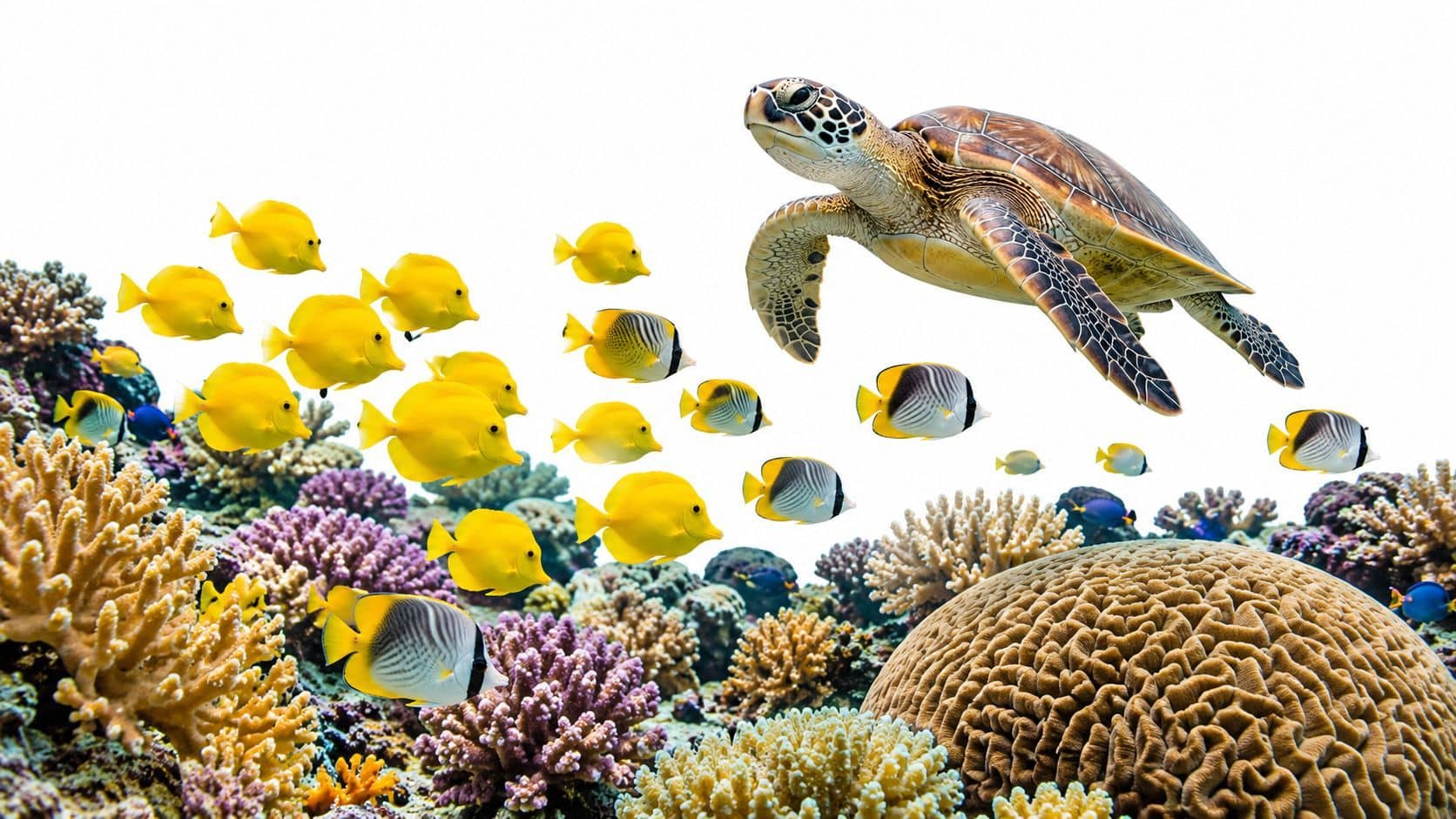
Tropical fish and reef activity
The bay's no-take protection supports healthy communities of herbivorous fish and invertebrates. These animals help control algae, which matters when coral reefs face environmental stress. Protection improves the conditions for marine life, but it does not remove the effects of warming water, bleaching, storms, or poor water quality.
The Marine Life Conservation District rules govern activity within this habitat (DLNR's Kealakekua Bay MLCD regulations). Treat those rules as part of the snorkeling experience, not as background paperwork. A reef can look healthy while remaining vulnerable, so avoid contact even when coral appears durable.
Dolphins and manta rays
Dolphins may pass through the bay or travel near a vessel, but their appearance should never prompt unsafe pursuit. If they surface, remain with your group and allow the animals to determine the distance. Swimming after them can cause disturbance, even when their movements seem playful.
Manta rays offer a different type of wildlife encounter. Daytime snorkeling may produce a sighting, but appearances are seasonal and unpredictable. A manta ray night snorkel uses lights that attract plankton and may bring feeding manta rays close to the viewing area. It is separate from a Captain Cook daytime trip, so travelers interested in both should plan them as complementary excursions rather than expect one bay visit to provide every encounter.
Use these habits in the water:
- Scan slowly: Check coral edges, open blue water, and the space above the reef instead of kicking toward every movement.
- Hold your position: Neutral buoyancy and controlled fin strokes reduce disturbance and help animals remain comfortable.
- Keep distance: Never touch, feed, chase, or surround marine life.
- Follow the guide: Captains know how to position a group without creating a moving wall of swimmers.
Choosing Your Snorkeling Tour Option
Start with the experience your group wants. A daytime Captain Cook excursion centers on Kealakekua Bay, its reef, and the historical setting around the monument. A manta ray night snorkel follows a different format, with darkness, illuminated water, and the possibility of watching manta rays feed. These trips are complementary rather than interchangeable, particularly for travelers who want both historical context and a distinct wildlife experience.
Kona Snorkel Trips is one option when you're comparing a Manta Ray night snorkel tour with a Captain Cook snorkeling tour. Its Manta Ray night snorkel tour suits travelers seeking an evening wildlife outing instead of a historical daytime visit. The operator also offers guided snorkeling tours in Kona for visitors comparing different experiences through one booking process.
Match the trip to your priorities
Your priority — More suitable option — Why it fits
Cultural and historical context — Daytime Captain Cook excursion — You visit Kealakekua Bay alongside the monument, historical park, and protected reef.
A distinctive nighttime wildlife experience — Manta ray night snorkel — Lights attract plankton, which may bring feeding manta rays close to the viewing area.
Calm, structured introduction — Guided daytime trip — Gear, a safety briefing, and in-water guidance reduce the logistical work.
A different kind of marine encounter — Night excursion — The setting, lighting, and animal behavior differ from daytime reef snorkeling.
Our comparison of the best Captain Cook snorkeling tour options explains what separates one operator from another. Before booking, compare the departure location, included equipment, flotation support, food and drink arrangements, time in the water, weather policies, and whether the trip uses a small group or private charter.
The Captain Cook snorkeling tour page is useful for travelers who want a daytime option focused on the bay and monument. A responsible crew should explain mask use, buddy supervision, neutral buoyancy, wildlife distance, and the conditions that would make the outing unsafe. Smaller groups may make it easier for guides to monitor swimmers and limit repeated contact with shallow coral, although group size alone does not prove that an operator follows responsible practices.
Price matters, but the lowest advertised fare may require more effort from your group. A boat tour can simplify access decisions, equipment logistics, and exposure to changing shoreline conditions. Compare what the price includes, then choose the trip whose safety practices and pace fit your swimmers.
Staying Safe and Following Regulations
Kealakekua Bay can look calm from the shore and still become uncomfortable or hazardous in the water. Hawaiʻi Ocean Safety identifies high surf, strong winds, heavy shorebreak, and strong currents as unacceptable snorkeling conditions. Morning commonly offers better conditions, visibility, and marine-life activity, but a morning departure isn't a substitute for checking the actual water.
Wind and waves resuspend sediment. That increases optical scattering and reduces what you can see through your mask. Currents also increase exertion and can separate swimmers from guides or vessels, especially when a tired swimmer keeps trying to maintain distance from the group.
Use a conservative go or no-go decision
Postpone or relocate if the water is murky, surge is pushing you around, or you can't comfortably enter and exit. Weak swimmers, young children, and anyone uneasy in moving water should choose a calmer alternative or remain on the boat. No lifeguard is stationed at Nāpōʻopoʻo Beach, so shore access requires more self-sufficiency than many visitors expect (Hawaiʻi's official snorkeling safety guidance).
Before entering:
- Check wind, swell, surge, visibility, and shoreline-entry conditions.
- Pair with a buddy and keep continuous visual contact.
- Test your mask seal and breathing in shallow water.
- Avoid breath-holding contests and stop immediately if you feel short of breath.
- Exit when fatigue or respiratory distress develops. Don't increase effort while breathing through a snorkel.
For broader coastal trip planning, MyPerfectStay Panama travel advice offers another useful reminder that attractive water conditions still require local awareness and realistic self-assessment.
Understand vessel and shoreline rules
A vessel entering Kealakekua Bay State Historical Park generally requires a Vessel Special Use Permit. This applies to private and commercial vessels, kayaks, and stand-up paddleboards. Permits are issued for one-year terms without a permit fee, while visitors renting a kayak or paddleboard don't obtain a separate permit. Instead, verify that the vessel owner has a valid permit (Kealakekua Bay State Historical Park management plan).
Swimmers and snorkelers may enter the water without a vessel permit, but they may not land at Kaʻawaloa. Motorized vessels must operate at no-wake speed, and boats may not launch or land at Nāpōʻopoʻo Wharf or transport people to or across Kaʻawaloa Flats, including the Captain Cook Monument. The rules also prohibit damaging live coral or interfering with marine life and mammals. Violations can lead to immediate permit suspension and civil or criminal penalties (current non-commercial permit conditions).
Preparing for Your Snorkeling Adventure
A comfortable Captain Cook snorkeling trip depends on preparation before you reach the water. Tour operators may provide masks, snorkels, fins, and flotation devices, but guests still need personal supplies and a realistic plan for heat, hydration, and fatigue. The bay is both a living reef and a historic place, so preparation should support safe swimming without adding pressure to either.
Pack for the boat and the water
Bring:
- Reef-conscious sunscreen: Choose a product marketed as reef-safe and apply it before boarding where possible.
- Waterproof storage: Use a dry bag or waterproof pouch for phones, identification, and medication.
- A towel and change of clothes: Wet swimwear can become uncomfortable during the return trip.
- Water shoes: They can help with rocky entries, but they do not make standing on coral acceptable.
- Personal medication: Protect essential medication from spray and keep it accessible to the crew.
- Water and light layers: Sun exposure and wind can affect comfort even when the air feels pleasant.
Sunscreen choice is one of the few pollutant inputs a visitor controls directly. It will not offset climate-driven bleaching, but reducing avoidable stress is a sensible choice when visiting a reef already under pressure.

Practice before the boat leaves
First-time snorkelers should practice breathing through a mask and clearing it in shallow water before attempting a longer swim. Olympic-level ability is unnecessary, but you must swim confidently enough to follow instructions, stay with your buddy, and return to the boat or guide without panic.
In the water, keep your body horizontal, use controlled fin kicks, and maintain neutral buoyancy. Do not stand on coral, touch animals, feed fish, collect anything, or chase wildlife. These actions can cause shallow-water contact, fin strikes, behavioral disturbance, and habitat damage, undermining the experience visitors came to enjoy.
Small groups give guides more opportunity to monitor guests and offer individual corrections. Every swimmer remains responsible for the position of their hands, knees, and fins. Kealakekua Bay can appear calm while still presenting boat traffic, exhaustion, changing currents, and poor visibility. Leave the water or alert the guide early if fatigue, discomfort, or confusion begins to affect your control.
Frequently Asked Questions About Captain Cook Snorkeling
Do I need to be a strong swimmer?
You need confident swimming skills, but you don't need Olympic ability. You should be able to use a mask and snorkel, stay with a buddy, respond to a guide's instructions, and stop when you become tired. Flotation equipment can add support, but it doesn't replace the ability to remain calm and manage yourself in open water.
If you dislike water over your head, become anxious when you can't touch the bottom, or struggle to breathe through a snorkel, practice in a controlled shallow setting first. Tell the crew about your experience before entering. A guide can often adjust your position or suggest staying close to the vessel, but you need to communicate early.
What happens if conditions become unsafe?
A responsible tour may cancel, delay, or relocate when conditions don't meet its safety standards. High surf, strong winds, heavy shorebreak, strong currents, and poor visibility should be treated seriously, as Hawaiʻi Ocean Safety guidance makes clear.
Don't pressure a captain to continue because you have limited vacation time. Conditions can change after departure, and a relocation may provide a safer experience than forcing access to a particular reef. Ask about the operator's weather, cancellation, and refund policy before paying, because some bookings are refundable while others may be non-refundable.
Can children participate?
Children may participate when the operator permits it and the child has the necessary swimming ability, comfort, and maturity. Parents should provide active supervision rather than assuming a flotation device makes the child independent.
A child who becomes cold, tired, frightened, or separated from the group needs to leave the water promptly. Choose a trip with clear briefings, attentive guides, and equipment that fits the child properly. If the child is uncomfortable in surge or can't follow buddy instructions, postponing is the safer decision.
How large are the groups?
Group sizes vary by operator, vessel, and departure. Ask directly how many guests the boat carries, how many guides enter the water, and whether the crew uses buddy checks or divides swimmers into manageable groups.
A smaller group can make it easier to ask questions, receive mask help, and stay visible to the guide. A larger boat may offer more space and stability. Neither format automatically guarantees a better trip, so compare supervision, briefing quality, water time, and the crew's approach to wildlife and reef protection.
What should I do if I feel uncomfortable?
Signal immediately. Raise a hand, use the agreed distress signal, or tell your buddy and guide that you need assistance. Don't wait until you're exhausted, and don't swim farther from the group to avoid embarrassment.
The correct response to shortness of breath is to stop, float if possible, and ask for help. A guide can help you reach the boat or a safer position. If you feel dizzy, panicked, chilled, or unusually fatigued, leave the water. Continuing to prove that you can manage discomfort is not a snorkeling skill.
Is the bay suitable for every first-time snorkeler?
The bay can be an excellent introduction when conditions are calm and the guest receives proper instruction. It isn't suitable for every person on every day. Calm-looking water doesn't eliminate currents, boat traffic, changing visibility, or exhaustion.
Before booking, evaluate your swimming confidence, the age and ability of everyone in your group, and the operator's support practices. For additional planning ideas, Kona Honu Divers' reef adventures can help travelers compare reef-focused activities and think through the difference between a guided excursion and a more demanding independent outing.
Should I choose daytime Captain Cook snorkeling or a manta ray night snorkel?
Choose daytime Captain Cook snorkeling if you want the historic setting, daylight reef viewing, and a chance to understand the bay's cultural environment while you swim. Choose a manta ray night snorkel if the distinctive nighttime feeding experience is your main priority.
They aren't interchangeable products. The daylight trip centers on Kealakekua Bay and its history, while the night excursion depends on plankton, lighting, conditions, and manta behavior. Travelers with enough time may enjoy both, provided they treat each as a separate activity and follow the safety briefing for each one.
How should I evaluate cancellation policies?
Read the policy before booking, particularly the sections covering weather, operator cancellation, guest cancellation, illness, and missed departure times. Refundable and non-refundable tickets can have very different consequences when plans change.
Ask whether the operator offers a refund, rescheduling, or relocation when conditions are unsafe. Save the policy with your confirmation email, and contact the company as soon as your circumstances change. Clear answers before payment are more useful than assumptions at the dock.
Captain Cook Snorkeling Tours offers guided access to Kealakekua Bay with snorkeling equipment, safety briefings, snacks and drinks, and personalized guidance for the historic Captain Cook outing. Visit Captain Cook Snorkeling Tours to review the tour details, prepare for the conditions, and choose a responsible way to experience the reef and its history.