
Big Island Captain Cook: Reefs, History, and Snorkeling
Plan the perfect Big Island Captain Cook visit. Snorkeling tours, Kealakekua Bay history, access rules, best times to go, and sustainable travel tips.
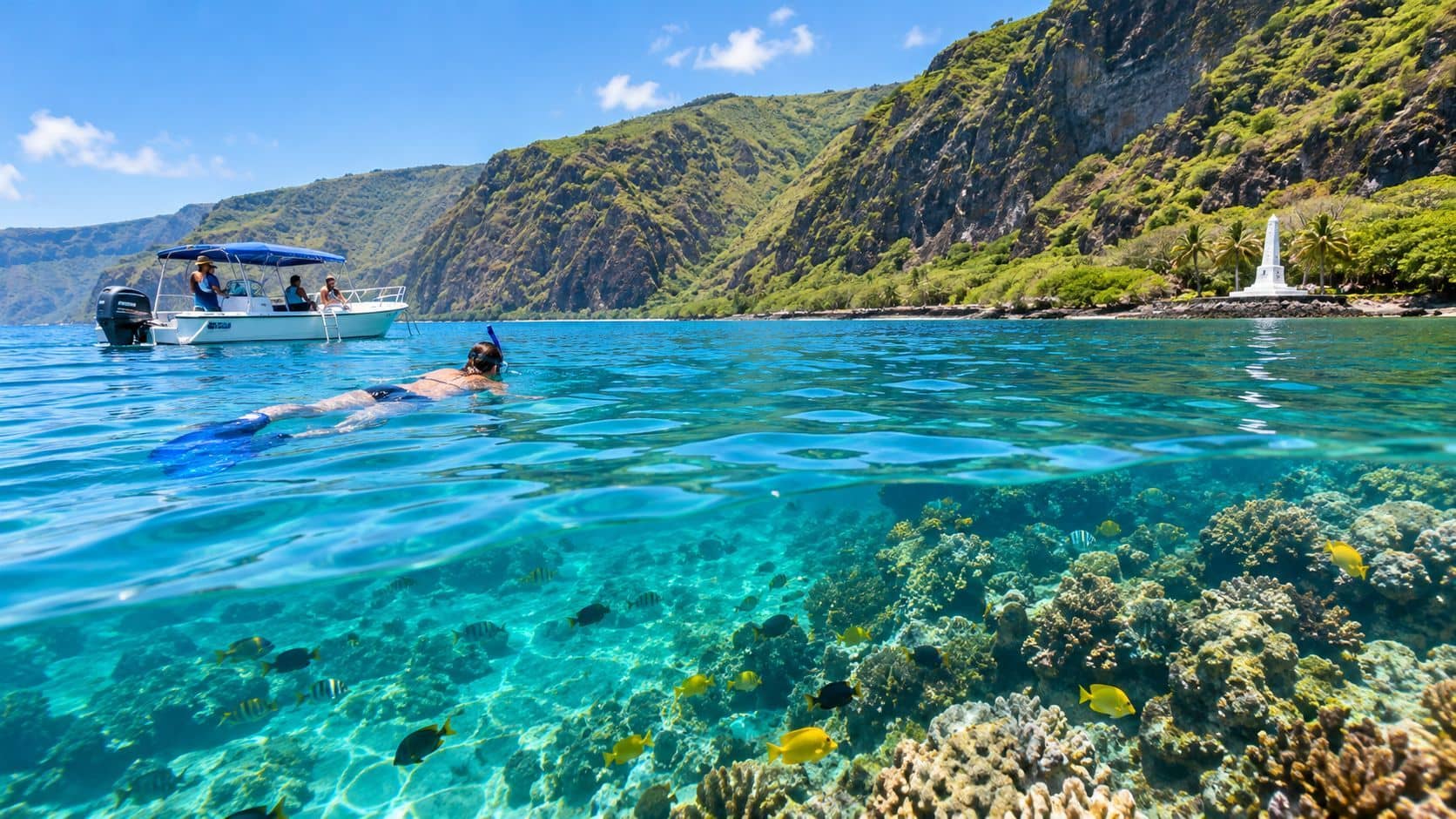
You've got a snorkeling tab open, a weather forecast on your phone, and somebody in your group asking whether you can walk up to the Captain Cook Monument after the boat arrives. That last question matters more than most booking pages admit. A good Big Island Captain Cook trip starts with understanding what you're visiting: a protected reef and a Hawaiian historical site, not a beach stop with unlimited access.
A Morning at Kealakekua Bay
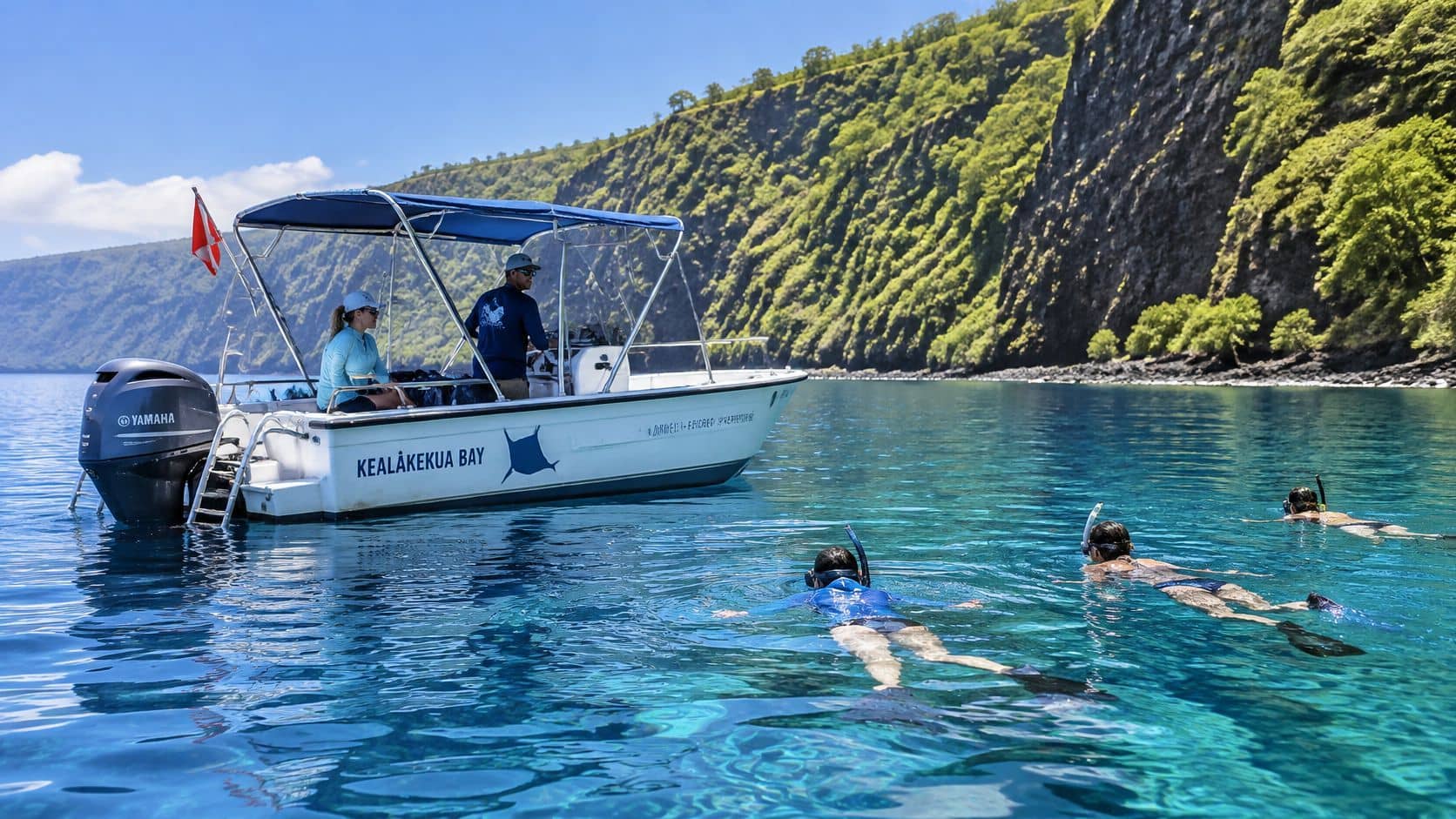
On a calm morning, the arrival can feel almost theatrical. Cliff faces rise above the water, the white monument stands out against the shoreline, and passengers stop looking at their phones. Then comes the practical business: masks fitted, fins ready, and a guide checking the entry area before anyone gets wet.
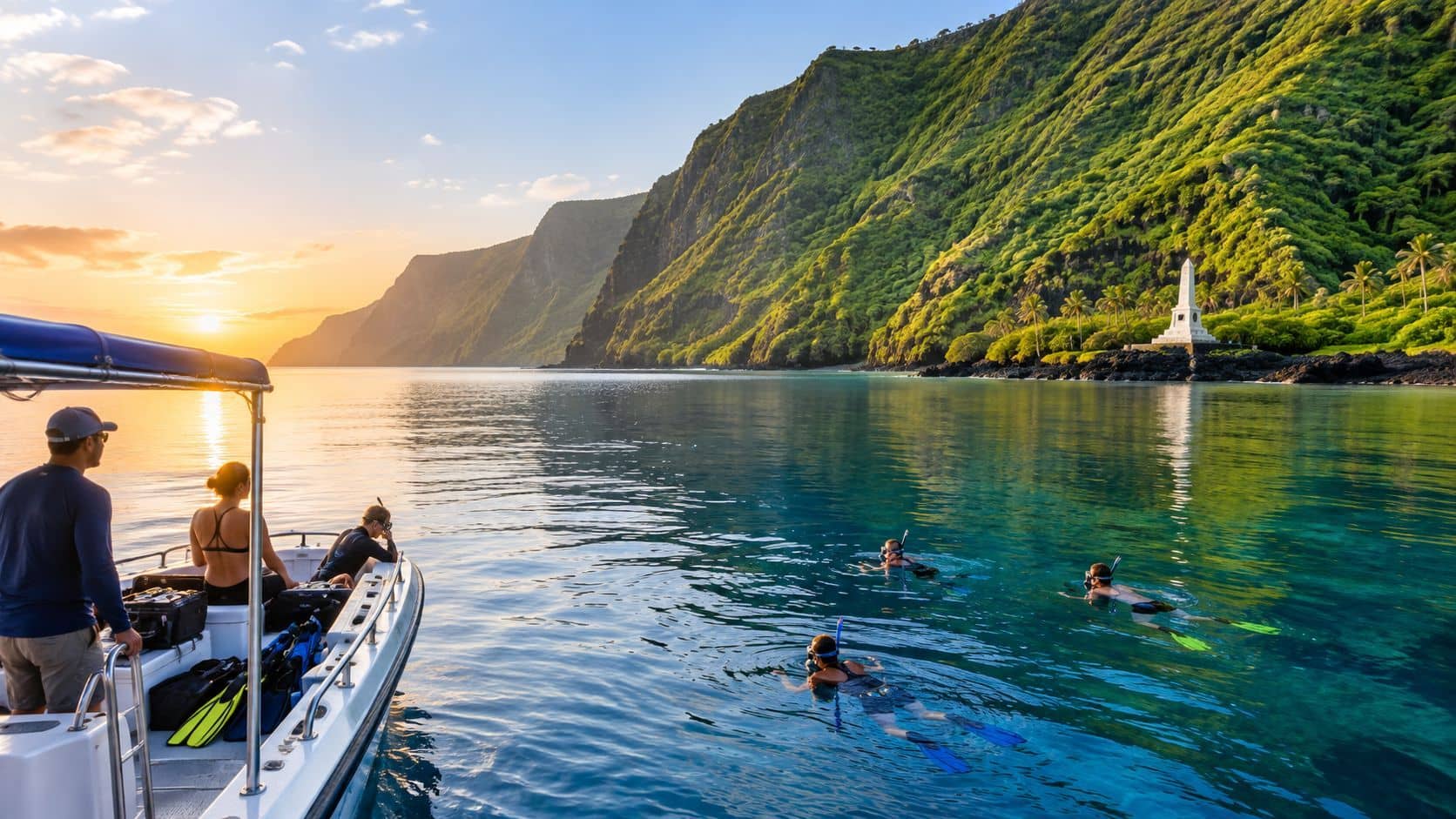
That pause before entry is valuable. You can admire the setting without rushing straight past what makes it meaningful. The monument is a landmark, but it isn't the whole story, and the reef isn't a swimming pool arranged beneath it.
My recommendation is to choose an outing that gives both places proper attention. You want a captain who explains the shoreline without reducing Hawaiian history to an explorer's biography, and a guide who checks your equipment before pointing you toward coral.
What a worthwhile arrival looks like
A responsible crew makes the opening minutes useful rather than filling them with promises.
- A conditions check: The captain chooses the entry based on the water that morning, not a photograph on the booking page.
- A clear swim plan: You know where to stay, how to signal for help, and how to return to the boat.
- Historical context: Someone explains why this shoreline deserves more restraint than an ordinary sightseeing stop.
- An honest expectation: Clear water, wildlife encounters, and an empty bay aren't things a crew can manufacture.
My booking rule: Choose the crew that explains its limits clearly. That's more useful than a longer list of promises.
Don't build the rest of your day so tightly that a changed departure or slower return becomes a crisis. Whether you're allocating a morning or making this the centerpiece of a longer excursion, leave room for the captain to make sensible decisions. The best day isn't the one that squeezes in the most stops. It's the one where you enter comfortably, understand the place, and leave without damaging it.
The History and Cultural Layers of Captain Cook
From the boat, the white obelisk can look like the bay's main story. It marks one chapter in a place with a much longer Hawaiian history.
James Cook made documented European contact with the Hawaiian Islands on January 18, 1778, and arrived at Kealakekua Bay on January 17, 1779, during Makahiki, a season associated with Lono. His reception initially involved ceremonial respect. Relations deteriorated amid disputes over property and provisions and growing pressure on local resources. Cook left on February 4, 1779, then returned after storm damage to a vessel. He was killed during a confrontation on February 14, 1779, according to the National Park Service's account of Cook's arrival and death.
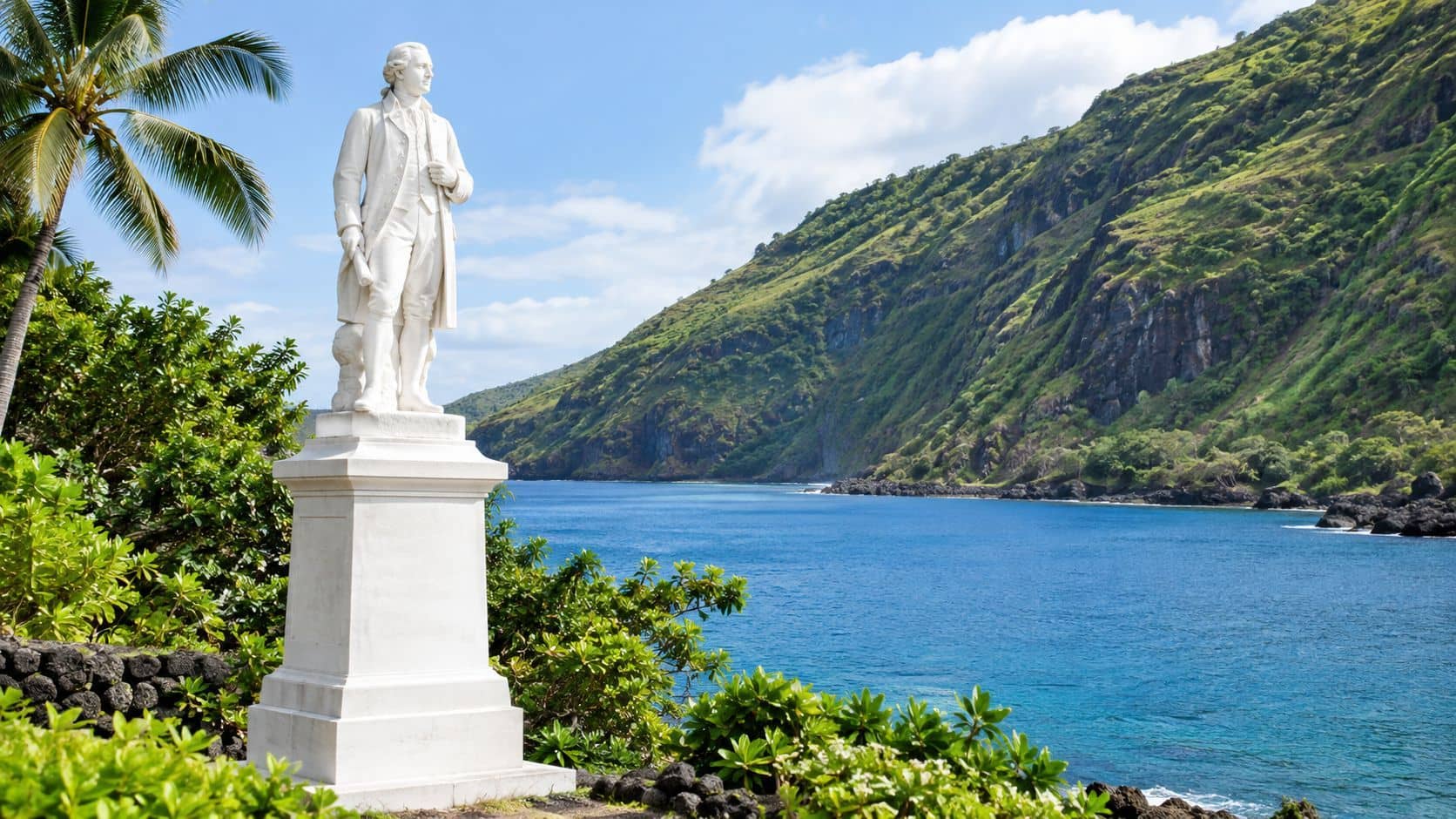
The monument is itself part of a later history. The 27-foot obelisk was unveiled on November 14, 1874. About 180 acres became a state historic park in 1967, the historic district was listed on the National Register in 1973, and a memorial plaque returned to the landing in 2018, as recorded in the Captain Cook Society's memorial history.
A good visit puts Kaʻawaloa and Hawaiian perspectives alongside the monument. The National Register documentation for Kealakekua Bay includes Hikiau Heiau and Kaʻawaloa among the area's historic places. Treat the heiau with respect, leave archaeological and cultural objects where they are, and don't reduce the bay to a backdrop for Cook's story.
Reading Kealakekua Bay's Reef Before You Swim It
The first thirty yards tell you how to snorkel the bay. Milky water at the entry means patchy clarity farther out. Coral heads rising close to the surface mean you take the deeper route, not the tighter one.
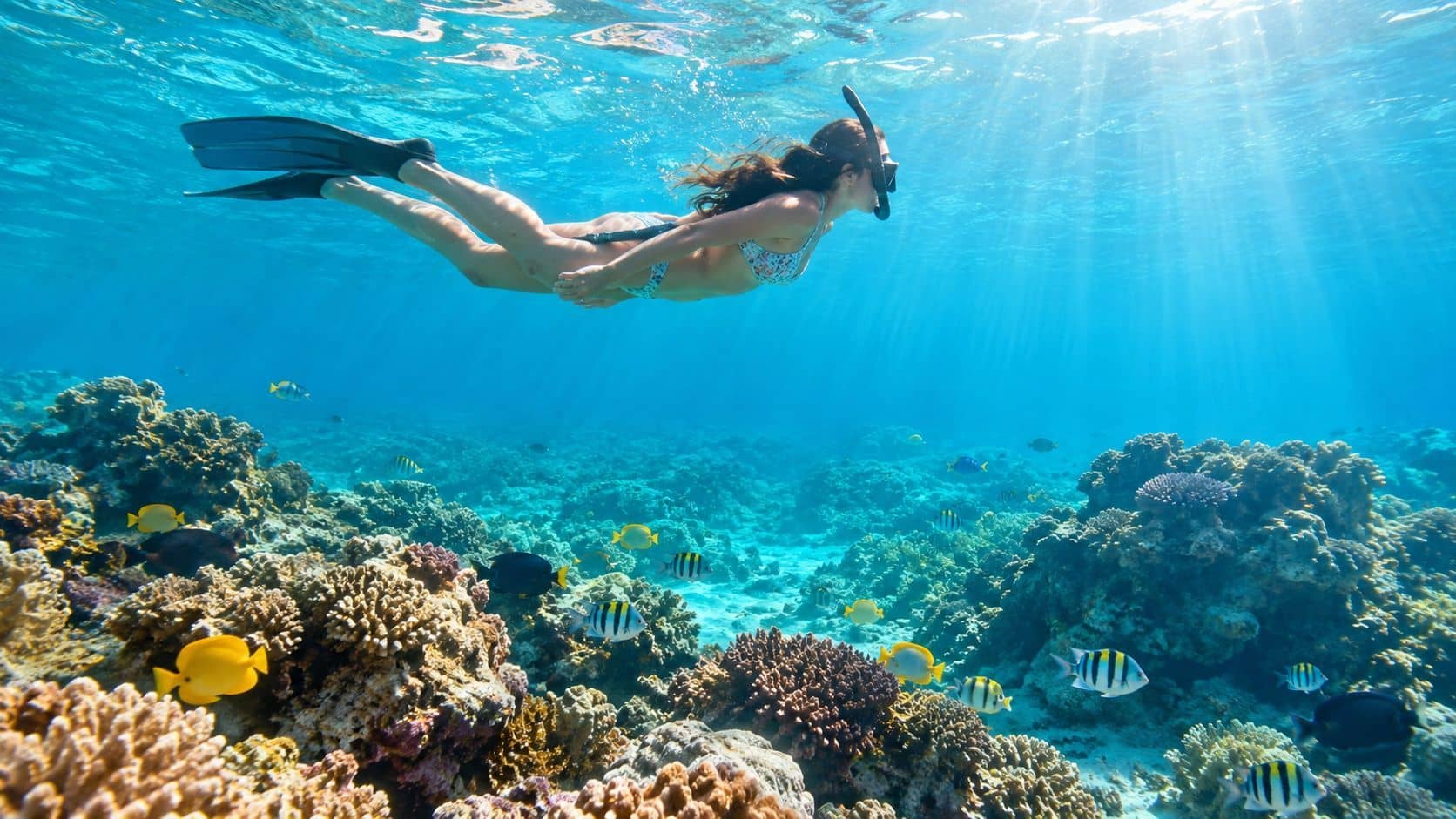
Expect a mosaic: coral patches, sand channels, fish working the edges, visibility that changes with swell and runoff. That mixed scene is normal for a heavily visited marine sanctuary. The skill is reading it before your fins are over the reef.
Be skeptical of any description that calls the whole bay pristine. The NOAA-linked West Hawaiʻi coral-restoration assessment reports approximately 10–30% coral cover at Kealakekua Bay, identifies sedimentation and nutrient inputs from cesspools and other onsite sewage systems, and describes lower coral-outplant survival and growth than at less-degraded comparison sites. Suspended sediment can cut visibility. Nutrient enrichment can feed algae and stress coral.
Look down before you kick. If your fins can touch coral, you are too shallow; move toward open water. Let fish cross your view instead of chasing them. Ask the guide what species you are seeing and where the sensitive patches sit. Keep the camera secondary until you know your position, your companions, and your return route.
I would book this trip for reef structure and water clarity, with wildlife treated as a bonus on the animals' terms. If turtles are your main interest, Snorkel Turtle Canyon's guide to snorkeling with turtles helps with planning; it is no sighting promise at Kaʻawaloa.
The regulated setting is the point. Calm movement, buoyancy control, and distance from coral keep the bay worth entering tomorrow.
Permits, Rules, and the 2026 Access Reality
Permission to travel across the bay is not permission to land at the monument. Keep those separate, and most of the access confusion disappears. Don't let a rental counter, a social-media video, or a vague “monument tour” description blur that distinction.
Under Kealakekua Bay State Historical Park's access rules, vessels transiting the bay require permits. Vessels may not land passengers at Kaʻawaloa Flats or allow them to traverse the monument area without separate written authorization, and swimmers may not access that shoreline. The commercial requirements also address no-wake operation, onboard human-waste systems, reef-safe sunscreen, and protection of coral and wildlife.
The permissions you need to distinguish
Activity — What to establish before paying
Boat tour — Whether the operator has current authorization for the proposed trip
Rental kayak or paddleboard — Whether the particular vessel and intended use are properly covered
Shoreline landing — Whether separate written landing authorization applies
Monument viewing — Whether the experience is viewing from the water rather than going ashore
Hawaiʻi's 2025 legislative text specifies that, beginning January 1, 2026, rental vessels used in state-park navigable waters must be registered and numbered or covered by an authorized permit; the rental-vessel provisions in HB1316 HD1 are another reason to verify current arrangements directly with State Parks and your operator. Don't assume an old rental description settles today's access requirements.
Marine protection is a separate obligation
The Division of Aquatic Resources' Kealakekua Bay regulations distinguish Subzone A, where fishing and taking or injuring marine life are prohibited, from Subzone B, where limited hook-and-line and throw-net fishing is allowed for specified species, including akule, ʻōpelu, and crustaceans. District-wide restrictions also prohibit fish feeding and taking or altering sand, coral, geological features, or specimens.
- Ask about changes: Find out what happens if authorization, launch arrangements, or conservation restrictions change.
- Separate promises: Get clarity on what's included, what depends on weather, and what depends on permission.
- Read departure instructions: Use the operator's know-before-you-go information alongside current official rules.
Seeing the monument from a boat doesn't make its shoreline an available beach stop.
For most visitors, viewing and learning from the water is the sensible plan. If shore access is essential to your booking decision, obtain a precise answer before purchasing, not after arrival.
Ways to Get on the Water and How They Compare
Two boats head toward Kealakekua Bay on the same morning. One carries a crew that fits masks, briefs guests, and watches the water while people snorkel. The other is a rental you loaded yourself, with the drive, the launch, and the paddle back still ahead of you. For most travelers, I recommend the first option: a permitted guided boat outing.
The qualification is "well-run." A vessel's shape says nothing about the quality of its guides, and a small group doesn't automatically mean good supervision. Kealakekua Bay is a conservation district with limits on who can operate there, so a permitted operator also tells you the trip is legal rather than improvised.
Option — Main trade-off — My recommendation
Guided snorkel boat — Less independent control, more organized support — The default choice for visitors prioritizing reef time
Guided kayak — Paddling becomes part of the outing — Choose it because you enjoy paddling, not merely to reach the monument
Permitted rental paddlecraft — You manage navigation, equipment, and compliance — Suitable only when you understand the responsibilities
Rigid-inflatable or catamaran charter — Boarding, seating, shade, and ride characteristics differ — Compare the actual vessel against your group's needs
Historic-trail approach — You manage the land journey and equipment yourself — Treat it as a hiking decision, not an effortless snorkeling shortcut
Whichever row fits, compare inclusions rather than headline prices. Ask about mask fit, flotation, guide support, shade, boarding assistance, and how much of the outing is transit rather than actual snorkel time. For families, the useful question is whether the crew can support your particular children, not whether the website says "family-friendly."
Review the Captain Cook Excursion details against those criteria. Kona Snorkel Trips is another operator to consider for a Captain Cook snorkeling tour, and its guided snorkeling tour options give you a second itinerary to compare.
Then match the trip to the swimmer. Nervous swimmers should prioritize patient instruction, suitable flotation, and explicit participation requirements. Confident paddlers should ask how equipment is managed while they snorkel and how the return is handled. Comfort-conscious travelers should ask about seats, shade, toilet arrangements, and getting back aboard.
Pay more attention to those answers than to any promise of an exclusive-feeling bay. You are booking competent access and guidance, not ownership of the water.
Best Times, Weather, and Water Conditions
Request an early departure, but let the actual forecast decide. That's my practical recommendation, not a guarantee that every morning will outperform every afternoon. A captain who changes a plan because of conditions is doing the job you hired them to do.
Don't let broad seasonal descriptions make the decision for you. “Summer,” “winter,” and “sheltered bay” aren't substitutes for an assessment of wind, swell, entry conditions, and the trip back. The useful question is whether the particular departure suits your group's swimming confidence and comfort aboard.
Ask for a usable conditions assessment
A vague “looks good” isn't very helpful if you're deciding for a nervous child or someone prone to seasickness.
- Ask about the ride: Conditions during transit can matter just as much as those at the snorkel site.
- Ask about entry and recovery: A manageable swim still requires a comfortable way into and out of the water.
- Ask about flexibility: Establish whether the captain can adjust the entry, timing, or destination.
- Leave a backup window: Avoid placing the outing at the only possible moment in your itinerary.
The guide to the best time to snorkel in Hawaiʻi can help you organize timing questions before speaking with the crew.
Respect the working swim area
State planning describes a swim-and-snorkel safety zone near Kaʻawaloa with buoys 100 feet offshore, while commercial vessel requirements require motorized vessels to operate at no-wake speed and protect coral, marine life, and mammals.
Conditions rule: A pleasant view from the boat doesn't replace an entry assessment.
Stay within the area your guide identifies. Don't interpret a buoy as permission to explore beyond the group, and don't assume slow-moving vessels eliminate the need to pay attention. The crew should explain the day's boundaries before you enter, including the return signal and what to do if you become tired.
Packing, Safety, and Sustainable Reef Etiquette
Pack for an ocean outing, not a photo shoot. A swimsuit, towel, sun shirt, secure hat, drinking water, and a compact dry bag cover the basics. Bring the reef-safe sunscreen required by the commercial access conditions, and ask the operator which products it accepts rather than relying solely on packaging.
For snacks, choose something easy to manage aboard and keep wrappers secured. Rip Van's ideas to find better-for-you travel snacks can help with packing, but first confirm whether your trip supplies food or restricts what passengers bring.
Health questions belong before booking
Don't rely on a generic internet exclusion list to decide whether you can participate. If you're pregnant, have serious back or neck problems, have a cardiac or respiratory condition, or are concerned about fatigue after travel, discuss the actual vessel and activity with the operator and seek appropriate medical advice.
A recent long-haul flight alone shouldn't be turned into an invented universal ban. What matters is an honest assessment of your health, alertness, mobility, and ability to meet the operator's requirements.
- Disclose relevant limitations: Explain difficulty climbing ladders, swimming independently, or tolerating a moving vessel.
- Test equipment before moving away: Tell the guide immediately if your mask leaks or breathing feels uncomfortable.
- Use assistance early: Ask for flotation or help before fatigue becomes urgent.
- Keep an exit option: Staying aboard can be the correct decision even after everyone else enters.
Protect the place with deliberate movements
Don't stand on coral, kick across shallow colonies, chase wildlife, or handle objects along the shore. Apply the district restrictions already described, even when another visitor ignores them. Someone else's behavior isn't your permission.
The explanation of why Kealakekua Bay is protected is useful preparation for families because it connects visitor behavior with the place they're entering.
Respect also includes how you speak about the shoreline. Listen to cultural interpretation, ask thoughtful questions, and resist treating restricted places as attractions you've been unfairly denied. Responsible access sometimes means appreciating something without touching it or standing beside it.
Booking a Captain Cook Tour and FAQ
Book the crew's judgment, not just the destination. Look for a small-group outing with equipment, a safety briefing, personalized guidance, and meaningful historical interpretation. Confirm current authorization, departure arrangements, and participation requirements directly rather than assuming every detail on an older page still applies.
Use the Captain Cook snorkel tour page to review the proposed experience. Before paying, establish what happens if conditions prevent snorkeling, whether an alternative itinerary is possible, and which cancellation terms apply to your reservation.
Questions to settle before departure
- What should I wear? Arrive ready for the water, with sun protection and clothing suitable for the boat. Confirm accepted sunscreen products and any footwear requirements with the crew.
- What's the minimum age? Ask for the current requirement for your specific departure. Don't assume every vessel or itinerary accepts the same ages.
- Do I need to swim? Describe your actual ability, including whether you're comfortable floating face-down and returning to a boat. Flotation and instruction don't automatically make every outing suitable for a non-swimmer.
- What happens if weather cancels the trip? Obtain the written cancellation and rescheduling policy before booking. Don't assume a refund, credit, or substitute destination.
- Can I step ashore at the monument? Plan on viewing from the water unless the operator explicitly confirms the separate authorization discussed earlier.
Make a booking you understand
The right reservation should leave you with fewer unanswered questions, not more. You should know where to check in, what to bring, what support is included, and which parts of the experience remain conditional.
If the answers fit your group, secure a departure and keep the confirmation handy. Arrive rested, listen to the briefing, and give the crew room to make decisions around the bay rather than around a marketing promise.
Captain Cook Snorkeling Tours offers guided Kealakekua Bay outings with snorkeling equipment, safety briefings, and personalized guidance in a small-group setting. Visit Captain Cook Snorkeling Tours to prepare for the reef, understand the historical setting, and choose an outing that suits your group.